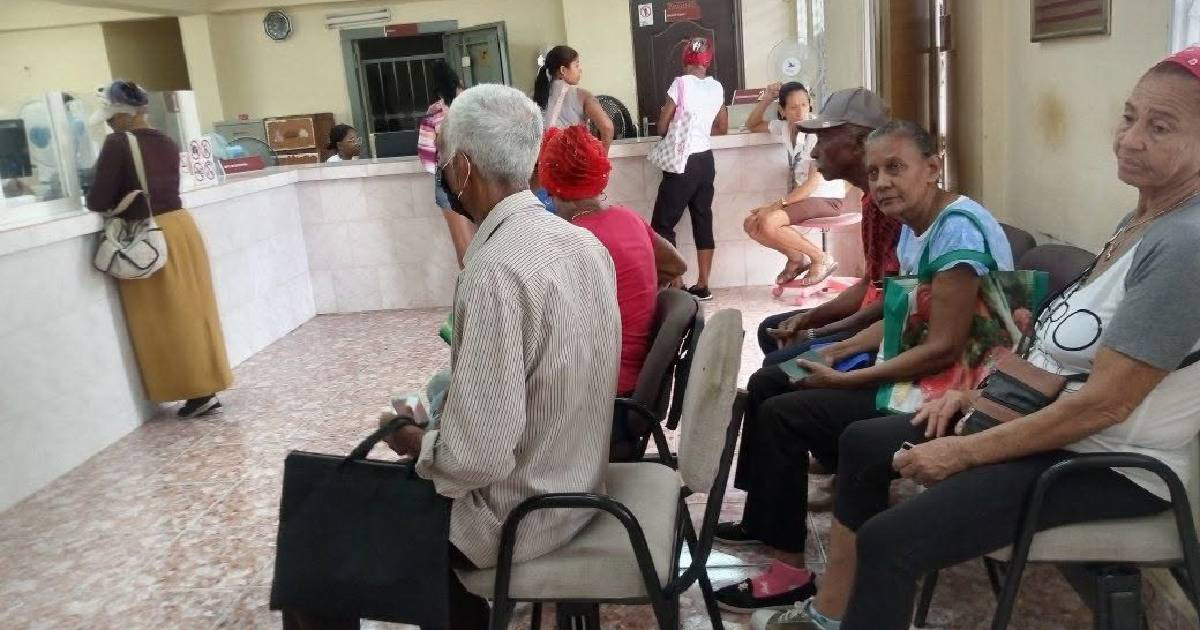
The Credit and Commerce Bank (Bandec) branch in Guantánamo is managing to gather slightly over 34% of the nearly 15 million pesos it requires on a daily basis, as reported by the official newspaper Venceremos this Friday.
This information was revealed during the daily meeting focused on the operational vitality and socio-economic state of the eastern region, overseen by the top officials of the Communist Party and the provincial government.
The liquidity shortfall is directly affecting education and public health workers who are not receiving their salaries on time, as well as retirees awaiting their pension payments.
Conducted via audioconference with all municipalities, the meeting revisited a crisis that the provincial government publicly acknowledged in July, highlighting that Guantánamo banks lack sufficient cash to operate normally.
Back then, Bandec was collecting a similar proportion—just above 35% of its daily target—indicating that the situation has not improved over the past two months.
Compounding Issues Beyond Cash Shortage
In addition to the cash shortage, other issues such as delays in meeting revenue plans and the refusal by both private and state vendors to accept electronic payments exacerbate the situation. This is despite a legal mandate requiring all establishments nationwide to facilitate electronic transactions.
“All state or private establishments are required to operate with electronic payment methods, accepting transfers and enabled digital payments,” it was reiterated at the meeting, with a call for inspection bodies to intensify enforcement of these regulations.
Private Sector Involvement in Pension Payments
In August, faced with the banking system’s inability to ensure pension payments, authorities announced that 113 private businesses would take on the responsibility of paying pensions to over 3,000 retirees. Yuder Ortiz González, Bandec's deputy accounting director, clarified that this arrangement was not entirely voluntary.
“There’s a difference between someone who becomes a financial agent, assisting the bank with payments, and an entity that does nothing,” he stated.
Guantánamo is home to over 68,000 retirees or pensioners, with 18,000 receiving cash payments through the postal service and 50,000 using cards, according to official figures.
The government has set a goal for 70% of the province’s retirees to be paid through private actors, but with only 3,000 currently served this way, the target remains distant.
National Impact of Mandatory Banking Policies
On a national scale, the mandatory banking policy, enforced since August 2023, has resulted in tens of thousands of fines and over two hundred businesses being shut down, yet the trend remains unchanged.
In July, even Venceremos admitted that the situation in Guantánamo “has ceased to be merely a banking problem and has evolved into a social issue,” acknowledging the failure of a model that shifts the state's unmet responsibilities onto the private sector.
Impact and Challenges of Guantánamo's Banking Crisis
What is the daily financial shortfall faced by Bandec in Guantánamo?
Bandec in Guantánamo collects only slightly more than 34% of the nearly 15 million pesos it needs to gather daily.
How is the liquidity crisis affecting public sector workers and retirees?
The liquidity crisis results in delayed salary payments for education and health workers and affects retirees who await their pensions.
What measures has the government taken to address pension payment issues?
The government announced that 113 private businesses would help pay pensions to over 3,000 retirees as the banking system couldn't guarantee these payments.