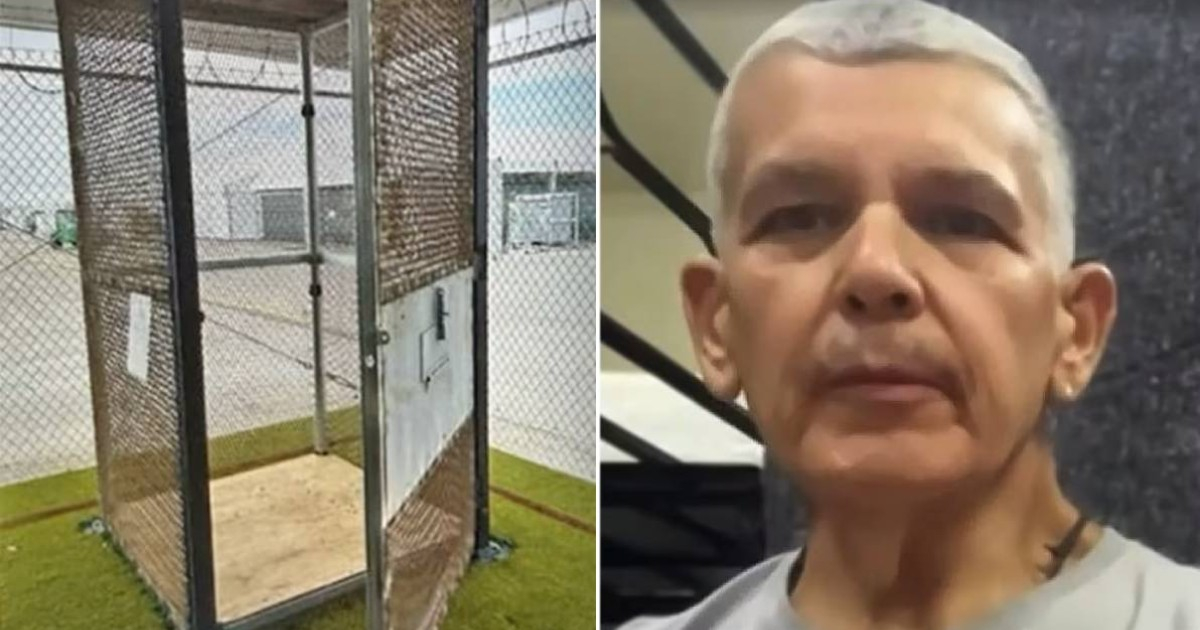
Raúl Suárez Herrero, a 59-year-old Cuban who spent nearly five decades living in the United States, has alleged that he was confined for over 15 hours in a cramped metal cage resembling a phone booth at the Alligator Alcatraz immigration detention facility located in the Florida Everglades. He shared his harrowing experience with NBC News and Noticias Telemundo.
Suárez, who migrated to the U.S. at the age of 12, was taken into custody by Immigration and Customs Enforcement (ICE) in July 2025 during a routine appointment. He recounted his ordeal from Mexico, where he was deported.
In an interview with Noticias Telemundo's "Ahora 360," Suárez described the incident, which unfolded after he began praying aloud for a fellow detainee who suffered an epileptic seizure while they awaited processing at the center. "I prayed to God for the young man's life," he explained.
A Disturbing Account of Detention Practices
Suárez's story is emblematic of the current challenges faced by Cuban migrants in the U.S. Stay informed about the latest developments in detentions, deportations, and immigrant rights in our U.S. Immigration section.
According to Suárez, two guards approached him, asked about his nationality, and upon hearing "Cuba," they dragged him to a small metal cell measuring 7 feet 9 inches in height and 4 feet 3 inches in width. The cell was situated in the recreation area, deep within Florida's swampland.
"They took me there, and I spent more than 15 hours in that tiny space," he told Telemundo, adding that he was locked up around 1:00 p.m. and not released until 5:00 a.m. the following day.
Living Conditions Inside the Cage
While confined, Suárez was unable to lie down, was not provided food, endured mosquito bites, and stayed awake all night fearing snakes. "You have to be cautious because there are snakes on the ground, and you can't see them. You can't fall asleep because they might enter the cage," he stated.
In a phone conversation with NBC News, he summed up his ordeal by saying, "I felt like I was in hell."
The testimony emerged shortly after the Department of Homeland Security's inspector general released a report confirming the use of these cages following an unannounced visit in January 2026. The report labeled them as "highly unconventional" and inconsistent with humane treatment standards.
Official Response and Aftermath
The agency issued 10 recommendations, including halting the use of metal enclosures, but the administration ignored them. Records at the facility indicated that 79 individuals were held in these structures between July 2025 and January 2026, with an average duration of 59 minutes per person.
Staff referred to the cages as "calm areas" and claimed no one was held for more than two hours. Suárez vehemently denied this, stating, "Everyone lied," and refuted the idea that confinement was voluntary.
The Department of Homeland Security dismissed the allegations of inhumane conditions as "categorically false." A spokesperson for Governor Ron DeSantis, Alex Lafranconi, described the cages as confinement areas for "violent criminal aliens" and even suggested, "We'd make them smaller if we could."
Alligator Alcatraz, constructed in just eight days under state emergency powers with a capacity for up to 5,000 detainees, was permanently closed in June 2026 after processing nearly 21,000 deportations and incurring over $1.2 billion in costs.
In December 2025, Amnesty International documented overcrowding of up to 32 people per cage, non-potable water, and constant lighting, labeling the use of small cages as torture.
Nearly 60% of detainees had no prior criminal convictions, and the Cuban community was particularly affected: between January 2025 and March 2026, 4,353 Cubans were deported to Mexico, making them the largest national group expelled to that country.
Understanding the Impact of Detention Practices on Cuban Migrants
What conditions did Raúl Suárez face in detention?
Raúl Suárez was held in a small metal cage for over 15 hours without food, unable to lie down, and endured mosquito bites while staying awake due to the fear of snakes.
How did the Department of Homeland Security respond to the allegations?
The DHS dismissed the accusations of inhumane conditions as "categorically false" and did not implement the recommendations to discontinue the use of metal enclosures.
What was the outcome of the report by the inspector general?
The inspector general's report confirmed the use of cages and described them as "highly unconventional." However, the administration did not act on the recommendations to stop using them.
Why was Alligator Alcatraz closed?
Alligator Alcatraz was closed in June 2026 after processing nearly 21,000 deportations and facing criticism for its costly operations and inhumane detention practices.