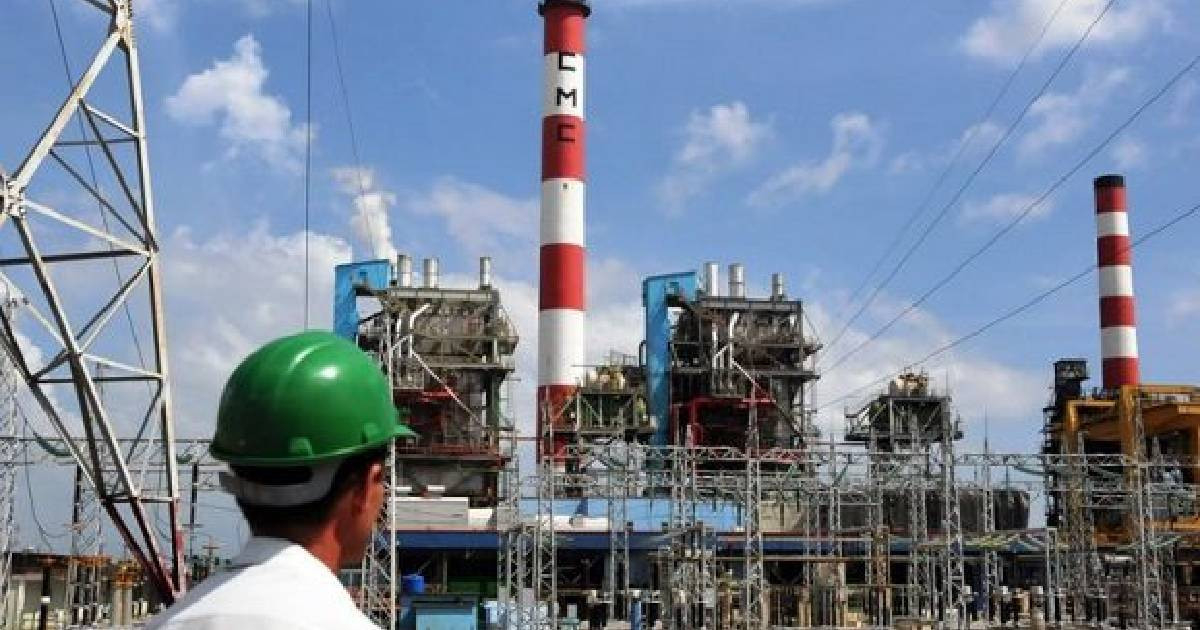
The Cuban Ministry of Energy and Mines announced on Friday another complete blackout of the National Electrical System, marking the eighth such incident this year. They assured that recovery protocols have already been set in motion.
According to the brief official statement, "A total disconnection of the Electrical System has occurred. Recovery protocols are being activated," although the exact time of the outage and its immediate causes were not disclosed.
The power outage report from the same day foreshadowed the severity of the situation: the system had only 1,113 MW of available generation capacity against a projected demand of 3,210 MW, with a maximum predicted shortfall of 2,007 MW.
Before the full-scale blackout, Havana experienced 358 MW affected and 117 circuits disrupted, while Villa Clara saw 142 circuits impacted and a capacity deficit of 204 MW.
This latest breakdown adds to a series of total disconnections that have plagued the nation throughout the year, occurring twice in March, three times in July—on the 6th, 10th, and 14th—and twice in August, on the 2nd and 3rd.
News in progress...
Understanding Cuba's Energy Crisis
Why is Cuba experiencing frequent blackouts?
Cuba's frequent blackouts are largely due to outdated infrastructure, insufficient power generation capacity, and challenges in maintaining the aging equipment, compounded by economic and political factors.
What measures are being taken to restore power in Cuba?
The Cuban government activates recovery protocols after each disconnection, which include reallocating available resources and undertaking necessary repairs to restore power supply.
How do these blackouts affect daily life in Cuba?
These blackouts severely disrupt daily life, affecting everything from residential electricity needs to industrial productivity and essential services, causing widespread inconvenience and economic strain.