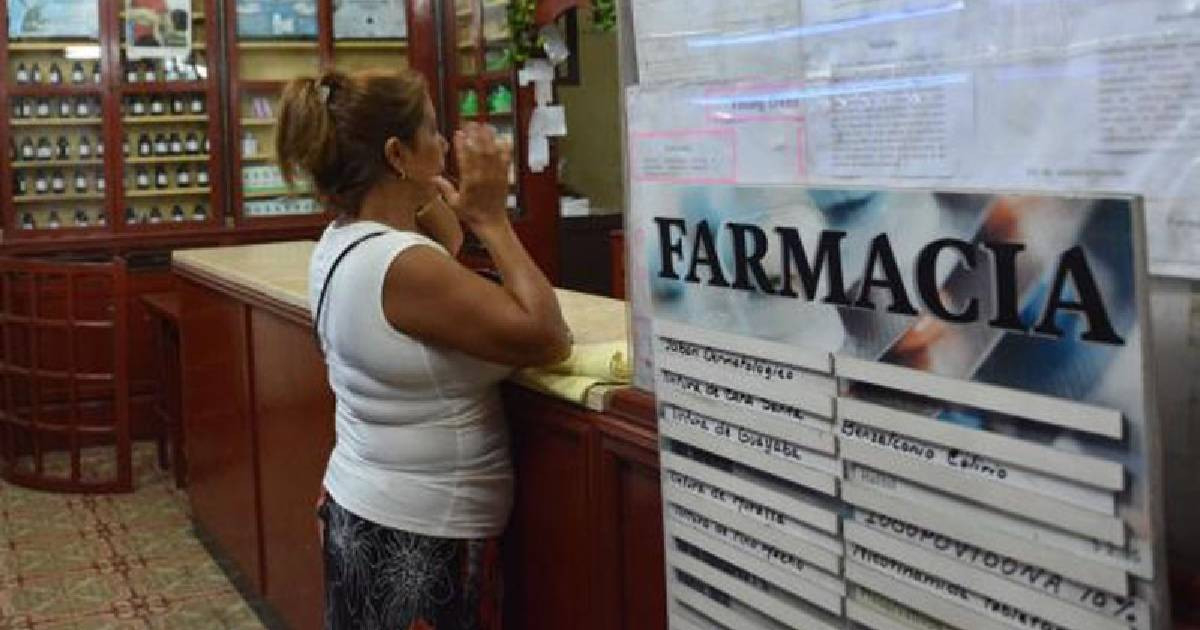
The General Health Directorate (GHD) in Holguín has received approximately 15 inquiries from individuals interested in establishing private pharmacies under the new private management model. However, none of these establishments have commenced operations yet.
Dr. Maritza Almaguer Cruz, head of the Department of Medicines and Medical Technologies at Holguín's GHD, noted that those interested are still in the initial phases. "Many are in the process of identifying locations and other essential activities for their projects," Almaguer was quoted as saying by the official newspaper ¡Ahora! on Wednesday.
The green light for private pharmacies in Cuba was given by Decree 160/2026, effective from August 4 following its publication in the Official Gazette. This regulation allows private small and medium-sized enterprises (SMEs), non-agricultural cooperatives, and mixed entities with foreign capital to provide pharmaceutical services in Cuba, an activity previously reserved for the state.
Current Challenges in Establishing Private Pharmacies
The scenario in this eastern province mirrors the sluggish pace observed nationwide. The most recent data from the Ministry of Public Health (MINSAP) revealed that of 36 evaluated projects across the country, only 14 have been approved to proceed with further processes, and three are in formation. Nevertheless, no private pharmacy has yet opened to the public.
Holguín's GHD also clarified that existing state-run community pharmacies will not be handed over to private entities. "Currently, there are no plans to lease establishments that currently operate as state community pharmacies, which will remain under state management," Almaguer specified.
Requirements and Regulations for New Pharmacies
New establishments must include areas for reception, storage, office space, restrooms, ventilation, lighting, refrigeration, and energy backup. Furthermore, personnel dispensing medications must demonstrate expertise and credentials in pharmaceutical activities.
Regarding supply, the importation of drugs for these pharmacies must be conducted exclusively through Medicub or Farmacuba, the two state importers in the sector. All medications must have a Cuban sanitary registration approved by the Cuban Authority for Medicines, Equipment, and Medical Devices (CEPMED). Private sales of narcotics, psychotropics, and drugs designated for exclusive hospital use are prohibited.
There will be three types of establishments: over-the-counter, prescription-based, and those offering non-prescription drugs but also providing pharmaceutical formulations. Valid prescriptions will be those issued by practitioners from state health institutions.
Impact of Drug Shortages on Pharmacy Openings
Almaguer highlighted that the commercialization of medications requires special treatment due to its impact on patient health, implicitly acknowledging the risks of opening this market amid chronic shortages of drugs and medical supplies.
In August, the government admitted that only 30% of the essential drug list was available in the state network. In Holguín, the scarcity has led to dire situations. In May, a resident reported that an elderly person nearly died because the Lucía Íñiguez Landín Clinical-Surgical Hospital in Holguín did not have paper to perform an electrocardiogram, a supply reportedly systematically stolen from city hospitals and resold on the black market for 3,500 Cuban pesos per meter.
Frequently Asked Questions about Private Pharmacies in Cuba
What is the current status of private pharmacies in Holguín?
Although there are about 15 inquiries, no private pharmacies have opened yet in Holguín. Interested parties are still in preliminary stages.
What are the requirements for opening a private pharmacy in Cuba?
New pharmacies must have designated areas for various functions, adhere to import regulations, and personnel must be credentialed. Only state-approved drugs can be sold.
Are state community pharmacies being leased to private entities?
No, current state community pharmacies will remain under state management and are not planned to be leased to private operators.