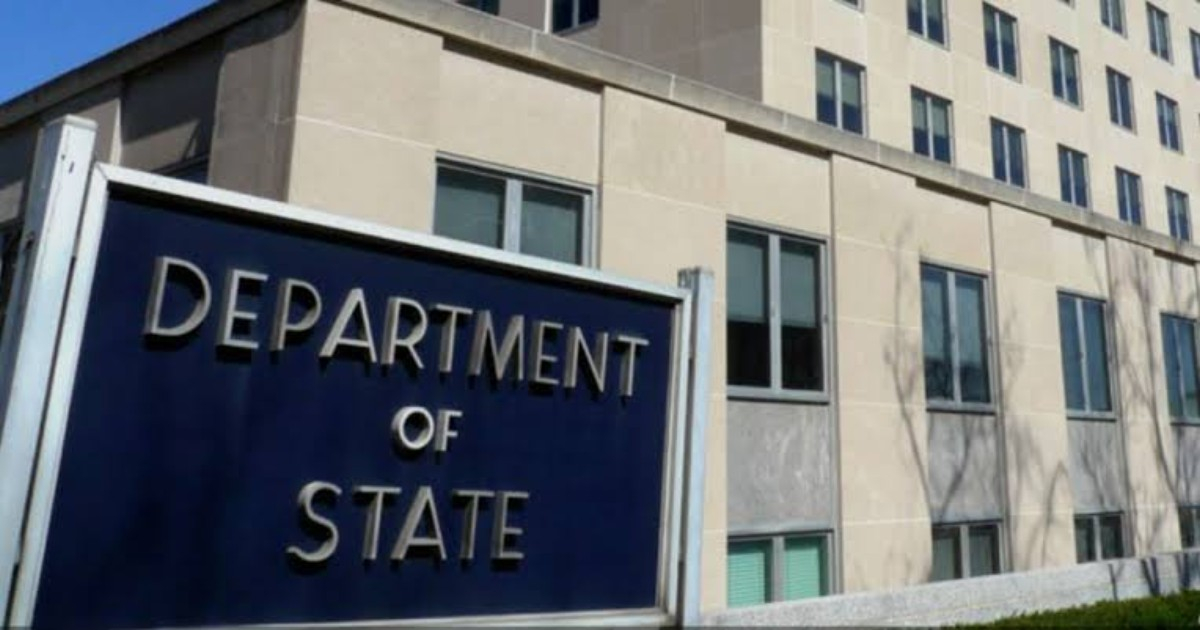
The U.S. State Department issued a stern warning on Friday, signaling the Trump administration's determination to completely dismantle Cuban and other adversarial networks operating within the United States. This action comes in direct response to a federal indictment involving two Cuban nationals accused of orchestrating an assassination plot from Russia.
In an official statement on its X account, the U.S. State Department described the case as evidence of the ongoing threat posed by these subversive networks: "The assassination plot outlined in this indictment is yet another testament to the persistent threat of Cuban subversive networks and other foreign networks acting on behalf of our adversaries on U.S. soil. The Trump administration is committed to crushing these networks for good."
The statement was made two days after the Department of Justice filed formal charges in the Southern District of New York against five individuals linked to Russian intelligence services, including two Cubans accused of participating in a Russian network to fund terrorism and plan murders.
Details of the Accused
The Cubans named are Oemis Romagoza Durruthy, 35, originally from Camagüey and residing in Petrozavodsk, Russia, where he runs a Latin dance academy called "Made in Cuba." Yaidel Delgado Suárez, also 35, known by the alias "Viking," is described in the indictment as a "prolific recruiter" who sought to enlist multiple individuals within the United States.
According to the indictment, Romagoza orchestrated sabotage attacks linked to Russia in Prague in June 2024 and Lithuania in September of the same year. In November 2025, he obtained surveillance footage of a prominent Russian dissident's home in the U.S. to facilitate monitoring.
Delgado Suárez, along with Venezuelan Ángel Eduardo Castro, 22, offered a U.S. resident between $1,000 and $1,500 for pre-operational surveillance work and $40,000 to "eliminate" the dissident identified in the documents as Victim-1.
Broader Implications and Sanctions
Also charged are former Russian intelligence colonel Yuri Khrameev, 63, alias "Colonel Yuri," and his son Kirill Khrameev, 27, an FSB officer. Khrameev Sr. separately offered $25,000 to assassinate a dissident in Lithuania, whom he described as spreading "filth about my country." All suspects remain at large.
Deputy Attorney General for National Security, John A. Eisenberg, noted that the defendants "allegedly operated as part of a global assassination network reaching into the United States, seeking to recruit U.S. and foreign citizens to carry out crimes at the Kremlin's behest."
Those charged face up to 20 years in prison for conspiracy to finance terrorism; Khrameev Sr., Delgado Suárez, and Castro face an additional ten years for conspiracy to commit murder-for-hire.
The State Department's announcement was accompanied by a thread sharing their report on six decades of Cuban espionage, titled "Cuba: The Capital of 21st Century Communism," originally published in July 2026. The report documents nearly seven decades of Cuban subversion against the U.S. and warns that the island hosts 18 signal intelligence facilities, three operated by China and two by Russia.
This development follows a day after Secretary of State Marco Rubio announced new sanctions against the Cuban regime, part of an ongoing campaign that has imposed over 240 restrictive measures against Havana since Trump declared a national emergency in January 2026, designating Cuba as an unusual threat to national security.
Understanding the Threat of Cuban Network Involvement
What actions has the U.S. State Department taken against Cuban networks?
The U.S. State Department has vowed to dismantle Cuban networks operating within the United States, particularly those linked to adversarial activities orchestrated from abroad, as part of the Trump administration's efforts to address threats to national security.
Who are the key figures involved in the recent indictment?
The indictment involves Oemis Romagoza Durruthy, Yaidel Delgado Suárez, and three others linked to Russian intelligence, accused of participating in a network to fund terrorism and plan assassinations.
What are the implications of these charges?
Those charged face significant prison time, with penalties of up to 20 years for conspiracy to finance terrorism, and additional sentences for involvement in murder-for-hire plots.