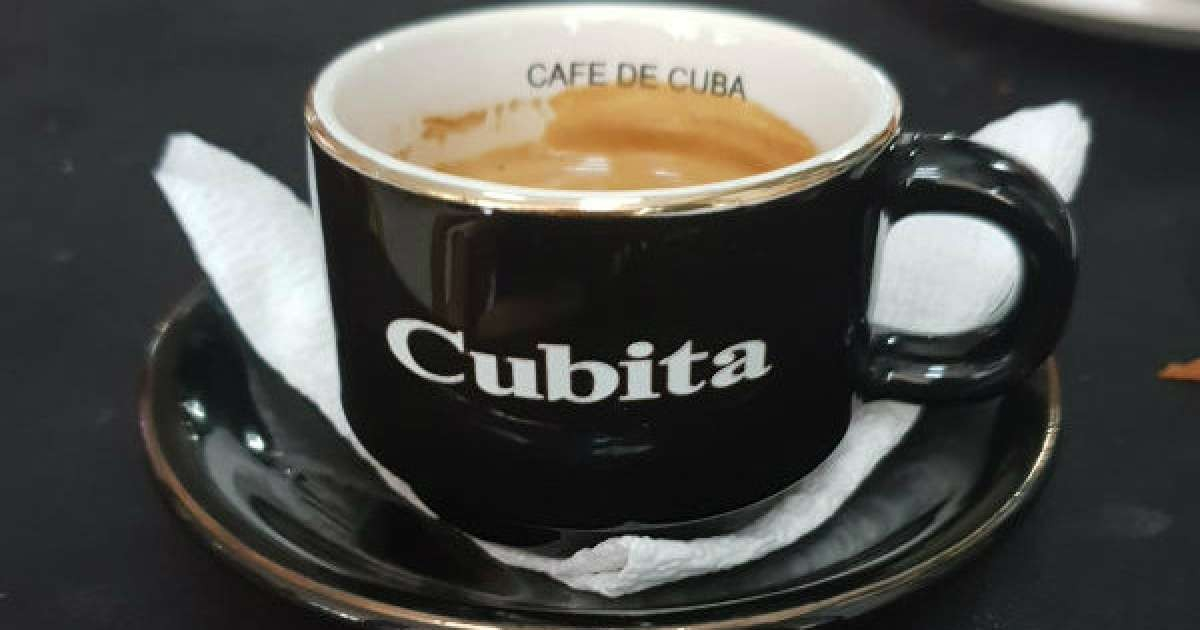
This week, the provincial television station CNC TV Granma shared on Facebook the launch of a new Cuban coffee brand called Oloroma. This coffee, crafted by hand using the Robusta variety, is produced by the Agroforestry Research Station in Guisa, a municipality that shares its name.
The announcement indicated that this product is now available in the eastern region of Cuba, sold in 125 and 250-gram packages for 300 and 600 Cuban pesos, respectively.
According to officials from the entity, the brand stems from the research project "More Coffee II," which is funded by the Italian Agency for Development Cooperation. This initiative aims to support sustainable forestry systems in the mountainous areas of eastern Cuba.
The telecenter pointed out that Robusta coffee comes from a more resilient shrub than Arabica, allowing it to grow in a wider array of soil types. With a caffeine content ranging from 2 to 3 percent, its beans are smaller, and its flavor is notably stronger and more bitter, with a rough texture. It is commonly used in blends.
Public Reaction: A Mix of Hope and Doubt
Despite the official announcement, the news was met with significant skepticism on social media. Comments under the post reflect years of accumulated distrust due to the scarcity and adulteration of rationed coffee.
One user commented, "We'll see what percentage of coffee is in that roasted pea," while another added, "It must be peas with a little bit of coffee, like always."
A resident from Granma questioned the product's availability, "Where is it? I'm from the province and haven't seen it." Meanwhile, a user from Niquero was more blunt: "You (Granma folks) have hope because here in Niquero, we won't see it."
With a touch of irony, another internet user recalled the historical connection between Cuba and Robusta cultivation: "It's the coffee that grows at practically any altitude, the one Vietnam learned to cultivate from us." In fact, Cuban technicians helped establish coffee cultivation in Vietnam during the 1980s, and that country eventually became the world's largest Robusta producer.
The Coffee Crisis: A Long-Standing Struggle
The skepticism from the public is rooted in a coffee crisis that the Cuban regime has failed to resolve. In the first half of 2025, Cuba produced just 2,887 tons of coffee, meeting only 23.7% of the planned target, compared to a national demand estimated at 24,000 tons annually. This sharp decline starkly contrasts with the peak production of over 60,000 tons achieved in 1961, highlighting six decades of industry collapse.
The situation reached a critical point in August of this year when the Manuel Ascunce Roasting Plant in Villa Clara resorted to processing corn, sorghum, and rice due to a lack of coffee. Its director, José Raúl Arias Díaz, explained candidly: "We roast, grind, and package; that's the basic systemic process, and we can do it with corn, sorghum, and almost any seed."
In Santiago de Cuba, a key province for coffee production, only 65% of the plan was fulfilled by the end of February 2025. On the informal market, coffee fetched prices as high as 200 pesos per pound.
The coffee distributed in ration stores has historically been a blend of 50% coffee and 50% roasted peas, in 115-gram packages, which explains the Cuban people's skepticism about any new official announcements.
Understanding Cuba's Coffee Industry Challenges
What is the new Cuban coffee brand introduced in Granma?
The new Cuban coffee brand introduced in Granma is called Oloroma. It is an artisanal product made from the Robusta variety by the Agroforestry Research Station in Guisa.
Why is there skepticism about the new coffee brand?
There is skepticism about the new coffee brand due to years of coffee scarcity and adulteration in Cuba. The public's trust has been eroded by poor-quality products and unmet promises.
How does Robusta coffee differ from Arabica?
Robusta coffee comes from a more resilient shrub than Arabica, allowing it to grow in a wider variety of soils. It has a higher caffeine content, smaller beans, and a stronger, more bitter flavor with a rough texture.