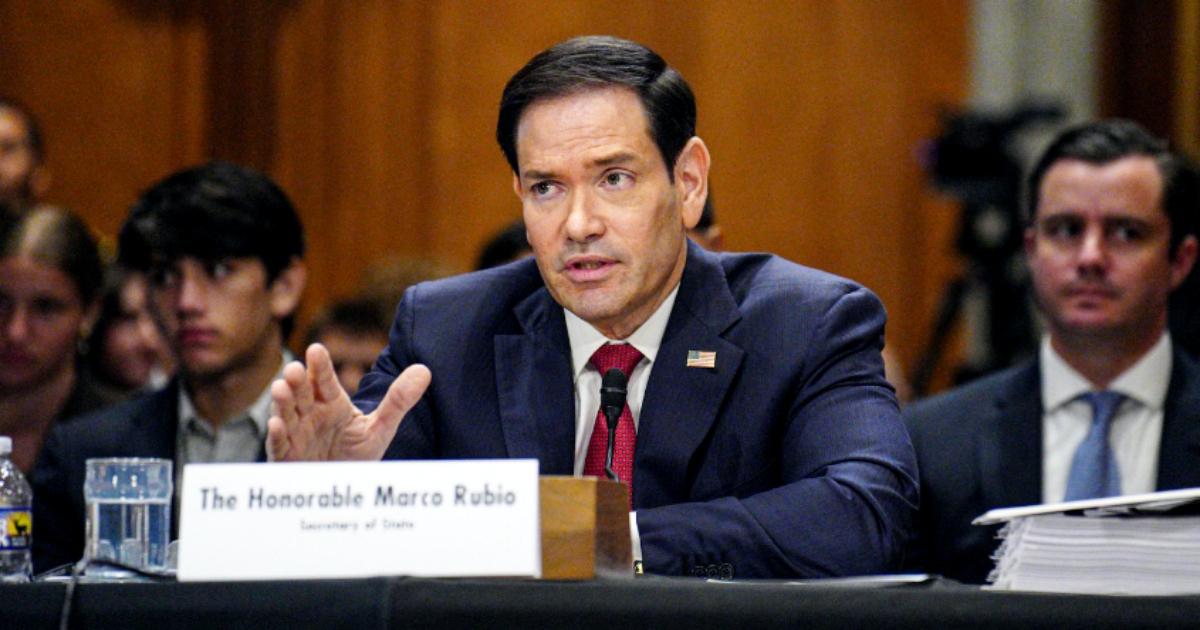
The United States State Department announced on Thursday the imposition of sanctions on eight entities and three individuals associated with the Cuban regime. This latest move by the Trump administration aims to cut off financial resources to the dictatorial government and impede the modernization of its military forces.
The newly announced sanctions, detailed in the official State Department fact sheet, are focused on two main areas: four military research and development centers of the Revolutionary Armed Forces (FAR) and their top directors, alongside four state-owned companies that underpin the nickel industry, a crucial source of income for the regime.
Military Entities Under Scrutiny
Sanctioned within the military realm are SIMPRO (responsible for simulators and training for the FAR), CIDNAV (conducting research for the Revolutionary Navy), CIDAI (focused on infantry weapons development and evaluation), and GELCOM (involved in military electronics and communications production).
The State Department emphasized, "Cuban military enterprises are critical to the defense apparatus of the regime, sustaining the operational capabilities of the armed forces across various industrial and technical roles."
Three high-ranking officials have also been individually designated: Colonel Joaquín Francisco Cancio Monteagudo, General Director of SIMPRO; Captain Dioglis Pedrera Argüello, General Director of CIDNAV; and Colonel Julio Hurtado Betancourt, General Director of CIDAI.
Impact on the Nickel Sector
In the mining sector, sanctions target SERCONI (providing technological services to the nickel industry), CEPRONIQUEL (focused on nickel engineering and projects), CEDINIQ (conducting industrial research and innovation for nickel), and PINARES S.A. (engaged in geological prospecting of mineral deposits).
Washington made clear its intentions: "The nickel sector is a vital revenue stream for the Cuban government, generating foreign currency through the exploitation of natural resources, which supports the regime instead of benefiting the Cuban people."
All these designations were made under Executive Order 14404, signed by Trump on May 1, 2026, which authorizes the blocking of assets of individuals and entities operating in Cuba's energy, defense, metals and mining, financial services, and economic security sectors.
As a result, any property and interests of the designated parties in the United States, or controlled by U.S. persons, are blocked and must be reported to the Office of Foreign Assets Control (OFAC) of the Department of the Treasury.
The notice also extends to third parties: the State Department warned that "foreign persons engaging in transactions with those designated under EO 14404 risk sanctions" and urged international financial institutions to "exercise caution in any dealings" with entities sanctioned under this authority.
Continued Pressure on the Cuban Regime
This is the latest in an ongoing campaign. In May, the U.S. sanctioned GAESA and Moa Nickel S.A. as the first major action under the new executive order. In June, MINFAR was added to the list of specially designated nationals.
In August, nine state-owned nickel and steel companies were designated, and in early September, sanctions targeted NICAROTEC, CEXNI, and other entities associated with Raúl Castro.
The State Department reiterated that "the ultimate goal of the sanctions is not punishment, but to provoke a positive change in behavior" within the Cuban regime.
Understanding the U.S. Sanctions on Cuba
What are the goals of the recent U.S. sanctions against Cuba?
The main objective of the sanctions is to cut off financial resources to the Cuban regime, hinder its military modernization, and ultimately encourage a positive behavioral change within the government.
Which sectors are primarily affected by these sanctions?
The sanctions primarily target the Cuban military's research and development units and the nickel industry, both of which are significant sources of revenue and support for the regime.
How might these sanctions impact foreign entities?
Foreign entities engaging in transactions with the designated Cuban entities or individuals risk facing sanctions themselves, urging international financial institutions to be cautious in their dealings.