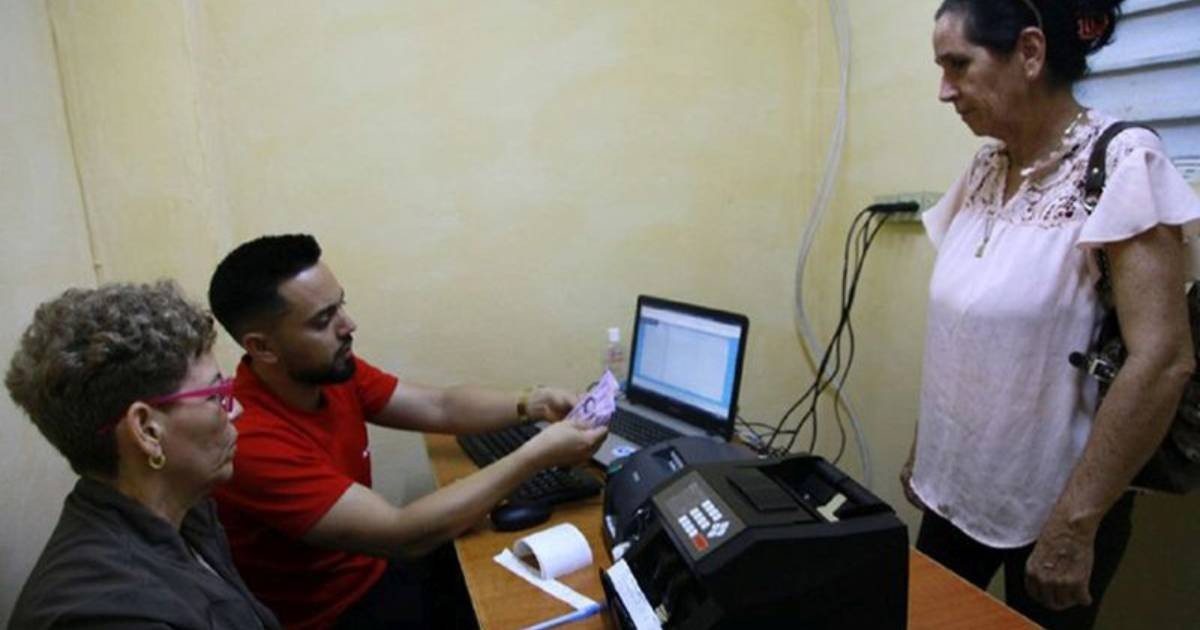
The José Martí Pérez Provincial Pediatric Hospital in Sancti Spíritus has introduced a currency exchange office within its premises. This initiative aims to provide doctors and other hospital staff with the opportunity to withdraw part or all of their salaries in cash, addressing the challenges they face in accessing funds through banks and ATMs.
Reported by the state-run newspaper Escambray, this development highlights a critical consequence of Cuba's cash crisis and the issues with the country's banking system: workers receive their salaries through bank deposits but struggle to access these funds when needed.
The problem is especially severe for hospital employees who spend long hours in operating rooms and intensive care units and cannot leave the facility during their shifts.
"From the moment we arrive in the morning, we can't leave the institution, and by the time we can, it's already three or four in the afternoon, and the banks are closed. It used to be a real headache," admitted Darisbel Rodríguez-Gallo, an operations room worker.
Leticia Benítez from the Mental Health department also described the common frustration: "We've had many days where we wait at the ATMs and can't get our money."
Hospital director Ramón Aquino explained that the initiative originated from the needs of employees in critical areas like Intensive Care and the surgical unit, given the nature of their work schedules.
"So far, we've managed to ensure that staff receive their entire salaries without needing to leave the building," Aquino stated. This service is exclusively for the Pediatric Hospital employees.
The establishment of an exchange office within a hospital, aimed at ensuring workers' access to their wages, starkly contrasts with the Cuban government's push for digital banking. Since 2023, the government has attempted to minimize cash usage and promote electronic payments.
As of July 2026, only 3.77% of transactions in Cuba were digital, and in Sancti Spíritus, less than 10% of private businesses regularly accepted digital payments. The reliance on cash as the primary means of payment forces many Cubans to depend on ATMs and bank branches for daily expenses.
The Pediatric Hospital's newly installed point is the second of its kind in a healthcare facility in Sancti Spíritus. Another has been operating at the Camilo Cienfuegos General Hospital since late 2023.
Even Cadeca's own offices are not immune to the island's service challenges. Héctor Peña, director of the entity in Sancti Spíritus, conceded that the branch located on the city boulevard lacks solar photovoltaic backup, hindering operations during power outages.
Despite these restrictions, Cadeca plans to replicate this model in other sectors. Peña confirmed that the Education sector is next, with preparations underway to establish a similar service in the provincial capital.
Understanding Cuba's Cash Crisis and Banking Challenges
Why did the hospital in Sancti Spíritus open a currency exchange office?
The office was opened to allow hospital staff to withdraw their salaries in cash, addressing difficulties they face in accessing funds through traditional banking channels.
What challenges do Cuban workers face with the banking system?
Cuban workers encounter obstacles in accessing their bank-deposited salaries due to limited cash availability and restricted banking hours, exacerbated by the government's push for digital transactions.
How prevalent are digital transactions in Cuba?
As of July 2026, digital transactions comprised only 3.77% of all transactions in Cuba, with limited acceptance by private businesses.