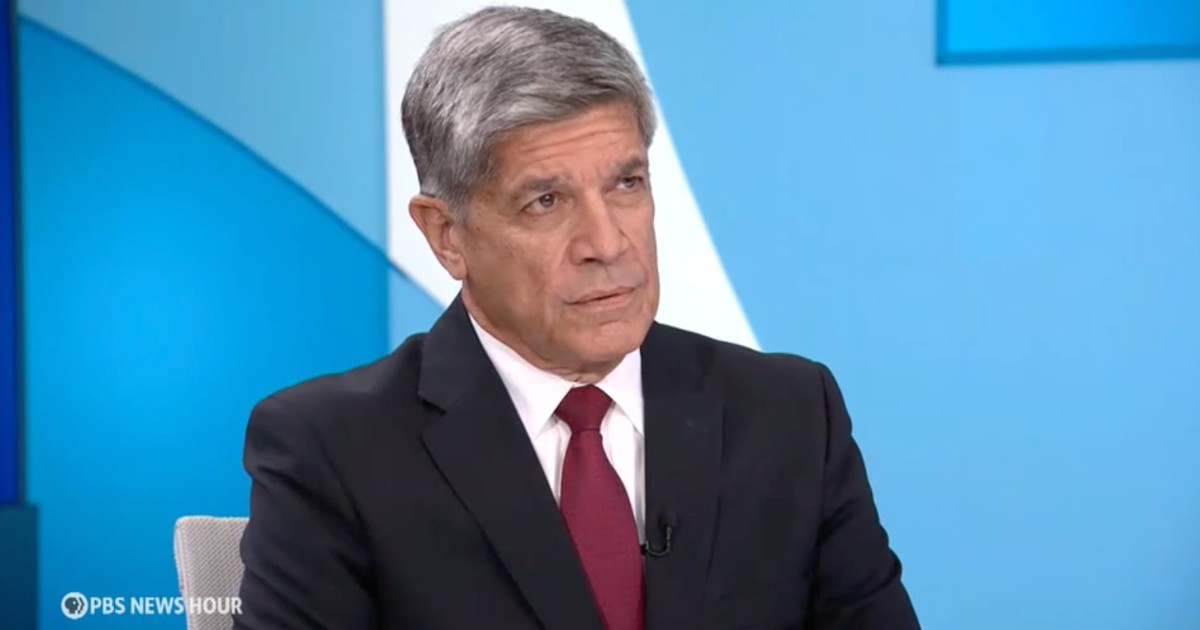
In a recent interview with PBS NewsHour, Cuba's Deputy Minister of Foreign Affairs, Carlos Fernández de Cossío, stated that he and other government officials are enduring only 2.5 to three hours of electricity daily. This shortage prevents them from refrigerating food, and they sometimes experience a lack of potable water.
The conversation, led by American public television journalist Amna Nawaz, occurred during De Cossío's visit to Washington for the United Nations General Assembly.
Nawaz challenged De Cossío with allegations made by U.S. ambassador to the UN, Mike Waltz, who claimed in July that the Castro family owns a private jet and 17 residences. Waltz also accused President Miguel Díaz-Canel of using luxury items, such as a Hermès tie, a Rolex watch, and a Montblanc pen, and that the military conglomerate GAESA controls an $18 billion trust fund that doesn't benefit the public.
The deputy minister dismissed the assertions regarding the private jet and the 17 properties as "completely" false, denying any privileges that would separate officials from the harsh realities faced by citizens.
This isn't the first instance De Cossío has made this argument. In October 2025, he had already mentioned in an interview regarding power outages that his household experiences cuts "every four hours," and he and his family feel the "urge to protest."
U.S. Policy and Energy Crisis
De Cossío attributed the energy crisis to Washington's pressure policy, describing it as "collective punishment" and an "international crime."
"The U.S. policy aims to inflict collective punishment to trigger a humanitarian crisis in Cuba," he declared, adding that the suffering of Cubans "is not collateral damage; it's the policy's objective."
He illustrated the human toll of power outages with specific examples: families with sick members unable to reach hospitals, surgeries delayed due to lack of power, and newborns dependent on machines that shut down.
As of Thursday, Cuba faced an electrical deficit of about 2,120 MW against a predicted demand of roughly 3,200 MW, with only 1,020 MW available. Throughout 2026, Havana has experienced blackouts lasting up to 20 and 26 hours daily, with interior provinces facing outages up to 40 hours.
Bilateral Relations and Sanctions
Regarding bilateral relations, De Cossío noted that while Cuba maintains communication channels with the U.S., progress is stunted as Washington announces new sanctions "almost every week or every 10 to 15 days."
He rejected President Trump's threats of "taking over" Cuba as unacceptable for a sovereign nation but acknowledged that ignoring them would be naïve: "U.S. officials are constantly asked if that option is on the table, and they reply that nothing is off the table."
Impact of U.S. Policies on Cuba's Energy Crisis
What did Carlos Fernández de Cossío claim about electricity access for Cuban officials?
Carlos Fernández de Cossío claimed that Cuban officials, including himself, receive only 2.5 to three hours of electricity daily, affecting their ability to refrigerate food and access potable water.
How did De Cossío respond to allegations about the Castro family's wealth?
De Cossío dismissed the allegations about the Castro family owning a private jet and multiple residences, calling them "completely" false and denying any privileges for officials that separate them from the general populace.
What reasons did De Cossío give for Cuba's energy crisis?
He attributed the energy crisis to U.S. policies, labeling them as "collective punishment" and an "international crime," aimed at creating a humanitarian crisis in Cuba.