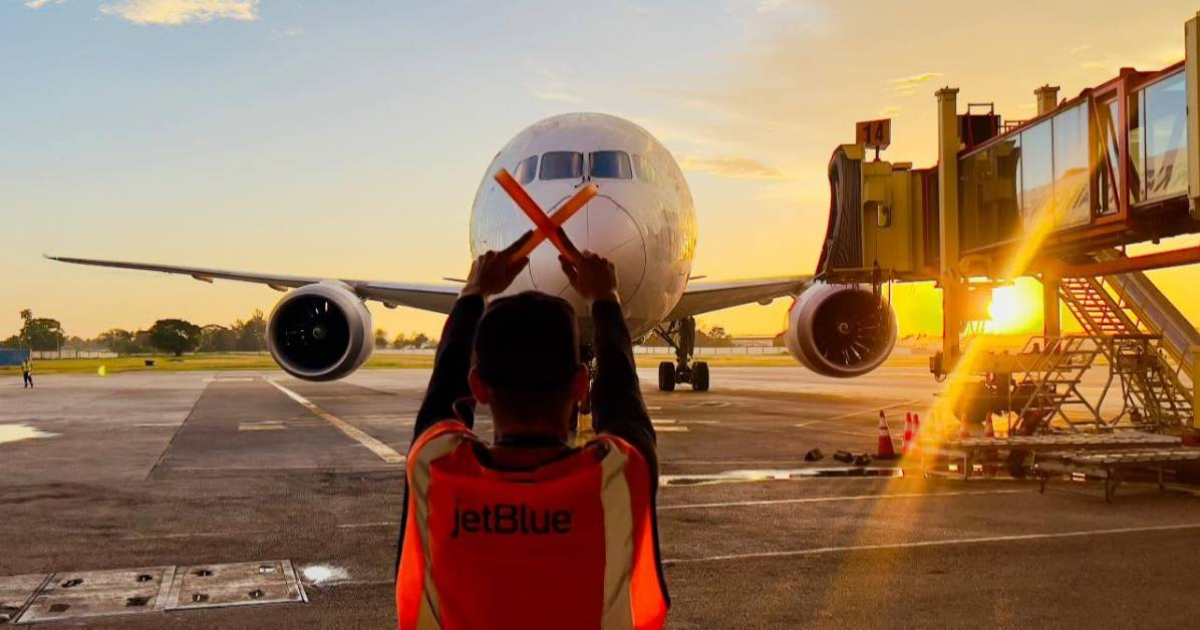
The Cuban Air Navigation Company (ECNA) continues to issue official aeronautical notices, stating that Jet A-1 fuel remains unavailable at 10 of the island's international airports.
This was confirmed by the NOTAM notice published through Cuba's official aviation system. The restriction, initially implemented on August 31, is scheduled to last until 04:00 UTC on October 1, 2026.
The affected airports include Havana's José Martí, Juan Gualberto Gómez in Varadero, Jaime González in Cienfuegos, Abel Santamaría in Santa Clara, Ignacio Agramonte in Camagüey, Jardines del Rey in Cayo Coco, Frank País in Holguín, Antonio Maceo in Santiago de Cuba, Sierra Maestra in Manzanillo, and Vilo Acuña in Cayo Largo.
The current NOTAMs (series A3054 to A3063/26) replace prior notifications, highlighting that the aviation kerosene shortage was already reported before August 31, and the restriction has been continuously extended.
Operational Challenges and Airline Adjustments
Despite the fuel shortage, the airports remain operational, and flights are not entirely canceled. However, airlines must either carry additional fuel from their departure airports, make technical refueling stops in other countries, or potentially cancel flights altogether.
In addition to the fuel crisis, José Martí Airport is set to close temporarily from 23:00 on September 21 to 06:40 on September 22 for personnel and equipment maintenance, according to the NOTAM A3277/26.
Background and Widespread Impact
Back in February 2026, ECNA issued an initial alert regarding Jet A-1 fuel unavailability at nine Cuban airports for a month. This restriction was extended through April and now reaches into October, with Cayo Largo added to the original list.
The commercial aviation sector has been severely affected. More than eleven airlines have either suspended or reduced their operations to Cuba, resulting in over 1,700 flight cancellations by April 2026. Notable airlines such as Air Canada, Iberia, Turkish Airlines, Rossiya, Nordwind, WestJet, and Air France have either halted or modified their routes.
Iberia announced in August that it would not resume its Madrid-Havana route until June 2027, following its suspension in June. Meanwhile, Russia has made the full normalization of kerosene supplies a condition for restarting its flights, without specifying a timeline.
The Structural Roots of the Crisis
This crisis is deeply rooted in structural issues: the cessation of Venezuelan oil supply following Nicolás Maduro's capture in January 2026, increased U.S. sanctions—including a Trump-era presidential order imposing tariffs on countries supplying crude to Cuba—and the regime's inability to secure stable imports of petroleum derivatives.
The repercussions are significant, directly impacting tourism—the country's main source of foreign currency—and connectivity with key markets such as Canada, Spain, Russia, and Latin America.
Understanding Cuba's Aviation Fuel Crisis
Which airports in Cuba are affected by the fuel shortage?
The fuel shortage affects José Martí in Havana, Juan Gualberto Gómez in Varadero, Jaime González in Cienfuegos, Abel Santamaría in Santa Clara, Ignacio Agramonte in Camagüey, Jardines del Rey in Cayo Coco, Frank País in Holguín, Antonio Maceo in Santiago de Cuba, Sierra Maestra in Manzanillo, and Vilo Acuña in Cayo Largo.
How are airlines managing the fuel crisis in Cuba?
Airlines are either carrying additional fuel from their origin airports, making stops in other countries for refueling, or canceling flights if necessary.
What are the main causes of the aviation fuel crisis in Cuba?
The crisis is largely due to the halt of Venezuelan oil supplies, tightened U.S. sanctions, and the Cuban regime's inability to secure reliable petroleum imports.