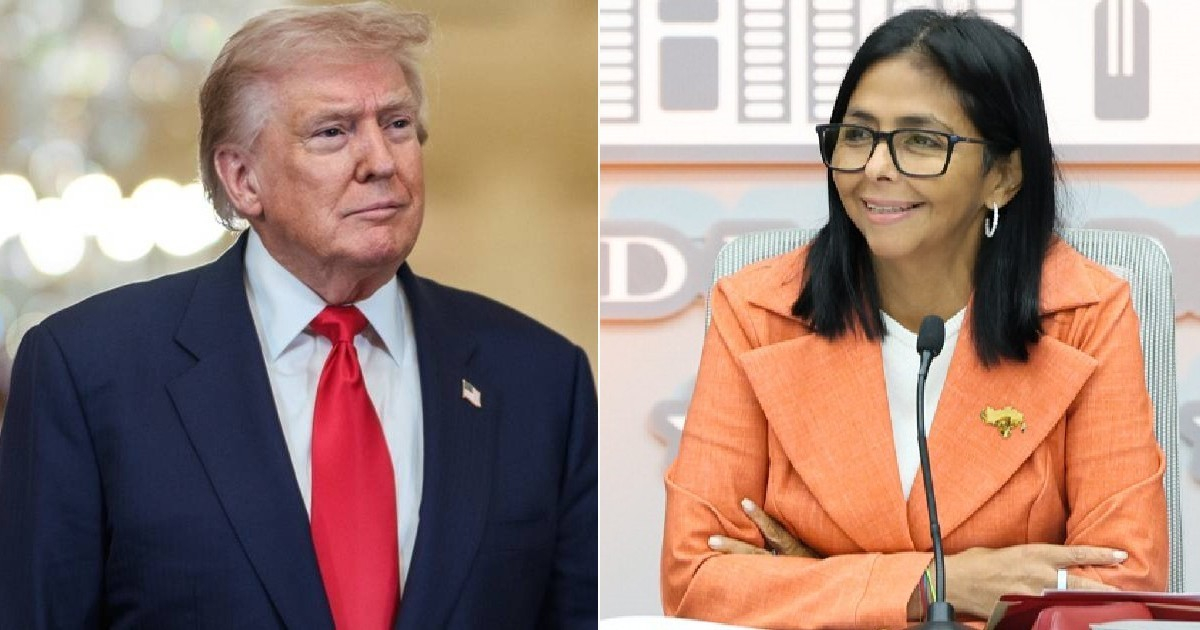
In a significant shift in U.S.-Venezuela relations following Nicolás Maduro's capture, President Donald Trump has removed Venezuela from the list of nations that have "demonstrably failed" to meet international anti-narcotics commitments.
This decision was formalized in the Presidential Determination on Major Drug Transit or Major Illicit Drug Producing Countries for the fiscal year 2027, which was submitted to Congress on Tuesday and made public by the State Department on Wednesday.
Historical Context and Recent Developments
Venezuela had been classified as non-compliant since 2005, following Hugo Chávez's expulsion of the DEA. This status persisted throughout Maduro's administration. Trump's decision is attributed to the cooperation exhibited by the interim government led by Acting President Delcy Rodríguez, particularly since U.S. forces captured Maduro on January 3 of this year.
"In Venezuela, due to my Administration's successful detention and removal of the illegitimate ex-dictator and drug trafficker Nicolás Maduro, we are witnessing increased cooperation with the country's interim government to combat cartels, including the elimination of Niño Guerrero, leader of the Tren de Aragua," Trump remarked in the document.
Key Operations and Ongoing Expectations
Trump referenced the operation that eliminated Héctor Rusthenford Guerrero Flores, also known as "Niño Guerrero," which was announced in June and described by Defense Secretary Pete Hegseth as conducted "in full collaboration" with Venezuelan security forces.
Given the positive progress under Acting President Rodríguez's leadership, Trump determined that Venezuela should no longer be classified as having demonstrably failed in its drug control commitments. However, he emphasized the necessity of "continued and measurable progress" in dismantling narco-terrorist groups.
Remaining Challenges and Regional Implications
Venezuela is still part of a broader list of 23 countries identified as major drug transit or production nations, alongside Mexico, China, Colombia, Nicaragua, and others. Colombia remains decertified, though Trump indicated a potential reassessment if progress is made in coca eradication and dismantling narcoterrorist networks, addressing the government led by the newly inaugurated Colombian President Abelardo de la Espriella.
Colombia was decertified in September 2025 amid tensions with then-President Gustavo Petro, whom Trump accused of narcotics ties. Afghanistan, Bolivia, and Burma also remain decertified, yet Trump stated that U.S. assistance to Bolivia, Burma, and Colombia "is currently vital to U.S. national interests."
This decision is part of the Trump administration's hemispheric strategy, which launched the Americas Counter Cartel Coalition in March, a security alliance with over a dozen Western Hemisphere countries aimed at reducing drug flow into the U.S.
According to EFE, Trump highlighted in the document that "drastic political changes in South America over the past year have created historic opportunities for U.S. cooperation with regional governments."
Understanding U.S. Anti-Drug Policies in the Americas
Why was Venezuela removed from the list of anti-drug agreement violators?
Venezuela was removed from the list due to increased cooperation with the U.S. following the capture of Nicolás Maduro, leading to significant progress in combating drug cartels.
What is the Americas Counter Cartel Coalition?
The Americas Counter Cartel Coalition is a security alliance initiated by the Trump administration, involving over a dozen countries in the Western Hemisphere, focused on reducing the flow of drugs to the U.S.
What are the implications for Colombia regarding its anti-drug status?
Colombia remains decertified, but Trump has signaled a possibility of reconsideration if there are tangible improvements in coca eradication and dismantling of narcoterrorist networks.