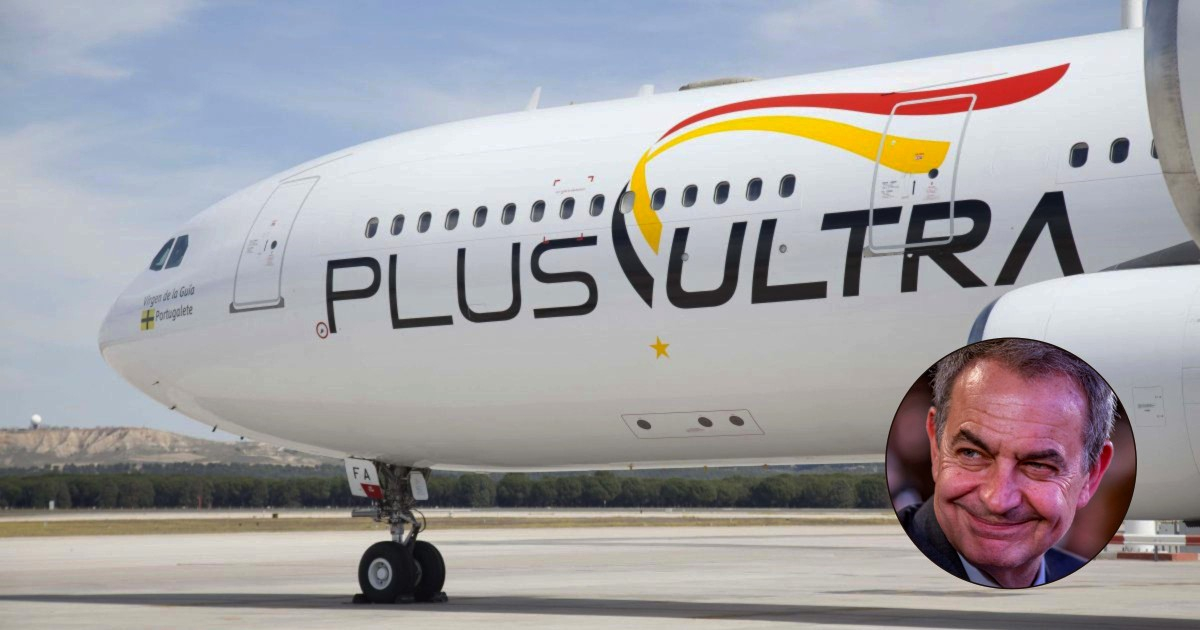
Alex Saab, a Colombian-Venezuelan businessman identified as a key financial operator for the Chavista regime, has pleaded guilty in a U.S. court to conspiracy to launder monetary instruments. This plea agreement with federal prosecutors opens a new channel in the Spanish investigation into the airline Plus Ultra and former President José Luis Rodríguez Zapatero.
The plea, submitted to Judge Kathleen Williams in the Southern District of Florida's Federal Court, involves the forfeiture of $195 million and Saab's full cooperation with prosecutors in ongoing investigations in both the United States and other countries, according to reports from ABC.
The confession outlines a scheme that began in 2015, involving bribery payments to secure contracts under Venezuela's CLAP food distribution program.
Financial Schemes and Corruption
Saab and his partner Álvaro Pulido are described by prosecutors as the "principal organizers and leaders" of a network that utilized shell companies, fake invoices, and frontmen. This network thrived under the "approval, involvement, and protection" of high-ranking Venezuelan government officials.
Among the most significant revelations, Saab admits to arranging approximately $17 million in bribes and illegal commissions for José Gregorio Vielma Mora in exchange for his influence over contract awards. He also met with a senior official, known only as "Official 1," to secure "support and protection" through payments both within and outside Venezuela.
International Money Laundering Network
The money laundering extended across at least nine countries, including Antigua, Bulgaria, Liechtenstein, Marshall Islands, Montenegro, Switzerland, Turkey, the United Kingdom, and the United Arab Emirates. From 2019, the scale expanded further when the network began receiving oil, gold, and other Venezuelan natural resources as compensation, arranging ships to transport and sell millions of barrels of PDVSA crude oil.
Implications for Spain and Plus Ultra
The connection to Spain is direct. In March 2026, the U.S. Treasury Department identified a transfer of over $519,000 from Plus Ultra to a Swiss bank account at MBaer, linked to PDVSA corruption.
According to the Financial Crimes Enforcement Network (FinCEN), this account paid an intermediary who distributed Venezuelan oil corruption funds among various beneficiaries, including Saab himself.
With Saab's admission to using these exact mechanisms—international accounts, shell companies, PDVSA crude operations—and his commitment to disclose all his knowledge, a new investigative link is established that previously lacked formal recognition.
While this doesn't prove Plus Ultra's involvement in the scheme, it allows for cross-referencing his account with financial transactions already identified in the Spanish case.
Legal Challenges and Zapatero's Involvement
Zapatero was charged in May 2026 by Judge José Luis Calama of Spain's National Court as the alleged leader of a "stable and hierarchical structure" aimed at securing benefits through influence in favor of the airline.
Two former Plus Ultra executives testified that they believed a commission equivalent to 1% of the public bailout—around 530,000 euros—was intended for the so-called "Zapatero group." The former president denied influencing the bailout before the judge.
The agreement requires Saab to submit, within 14 days, a declaration of all assets he controls or has controlled, including those in the names of his partner, proxies, or third parties, and to testify before grand juries or in other proceedings as needed.
However, for Spain to benefit from this information is not automatic. Madrid must request it through judicial cooperation channels, and Washington will decide what documents or testimonies to share, especially if they are part of still-open investigations.
The case of Venezuelan businessman Alejandro Betancourt, under investigation in Spain for alleged laundering of PDVSA funds, exemplifies this limitation: Spain's National Court has been waiting months for the U.S. to respond to a request to interview five key witnesses, with no response so far.
The prosecution also warns that the account signed by Saab "does not yet contain all the facts of the case" and that they have collaborating witnesses, emails, business documents, and bank records to substantiate the scheme.
Key Questions About the Investigation
What role did Alex Saab play in the Venezuelan corruption scheme?
Alex Saab was identified as a principal financial operator, orchestrating a network of front companies and fake invoices to launder money and secure contracts through bribery, with high-level Venezuelan government involvement.
How does the investigation affect Plus Ultra and Zapatero?
Saab's confession provides a new link to the Plus Ultra and Zapatero case by revealing financial mechanisms and transactions that can be cross-referenced with the existing Spanish investigation, though it does not prove Plus Ultra's involvement in the scheme.