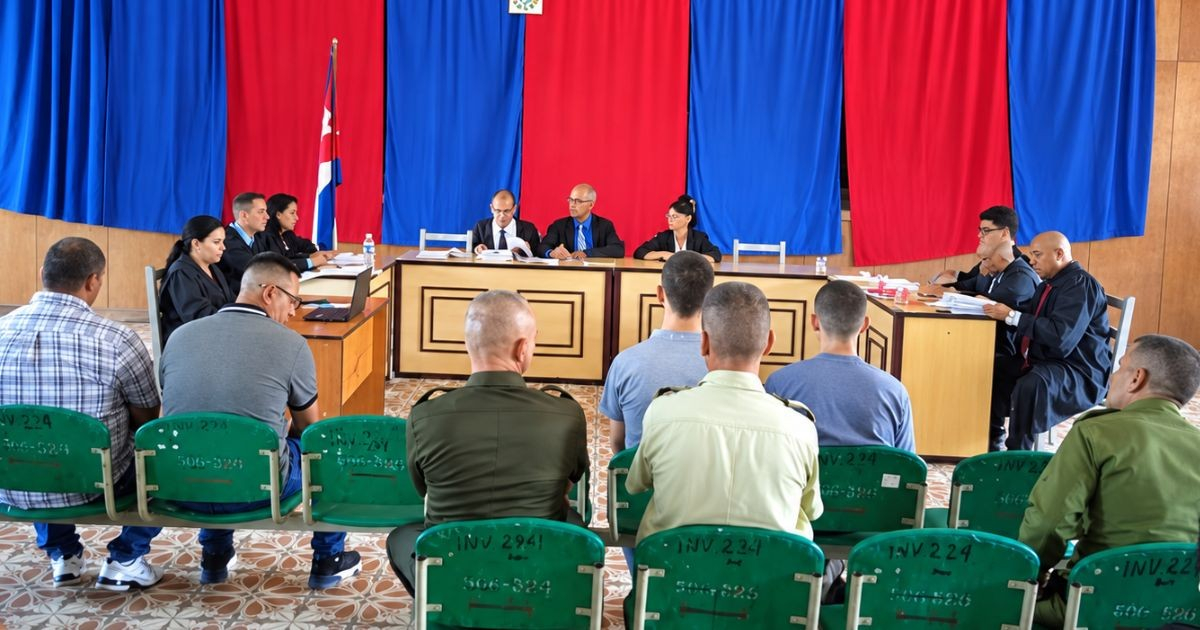
A 19-year-old has been sentenced to eight years in prison for ongoing sabotage after he and his uncle were involved in stealing dielectric oil, an act that left over 4,000 residents without power for more than a day in Urbano Noris, Holguín.
The Provincial Prosecutor's Office of Holguín announced on Wednesday that the trial took place on September 15 and was deemed "exemplary" in nature.
The prosecution attributed the disruption of electricity services and financial losses to the Electric Company to the actions of the two accused individuals.
The young man's uncle, identified as the second perpetrator, received a 10-year prison sentence, also for continuous sabotage.
Two additional individuals faced charges related to the crime of receiving stolen goods. According to the Prosecutor's Office, one received a 10-month sentence, while the other was sentenced to one year and six months of correctional labor with confinement.
The authorities did not release the names of any of those charged.
Legal Framework for Sabotage Charges
The classification of these incidents as sabotage follows a judicial policy established in May 2025. According to Decree 475 from the Governing Council of the Supreme People's Court, theft or damage to components of the National Electroenergetic System and other critical infrastructures can be prosecuted as sabotage under Article 125 of the Penal Code.
The decree also mandates expedited processing of such cases and the possibility of "exemplary" trials for attacks or thefts against critical infrastructure when deemed appropriate by judicial authorities.
Ongoing Challenges in Combating Infrastructure Theft
Despite harsher official responses and exemplary sentences, thefts related to the electrical infrastructure continue to occur frequently across various provinces in Cuba.
The scale of this issue was highlighted in early September, when authorities acknowledged over 460 criminal investigations for offenses against the National Electric System between 2025 and the first half of 2026.
For example, in May, an employee of the Electric Company in Isla de la Juventud was sentenced to eight years for stealing 60 liters of dielectric oil from a generating plant.
Later that month, another "exemplary" trial took place in Artemisa for the theft of 70 liters of oil from a transformer, where the prosecution sought a 12-year prison term.
In Ciego de Ávila, sentences ranging from seven to 12 years were imposed for sabotage linked to dielectric oil and cable thefts.
Recently, in Contramaestre, Santiago de Cuba, a man received a 12-year sentence following the theft of 120 liters of dielectric oil from an electrical installation, which left over 2,000 people without service for 48 hours.
Understanding Cuba's Legal Response to Infrastructure Sabotage
Why was the 19-year-old sentenced to eight years in prison?
The 19-year-old was sentenced to eight years due to his involvement in the theft of dielectric oil, which was classified as ongoing sabotage, affecting over 4,000 residents and causing economic losses to the Electric Company.
What constitutes sabotage under Cuban law?
Cuban law, as outlined in Decree 475, considers the theft or damage of components from the National Electroenergetic System or other strategic infrastructures as sabotage, prosecutable under Article 125 of the Penal Code.
How have the Cuban authorities responded to sabotage cases?
Cuban authorities have implemented harsher sentences and expedited processing of cases involving sabotage, often holding "exemplary" trials to deter future offenses.