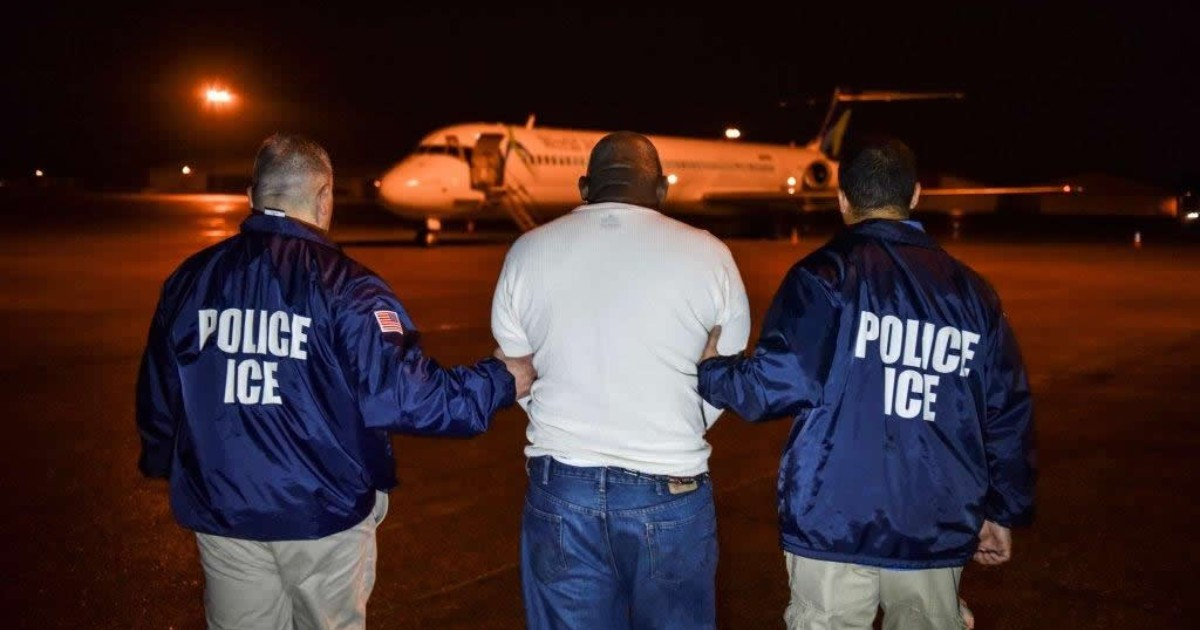
In August 2026, the U.S. Immigration and Customs Enforcement (ICE) achieved a new milestone with nearly 51,000 arrests, marking a record high. However, actual deportations have remained largely unchanged, according to preliminary government data reviewed by Reuters.
This situation showcases the tangible barriers—legal, logistical, and diplomatic—that the Trump administration encounters in its aspiration to enforce the most extensive mass deportation program in history.
Despite ICE surpassing its own detention records for the third consecutive month in August, the deportation rate has hovered around 1,200 individuals per day. This figure is almost identical to that of May, even though there were about 19,000 fewer arrests during that month. In essence, an increase in arrests has not translated into more deportations.
Legal and Logistical Challenges
The main reason lies in the demographics of those being detained. In July, less than a quarter of those arrested had criminal records, a stark contrast to nearly 60% in December 2024, just before Trump's second term began. A growing number of those detained do not have deportation orders, criminal charges, or convictions. Many have pending asylum claims or active court cases, preventing their immediate removal.
The ICE arrests, deportations, and legal hurdles faced by the Trump administration are part of an ever-evolving immigration landscape. Stay updated with the latest in our U.S. Immigration section.
"These individuals often have deep ties to the United States and are more likely to quickly secure legal representation through their American relatives, in addition to being more aware of their rights," explained Julia Gelatt, associate director at the Migration Policy Institute.
Broader Arrests and Diplomatic Hurdles
Among those caught in this expanding web of arrests are immigrants detected at airports through information provided by the Transportation Security Administration (TSA). Over 1,200 individuals have been apprehended via this method up to early June.
Adding to the legal hurdles are logistical challenges. "Getting people on planes is extraordinarily difficult, and the actual number of planes available has historically been a bottleneck," noted Blas Nuñez-Neto, a former Biden administration official.
The Trump administration had signed a deal to acquire six Boeing 737s for deportations, yet these aircraft remain under Federal Aviation Administration (FAA) inspections and are not in service. Current flights often depart without being fully occupied, and receiving countries impose their own limits: recent flights to Cap-Haïtien, Haiti, carried only 57 people, Human Rights First reported.
Pressure from the Administration
Current and former officials have indicated that ICE agents are under mounting pressure from the White House to meet a target of 3,000 daily arrests, although the Department of Homeland Security (DHS) denied any formal quotas exist. In June, Trump directed ICE agents via Truth Social to "do everything possible to achieve the crucial goal of conducting the largest mass deportation program in history."
White House spokesperson Lauren Bis dismissed Reuters' analysis as a "false narrative," asserting that "thanks to President Trump's stringent immigration control policies, three million undocumented immigrants have left the United States."
Impact on the Cuban Community
The situation is particularly dire for the Cuban community: arrests of Cubans surged by 463% between late 2024 and early 2026, and over 42,000 Cubans have pending final deportation orders in the United States. From January to August, 882 were deported in 31 air operations.
Understanding ICE's Record Arrests and Deportation Challenges
What are the main challenges faced by the Trump administration in increasing deportations?
The Trump administration faces legal, logistical, and diplomatic barriers in increasing deportations. Many detainees have pending asylum claims or active court cases, preventing immediate deportation. Logistically, securing enough planes for deportations is a challenge, and diplomatic restrictions from receiving countries also play a role.
How does the profile of detainees affect deportation rates?
The profile of detainees significantly impacts deportation rates. A growing number of those detained lack deportation orders or criminal records, with many having ongoing legal proceedings or asylum requests, which delays their deportation process.
How has the Cuban community been affected by increased ICE arrests?
The Cuban community has seen a significant increase in ICE arrests, with a 463% rise between late 2024 and early 2026. Over 42,000 Cubans have pending deportation orders, and 882 were deported from January to August in 31 air operations.