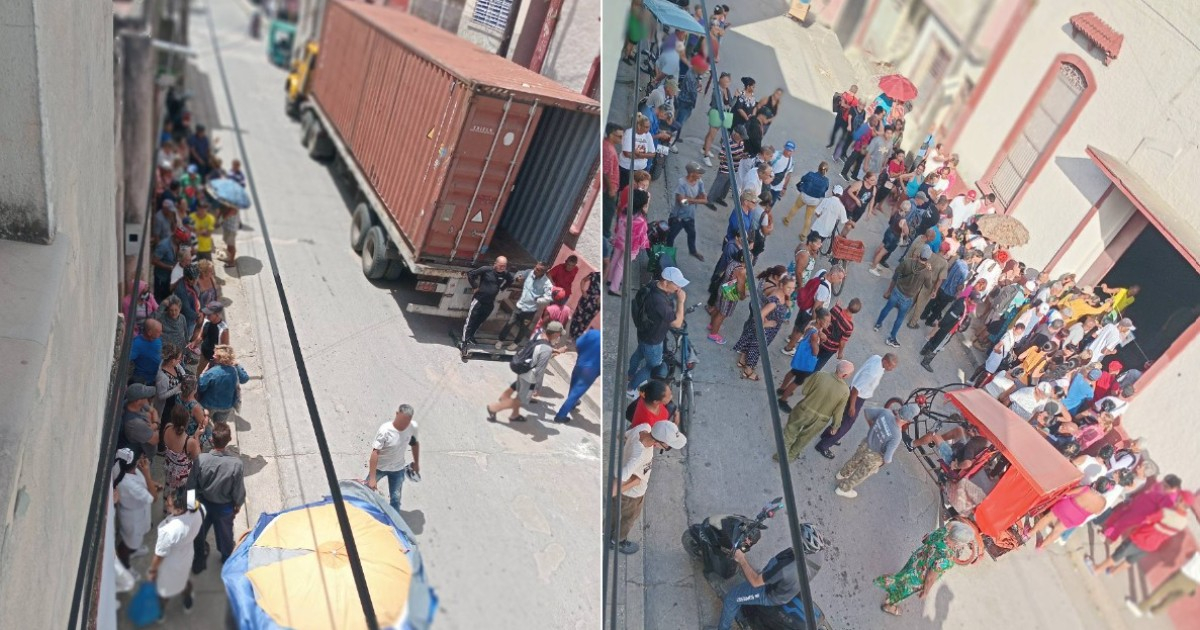
In the Cuban city of Holguín, a resident recently shared images on Facebook depicting long lines of people waiting outside a small private company to purchase cooking oil priced at a staggering 2,200 Cuban pesos per liter. The post was made by Manuel García Verdecia, who noted that the line had been forming since the previous day and showed no sign of diminishing.
"The crowd hasn't thinned out since yesterday to buy oil at Ángel Guerra and Mártires' small business, priced at 2,200 per liter. At least they'll grease their problems," García Verdecia commented with a touch of irony.
Despite the exorbitant cost, which remains out of reach for many Cubans, this price isn't the most extreme seen in today's Cuban market. In mid-August, an independent vendor in Las Tunas began selling vegetable oil for 2,250 pesos per bottle, a move reported by the local media outlet Tiempo21Cuba as a non-speculative sale following the removal of price caps.
The Aftermath of Price Cap Removal
Just days before, a Cuban-American voiced her outrage upon learning that a liter of oil in Cuba could cost as much as 4,000 pesos, exceeding the island's minimum monthly wage of 3,210 CUP. This price surge followed the Ministry of Finance and Prices' Resolution 150/2026, issued on June 20, which lifted national price caps on imported edible oils and removed the previous limit of 990 pesos per liter.
The expectation that this measure would encourage private imports backfired spectacularly, leading to unchecked price hikes. By late July, oil prices had soared to 2,500 pesos in Havana, surpassed 3,000 pesos in certain markets by early August, and reached an alarming 7,000 pesos in the most extreme cases.
Local Governments Respond
In response to societal pressure, several municipal governments began imposing their own price limits. In Guantánamo, the price was capped at 2,200 pesos, with threats of penalties for violators. Similarly, Pinar del Río and Matanzas set their caps at 2,150 pesos and 2,500 pesos, respectively.
For months, the state-rationed basket has failed to supply oil, a fact acknowledged by regime officials in June. This situation has left small private businesses, known as mipymes, as the only available sources, albeit at prices unaffordable for the majority of the population.
The mounting frustration has already led to incidents of violence. On September 4, a crowd in La Lisa, Havana, looted a truck loaded with oil, despite the presence of police officers who were unable to prevent the theft.
Understanding Cuba's Oil Price Crisis
Why are oil prices so high in Cuba?
Oil prices in Cuba have skyrocketed due to the removal of national price caps on imported edible oils, leading to unregulated market prices.
How are local governments responding to the oil price issue?
In response, local governments like those in Guantánamo, Pinar del Río, and Matanzas have set their own price limits to control the escalating costs.
What has been the public's reaction to these prices?
The public has expressed frustration and desperation, resulting in incidents of looting and increased social tension.