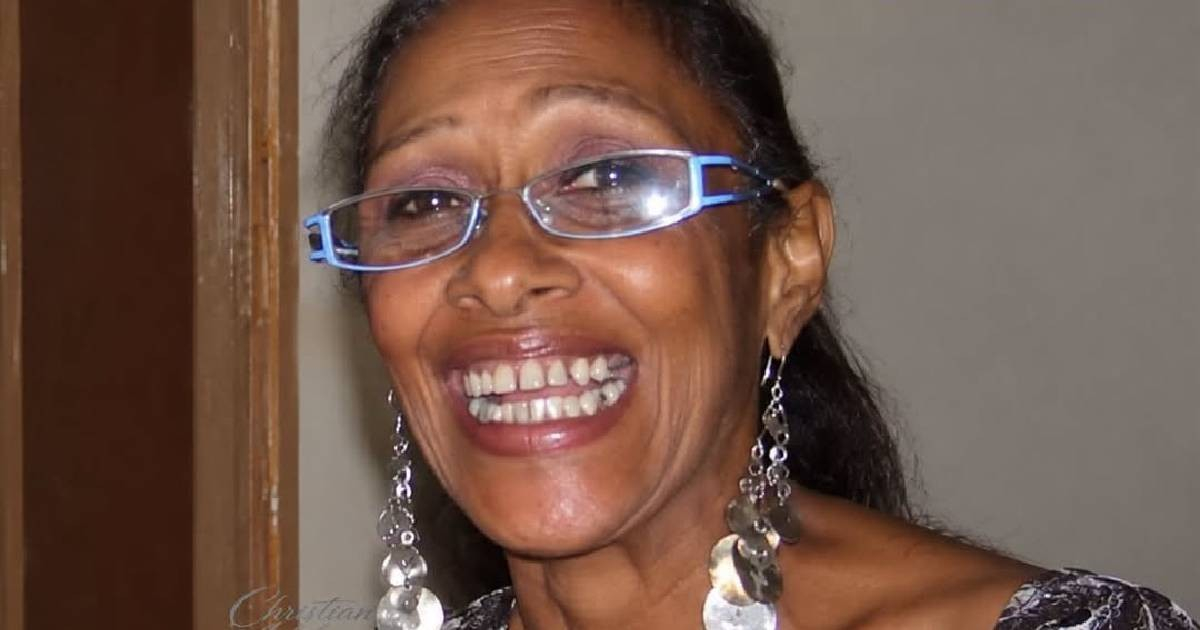
A Cuban woman identified as Berta Noriega Wencomo was discovered deceased in her residence in the El Fructuoso neighborhood of Cárdenas, Matanzas. Her body went unnoticed for several days before being found.
The incident, shared on social media by local activist Christian Arbolaez, deeply touched those who knew her and sparked a heated discussion on the neglect faced by elderly individuals in Cuba.
Her brother raised the alarm after not hearing from "Betty" for several days. He resorted to using a ladder to gain entry into her home, where his fears were confirmed.
The body was in an advanced state of decomposition, necessitating the involvement of the fire department. According to Arbolaez's account, a funeral vehicle was unavailable for most of the day to transport the remains.
"It wasn't until around 10:00 p.m. that the police, firefighters, and a hearse were present," Arbolaez recounted. Given the condition of the discovery, Betty had to be buried immediately.
Those who knew her remember her differently: as "the lovely mulatto woman who always wore her hair in a bun," an elegant, joyful, and proud individual.
The Life and Struggles of Betty Noriega
Betty had previously worked as a telephone operator but left her job to care for her parents. After losing them both, she returned to work, though later she was afflicted with thyroid disease.
Without children or her parents, Betty faced her final years in solitude. She struggled with food, obtaining medicine, and receiving medical care, and lacked the means to repair her home.
"Ultimately, she died alone, and it took several days for her absence to raise the alarm," wrote Arbolaez.
A Larger Crisis for Cuba's Elderly
The case highlights a humanitarian crisis engulfing elderly citizens in Cuba: inadequate pensions, scarce medications, and an under-resourced social care system.
The Ministry of Labor and Social Security itself has acknowledged that "there are no resources to support vulnerable individuals."
The mass emigration in recent years has exacerbated the problem, leaving thousands of seniors without a family support network.
Cuba has only 156 nursing homes and 12,697 beds for the entire island, with 51 municipalities lacking such services. In Matanzas, where Betty lived, the situation is particularly dire: over 300,000 residents lack consistent water supply.
The Recurring Tragedy of Abandoned Seniors
This is not the first incident to shock the public. Finding elderly individuals deceased in their homes or on the streets has become a frequent occurrence across various provinces in the country.
The international press has highlighted the abandonment of Cuban seniors, and in May 2026, the UN warned that the crisis disproportionately affects older adults, with systemic impacts on health, water, sanitation, and transportation.
A friend bid farewell to Betty with words that encapsulated the feelings of those who knew her: she recalled the cheerful and elegant woman of the past and wished that "after so much solitude on Earth, she now finds company in heaven."
Understanding the Challenges Facing Cuba's Elderly
What challenges do elderly people face in Cuba?
Elderly individuals in Cuba often encounter insufficient pensions, lack of access to necessary medications, inadequate social care systems, and the absence of family support networks due to mass emigration.
How does the Cuban government address the needs of vulnerable elderly?
The Cuban government has acknowledged the lack of resources to adequately support vulnerable elderly populations, which has led to widespread neglect and insufficient care for this demographic.
What are the impacts of the humanitarian crisis on elderly Cubans?
The humanitarian crisis has left many elderly Cubans without basic necessities such as food, medication, and proper healthcare, exacerbating their isolation and vulnerability.