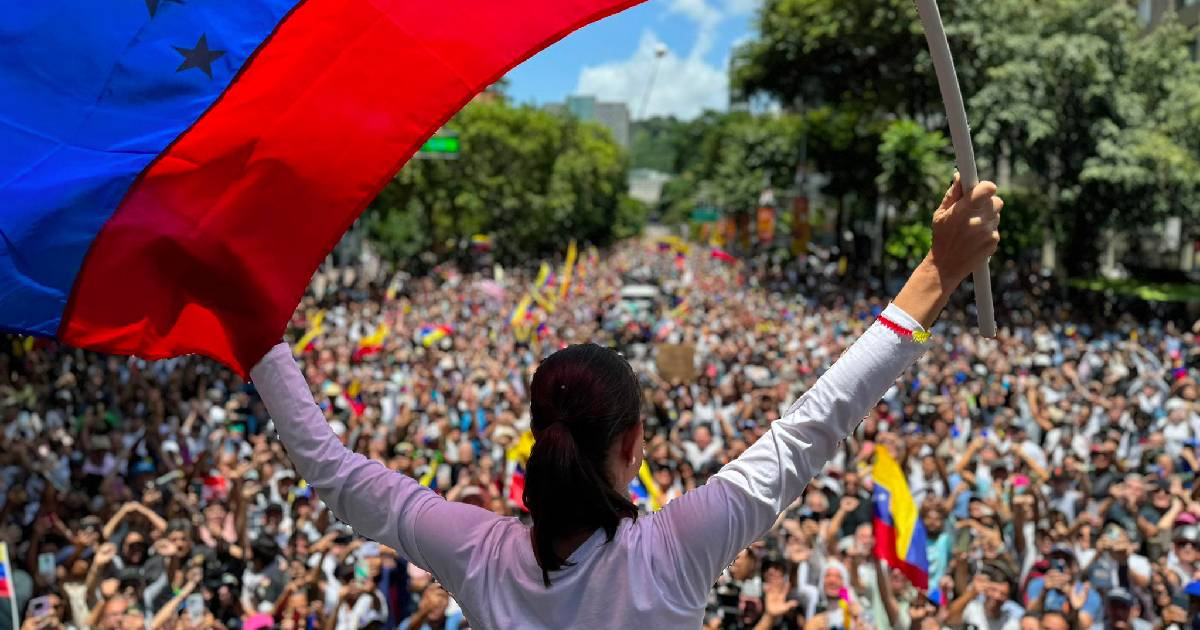
In a candid interview with Democrats Review published on September 4, 2026, María Corina Machado reaffirmed her unwavering commitment to return to Venezuela despite daily threats. She emphasized that the country's democratic transition is still "unfinished" and that Venezuelans are demanding her presence.
The 2025 Nobel Peace Prize laureate has been in hiding for over a year, and she has spent approximately 18 months away from her family, primarily residing in Panama without a valid passport, which the Venezuelan authorities refuse to renew.
Although Machado has repeatedly announced her intention to return to Caracas since January 2026, her return has yet to materialize. In March, she promised to come back "within weeks," and her party echoed this announcement shortly thereafter, without specifying a date.
The Perils of Leadership
Machado spoke openly about the dangers she faces: "I receive threats daily from members of Delcy Rodríguez's administration, and this state of terror obviously affects all our relatives and friends."
Nevertheless, the opposition leader was resolute in her decision: "I have made the decision to return to Venezuela to stand by my people, ensuring that this popular and democratic energy is channeled civically, grows, and ultimately wins the right to a genuine democratic electoral process."
Political Tensions and International Pressures
Machado's announcement comes at a particularly complex time. On September 7, news outlets cited journalist David Alandete reporting that the White House had requested Machado to visit Washington before heading back to Venezuela, adding a new layer of political pressure to her return.
She highlighted the ongoing oppressive regime inherited from Maduro: "The repressive and criminal organization that he led continues to operate in Venezuela." Out of 1,200 political prisoners, 700 have been released, but 500 remain detained, and torture centers still exist, as she denounced.
The Role of the United States
Discussing the U.S.-driven initiative, Machado explained that Secretary of State Marco Rubio devised a three-phase plan—stabilization, recovery, and democratic transition. According to the U.S. administration, the first phase has already concluded.
However, investments in the energy sector anticipated for the second phase have not been realized, partially because Venezuela ranks last globally in terms of rule of law.
This assertion contrasts with the extensive energy agreement pushed by the Trump administration with interim Venezuelan authorities, which includes the sale of up to 50 million barrels of oil under U.S. supervision and the entry of major international companies into the sector.
Trump has promoted investments of around $100 billion to rebuild the industry, although the plan has sparked controversy over its feasibility, Washington's control over oil sales and revenues, while companies like ExxonMobil have raised concerns about the lack of legal guarantees for major investments.
Confidence in Change
Machado expressed confidence in concrete signals: "Ongoing conversations with the State Department lead us to believe that a new National Electoral Council will be appointed by the end of the year, along with a new Supreme Court of Justice."
The June 24 earthquake, which left over 6,500 dead according to August reports, worsened the crisis and, according to Machado, exposed the regime's ineptitude: "Seventy-two hours after the quake, not a single action had been taken by the regime to support or assist the population." She described soldiers looting personal belongings from the rubble while people remained trapped.
A Meganálisis survey attributes her over 80% of the votes in a hypothetical electoral contest against Rodríguez, and 65% of Venezuelans exiled in the United States have expressed willingness to return if a genuine democratic transition is pursued.
"This is a critical moment. We would be mistaken to think we can ease the pressure on the Caracas regime," warned Machado, who in July stated that she had not requested protection to facilitate her return to the country.
Key Questions About María Corina Machado's Return to Venezuela
Why is María Corina Machado determined to return to Venezuela?
María Corina Machado is committed to returning to Venezuela to support the democratic transition and to stand by her people, channeling the popular energy in a civic way to achieve a genuine democratic electoral process.
What are the main obstacles she faces upon her return?
She faces daily threats from the current regime, an oppressive state apparatus, and the challenge of ensuring the rule of law and democratic processes in a country with significant instability.
How does the U.S. involvement influence the situation?
The U.S., through figures like Secretary of State Marco Rubio, has a plan for Venezuela's democratic transition and has been involved in facilitating an energy agreement, although the plan's feasibility and legal guarantees remain contentious.