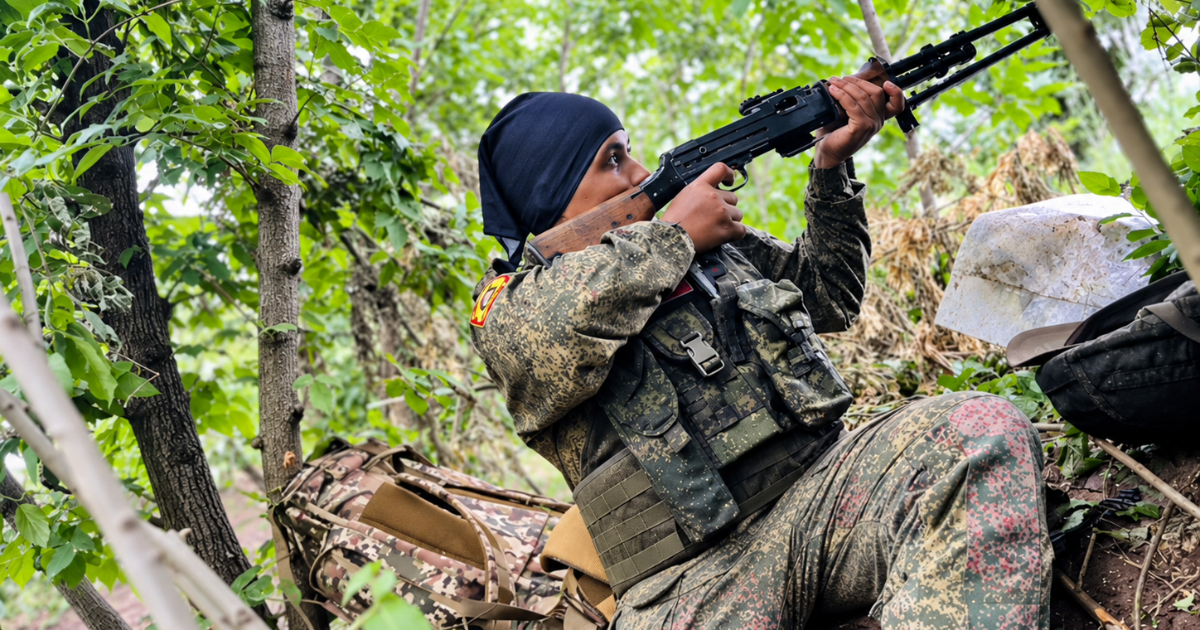
In a matter of weeks, foreign recruits, including Cubans, find themselves on the frontlines, receiving minimal training before being thrust into combat. This is one of the troubling patterns Amnesty International has uncovered regarding Russia's recruitment tactics in Ukraine.
The organization’s latest report, "Russia: Trafficking of Foreign Nationals to Fight in Ukraine," reveals a concerning trend: recruits, especially those from abroad, undergo inadequate preparation. Amnesty strongly suggests that Russia's recruitment methods prioritize quantity over quality, with little regard for the combat readiness or integration of these individuals into military units.
Amnesty argues that this approach reflects a military strategy focused on overwhelming force through sheer numbers, coupled with a blatant disregard for human life.
Rapid Deployment with Insufficient Training
Testimonies gathered by Amnesty describe extremely short training periods, often lasting around two weeks, before recruits are sent to combat zones. Some lacked any military experience, reported inadequate equipment, and struggled to communicate with Russian commanders.
Cuban Recruits' Experiences
Two Cuban recruits exemplify this documented pattern. "Enrique," who previously worked in construction in Russia, signed a military contract enticed by the promise of a Russian passport. He underwent about 20 days of training in a camp located in the occupied region of Luhansk, according to his account. Soon after, he was sent to the frontline, where his vehicle was quickly attacked by drones, forcing him and others to disperse.
"Ruben," another Cuban interviewed, signed a contract while serving a prison sentence in Russia, facing deportation to Cuba. Just two weeks after signing numerous documents in Russian, he received military ID and was sent to a training camp with former prisoners from various countries. Eventually, he found himself on the frontlines, was wounded, hospitalized twice, and captured in January 2026.
International Patterns of Ill-Preparedness
Amnesty's findings mirror similar situations among other nationalities. A Sri Lankan national underwent 14 days of training without understanding much due to the Russian language barrier and was captured shortly after deployment. A Brazilian IT professional, misled by promises of work in his field, spent three weeks in a training center before being sent to fight. A Somali recruit, with no prior military experience, reported receiving virtually no proper training before being thrust near the frontlines without a weapon.
Independent Insights into Cuban Recruitment
Amnesty's report provides an independent assessment of a phenomenon long documented by CiberCuba regarding Cuban citizens joining Russian forces. Previous cases, such as that of Denis Frank Pacheco Rubio, who received just 15 days of military training before being sent to the front where he died, highlight this ongoing issue.
In January 2026, CiberCuba analyzed data indicating that 42% of foreign combatants fighting for Russia died within four months of signing their contracts, with the highest casualties in the second month. While Amnesty has not corroborated these figures, they align with the rapid deployment of inadequately trained foreigners.
The Human Cost of Russia’s Military Strategy
Western military analysts have described Russia's tactics, such as "meat attacks," which involve successive waves of infantry accepting high casualties to exert pressure and locate enemy positions. Although Amnesty does not claim all foreign recruits are part of these tactics, it underscores the lack of preparation and the focus on boosting troop numbers over ensuring combat effectiveness.
Not all Cuban recruits report the same experience. Some, like a Cuban soldier who wrote to CiberCuba, assert they receive equal treatment to Russian soldiers. However, Amnesty’s findings highlight a specific pattern of brief training, communication barriers, and hasty deployment, adding a new dimension to the stories of Cubans enticed by prospects of employment or citizenship, only to end up in Ukraine’s trenches.
Understanding Russia's Recruitment of Foreign Nationals
What is Amnesty International's report about?
Amnesty International's report highlights the rapid recruitment and deployment of foreign nationals by Russia to fight in Ukraine, often with minimal training and preparation.
How are Cuban recruits affected by Russia's recruitment strategy?
Cuban recruits are often given limited training and quickly sent to the frontlines, facing language barriers and inadequate preparation for combat, as documented by Amnesty International.
What are "meat attacks" in the context of Russian military strategy?
"Meat attacks" refer to Russian military tactics involving successive waves of infantry attacks that accept high casualty rates to maintain pressure and gather intelligence on enemy positions.