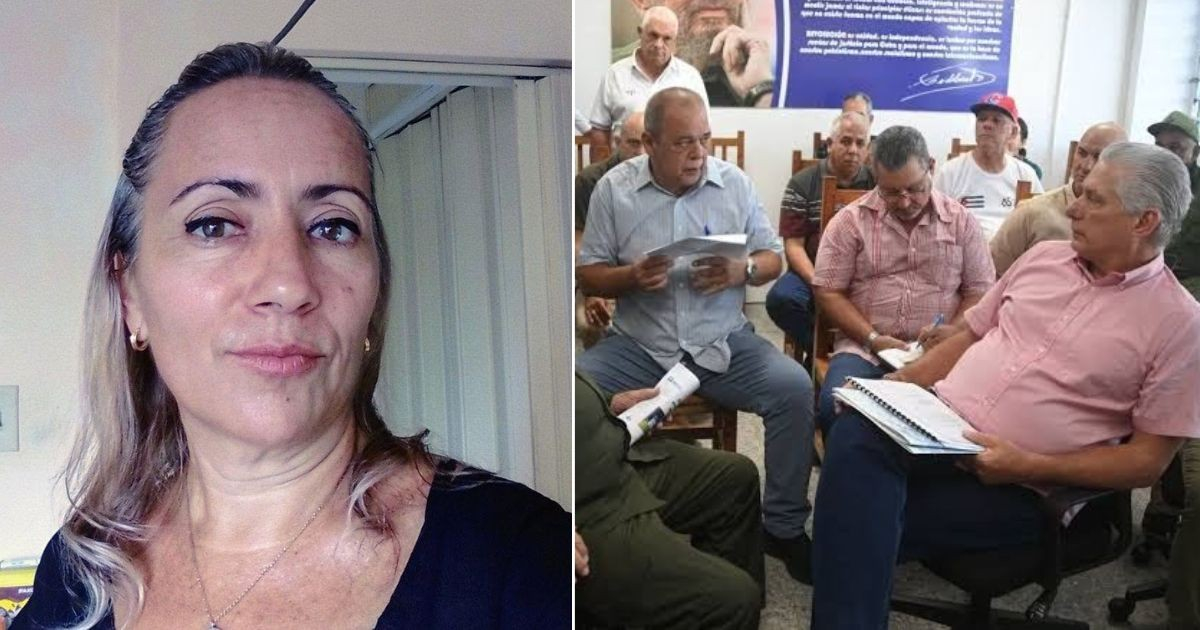
Elizabeth González Aznar, a resident of Cuba, has once again publicly called out the nation's leaders over the declining state of essential services, highlighting that San Agustín, a district in Havana's La Lisa municipality, has been without water for over a week.
In a Facebook post shared this past Monday, González directly addressed the authorities: "Cuban leaders, why must we endure this? What blame does the public bear for the US sanctions? Can we grab Trump and Rubio by the neck?"
She continued, "This is inhumane, and the responsibility lies with you. You are our government, the servants of this people, not them."
González painted a grim picture of the worsening conditions in San Agustín, where she noted that the water supply has been absent for more than a week. Some families have depleted their reserves, leaving them without water for drinking, cooking, cleaning, or flushing toilets.
To underscore the dire situation, she shared photos depicting unwashed dishes and toilets barely able to flush. "It's outrageous to live like this. We are human beings. Over a week without water in San Agustín, La Lisa, and there's nothing left to drink. Nothing at all. Not even for washing or flushing the toilet; it's like living in a pigsty. Why, Cuban leaders? How far will you take us?" she questioned.
González emphasized that access to water is not a luxury but a fundamental human right: "Having water is a human right; it's a basic necessity for living," she asserted, urging the authorities to provide alternatives while resolving the issues affecting the water supply.
She also highlighted the disparity between those who can afford private solutions and those who rely solely on state services. According to her account, water trucks in San Agustín charge $50, with some even bearing license plates from the Revolutionary Armed Forces (FAR).
"How long will this outrageous division among Cubans continue, where some can overcome obstacles with the damn dollar and others cannot?" she wrote.
Her message received widespread support from users demanding solutions and holding authorities accountable for ensuring basic services. One person commented, "If a government accepts governing a blockaded country, it must solve the problem, not justify it." Another noted, "They must ensure we live as normal people; that's why they represent us," while a comment insisted that "a well-organized, planned, and well-directed country can and should counteract the blockade."
The water shortage was a recurring theme in the reactions. A resident from El Palenque, also in La Lisa, mentioned that the supply arrives with such low pressure that some homes remain without service, lamenting that "even bathing is now a privilege." Another individual stated that in Ciego de Ávila, waterless cycles can last up to 20 days.
There were also direct calls to abandon excuses: "The government must guarantee not only water but all the basics the people need. Enough with the excuses; Cuba needs SOLUTIONS," expressed another user.
This is not the first time González has voiced strong criticisms of the Cuban authorities over deteriorating public services. Via her social media, she has become one of the most vocal critics today. In January, she questioned, "Where are the leaders?" while denouncing power outages, water shortages, and food scarcity during Havana's crisis.
Five months later, she criticized the allocation of resources for events and mobilizations celebrating Raúl Castro's birthday while numerous families endured power outages lasting up to 20 hours. "Raúl is Raúl, but the people also deserve respect," she stated then.
In July, she penned an open letter to Miguel Díaz-Canel, asking, "Why should we trust you and your government?" questioning the results of governmental management after years of crisis.
That same month, she raised concerns about issues in San Agustín and alleged unequal electricity distribution among nearby circuits. Under the phrase "I will not be silent," she demanded an investigation into a suspected electricity diversion and called for explanations from the authorities.
In August, she also rejected the official narrative of the Cuban people's "resilience," responding to Díaz-Canel: "This people resist because we have no other choice."
Understanding the Water Crisis in San Agustín Lisa
What prompted Elizabeth González Aznar to speak out?
Elizabeth González Aznar publicly addressed Cuban leaders due to the ongoing water shortage in San Agustín, where residents have been without water for over a week.
What are the conditions like in San Agustín due to the water shortage?
The situation in San Agustín is dire, with no water supply for more than a week, leaving families without water for drinking, cooking, cleaning, or flushing toilets.
How have residents reacted to the water crisis?
Residents have expressed outrage and frustration, demanding solutions and holding authorities accountable for ensuring basic services.