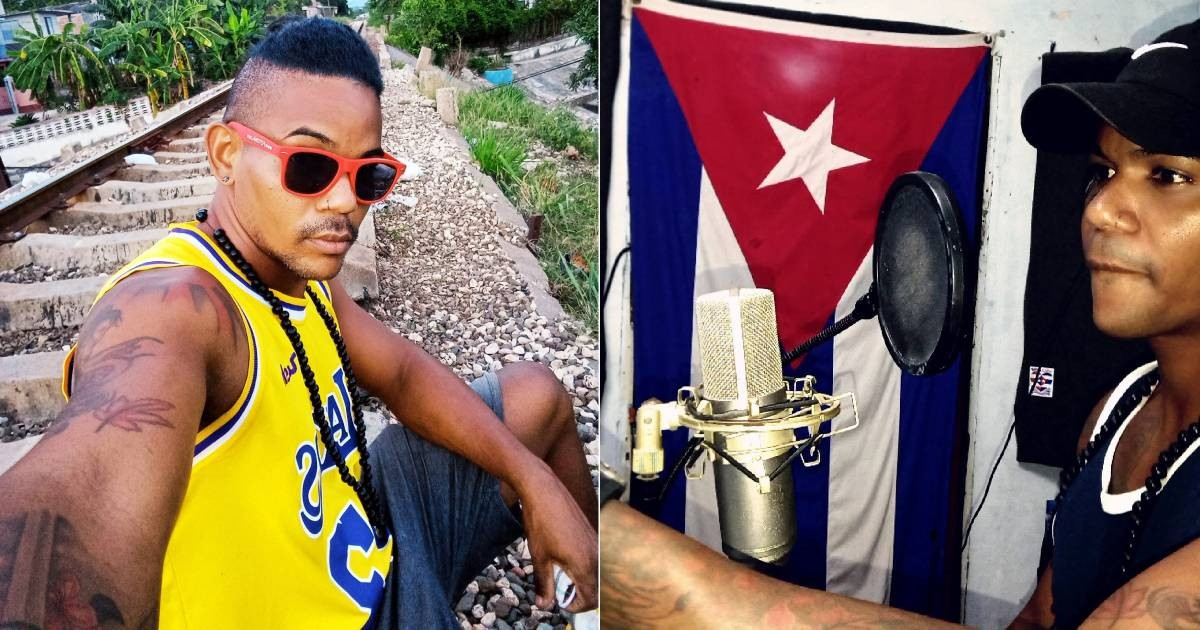
Ibrahim Domínguez Aguilar, a political prisoner held at Boniato Prison in Santiago de Cuba, has been experiencing severe pelvic pain for over 12 days without receiving any proper diagnosis or treatment from prison authorities, according to a report by his mother on Martí Noticias.
Mercedes Aguilar, his mother, was compelled to approach State Security herself to demand that her son be transferred to Saturnino Lora Provincial Hospital. Despite undergoing tests that returned negative, the pain persists, leaving him unable to sit or lie down comfortably.
"My son has been enduring intense pain for days. I had to go to State Security to request that my son be taken to a hospital. They did take him, and all the tests came back negative, yet the pain remains, preventing him from sitting or lying down," the mother expressed.
The specialists at Saturnino Lora recommended follow-up evaluations, but prison authorities have not adhered to these medical recommendations.
"The doctors advised follow-up care, but nothing has been done. I've pleaded for him to be admitted to find out what's wrong. I'm desperate, but political prisoners' lives don't matter. He needs to be examined further. The specialists who saw him provided excellent care but couldn't determine the cause of the pain, which still lingers," Aguilar added.
Domínguez Aguilar was sentenced to 10 years in prison for his involvement in the July 11, 2021 protests in Contramaestre, Santiago de Cuba, following a trial marked by heavy police presence and allegations of procedural irregularities, including claims of lost evidence favorable to the defense.
Despite having served more than half of his sentence, the regime has denied him any prison benefits and continues to subject him to harsher conditions.
His time at Boniato has been fraught with violence, including a beating on October 31, 2025, which left him with a forehead wound requiring four stitches and bruises. Cubalex implicated Major Humberto Garcés Tassé, the head of Internal Order at the prison, as the alleged orchestrator of the attack and accused authorities of fabricating new charges against him for "disturbances in penitentiary establishments" and "injuries" following the assault. Meanwhile, the Military Prosecutor's Office in Santiago de Cuba ignored his mother's request for an investigation.
In April 2024, Prisoners Defenders documented that Ibrahim was assaulted in Boniato after seeking medical care for stomach issues and a toothache, a pattern that Human Rights Watch highlighted on the fifth anniversary of the July 11 protests.
This case is part of a broader healthcare crisis documented at Boniato Prison, where at least eight deaths in 2025 were attributed to malnutrition, neglect, and lack of medical care.
Cubalex and the Cuban Prison Documentation Center have also condemned the practice of granting extraordinary release to terminally ill inmates, a strategy to sidestep the state's direct accountability for deaths in custody.
As of the end of August 2026, Prisoners Defenders reported 1,339 political prisoners in Cuba, with 458 suffering from severe medical conditions, highlighting the systemic neglect faced by those imprisoned for political reasons.
Understanding the Struggles of Political Prisoners in Cuba
What challenges do political prisoners in Cuba face?
Political prisoners in Cuba often endure harsh conditions, including inadequate medical care, physical abuse, and denial of legal rights. Many suffer from untreated medical conditions and face fabricated charges to prolong their sentences.
How has the international community responded to the plight of Cuban political prisoners?
International organizations like Human Rights Watch and Prisoners Defenders have documented and condemned the treatment of political prisoners in Cuba, urging the Cuban government to adhere to international human rights standards and provide adequate medical care.