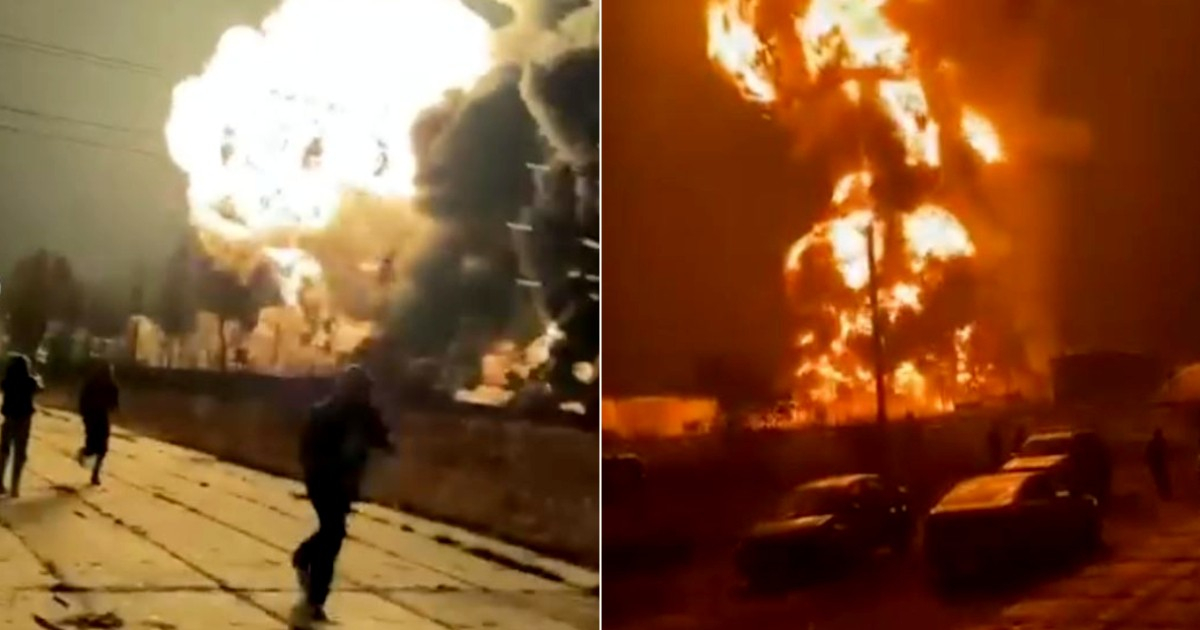
On Monday, Donald Trump declared that Ukraine and Russia had reached an understanding to mutually cease attacks on each other's energy infrastructures, as reported by EFE.
The former U.S. President shared the announcement on Truth Social amidst a sharp rise in fuel prices, which threatens his political standing ahead of the upcoming November midterm elections.
"Ukraine has agreed not to target Russian energy facilities. Russia has promised to do the same," Trump stated, emphasizing that "the surge in global diesel prices is primarily due to the conflict between Russia and Ukraine, not Iran."
This statement followed Trump's public urging of Ukrainian President Volodymyr Zelensky, during a weekend visit to Ireland, to halt strikes on Russian diesel facilities.
"Zelensky needs to stop the attacks on diesel in Russia," Trump told the press. "He can target other sites but not diesel, as it's causing a diesel shortage," he added.
Ukraine's Response and Skepticism
However, Zelensky quickly qualified the announcement. In a post on X, he clarified that there is no formally confirmed agreement, stating that Kyiv has merely "proposed that its partners negotiate an agreement with Russia to end the destruction of critical infrastructures."
Zelensky conditioned any Ukrainian cessation of attacks on concrete guarantees from Western allies. "If our partners are willing to ensure that Russia truly refrains from attacking our power systems, other energy facilities, critical infrastructures, and food supply routes, then we are ready to suspend our attacks accordingly," he wrote.
The Ukrainian president also expressed doubt about Russia's commitment to uphold any agreement, cautioning that the deal should not "fall apart" after Russian elections, hinting at Moscow's possible intent to seek temporary relief from fuel price pressures.
Historical Context and Political Implications
Ukraine has recently ramped up its attacks on Russian refineries and diesel depots as part of Zelensky's "long-range sanctions" strategy to weaken the Russian economy.
Conversely, Russia has systematically targeted Ukraine’s electric and energy infrastructures since its large-scale invasion in February 2022, focusing particularly during the winter months.
This isn't the first attempt at such a truce; in March 2025, Trump announced a ceasefire regarding energy infrastructure after talks with Putin, but Zelensky accused Russia of breaching the agreement over 30 times.
Domestic political dynamics are crucial to understanding Trump's announcement. Diesel prices in the U.S. have surpassed six dollars per gallon for the first time, hitting approximately $6.06 as of September 10, exerting significant pressure on the administration just months before the midterm elections.
California's Democratic Governor, Gavin Newsom, criticized Energy Secretary Chris Wright, stating, "Everyone knew Trump's Iran war would disrupt the Strait of Hormuz and skyrocket costs," in a post on X.
Experts highlight that the Middle East conflict—ignited in late February 2026 by U.S. and Israeli strikes on Iran—has had a more profound impact on global energy markets than the Ukraine conflict.
Iranian forces effectively closed the Strait of Hormuz, through which roughly a quarter of the world's seaborne oil trade passes, driving crude oil prices to over $126 per barrel at their peak.
Zelensky concluded his message with a call to action: "The war must end. And a step towards easing tensions on critical infrastructures could be the first move towards peace. We await concrete proposals from our partners."
Key Questions on Ukraine-Russia Energy Truce
What agreement did Trump announce regarding Ukraine and Russia?
Trump announced that Ukraine and Russia agreed to cease attacks on each other's energy infrastructures.
How did Zelensky respond to Trump's announcement?
Zelensky clarified that no formal agreement exists and emphasized the need for concrete guarantees from Western allies.
Why is the issue of diesel prices significant in this context?
The rising diesel prices in the U.S. are creating political pressure ahead of the midterm elections, with prices exceeding six dollars per gallon for the first time.