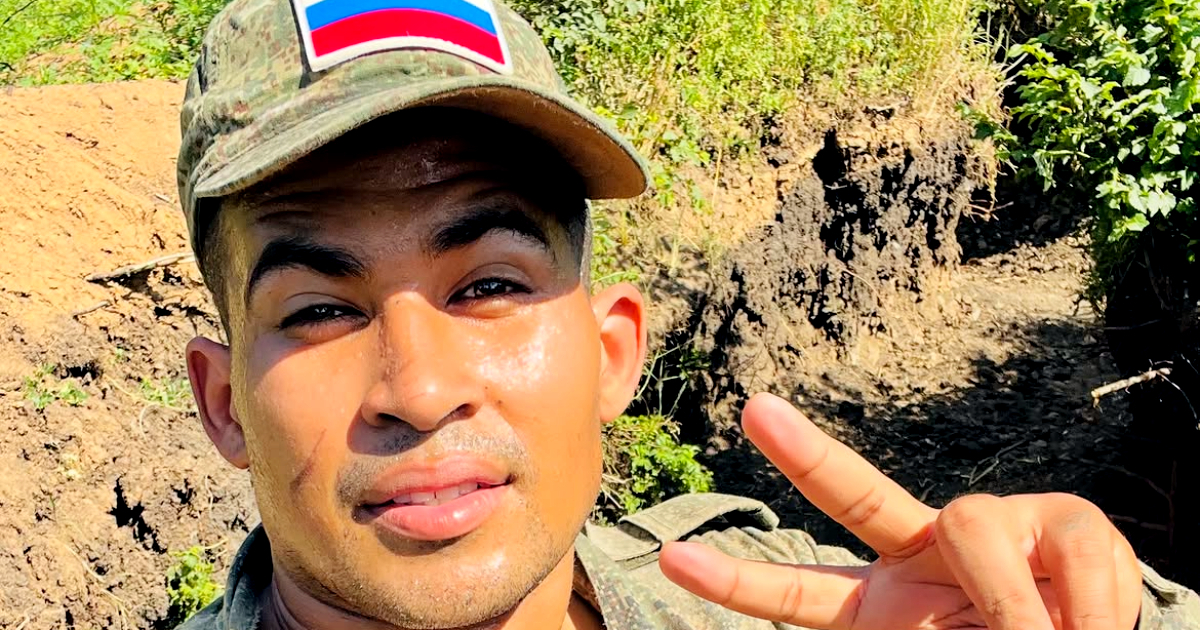
The discussion regarding the status of Cubans caught fighting for Russia in Ukraine has taken on a new level of urgency.
Amnesty International is urging Ukrainian authorities to discern potential human trafficking victims among the foreign prisoners of war and to assess their individual situations. This recommendation could impact their eventual release and return to their home countries.
Featured in the recent report titled "Russia: Trafficking of Foreign Nationals to Fight in Ukraine," published in September, Amnesty documents a recruitment system for foreigners that often relies on deception, coercion, and exploitation of vulnerable people.
The investigation contains accounts from captured Cuban nationals.
Ukraine's Stance: Not Mercenaries
Amnesty's recommendation aligns with a stance previously made public by Ukraine, which is particularly significant for the Cubans involved.
In April, the official Ukrainian project "I Want to Live" clarified that foreigners captured while serving in the Russian Armed Forces are not prosecuted as mercenaries. Instead, they are treated as prisoners of war under the Geneva Conventions. This is due to their formal integration into the regular Russian military through contracts, regardless of nationality.
"Despite being foreigners, since they were part of the regular Russian army, all are held in Ukraine as prisoners of war and not as mercenaries," the Ukrainian project explained. This classification grants them the protections of international humanitarian law, opening the door to potential exchange or repatriation mechanisms.
Amnesty now raises another crucial issue: some of these prisoners might also be victims of human trafficking.
From Russian Fighters to Trafficking Victims
The organization interviewed 15 foreign prisoners from Brazil, Colombia, Cuba, Egypt, Sierra Leone, Sri Lanka, Somalia, and South Africa. Only three acknowledged signing a military contract with the understanding that they would be sent to war. Seven were lured by supposed civilian jobs, while others described scenarios that question the voluntary nature of their enlistment.
Testimonies include contracts in Russian that foreigners couldn't understand, false job offers, promises of high wages or citizenship, confiscation of passports, restricted movement, inadequate training, and threats against those who wanted to leave the service.
Amnesty argues that when fraud, coercion, deceit, or abuse of vulnerability for exploitation are present, signing a contract does not necessarily negate the condition of being a victim.
This line of reasoning is particularly pertinent for Cubans, whose cases vary significantly.
One Cuban, identified as "Ruben," was imprisoned in Russia facing deportation to Cuba. He testified that in 2025, he was offered the opportunity to join the military instead of serving the remainder of his sentence, along with a bonus of 800,000 rubles, a monthly salary of 400,000, and the prospect of obtaining a Russian passport.
"I signed the contract because I didn't want to be deported back to Cuba," he explained. Three other Cuban prisoners accepted the offer. Ruben ended up on the front lines, was wounded twice, and was captured in January 2026.
Another Cuban, "Enrique," acknowledged knowing he was signing with the Russian Armed Forces but claimed he was led to believe he would be in a support role.
"They told me I would be in a support role, not on the front lines," he told Amnesty.
These cases illustrate why a single label cannot adequately describe the situation of all Cubans who joined the Russian military.
Amnesty Advocates for Liberation
Amnesty's report goes beyond merely requesting a change in how these fighters are described. It recommends Ukraine conduct individual assessments of foreign prisoners who may have been trafficked and consider, in accordance with Article 21 of the Third Geneva Convention, their potential release on parole or promise and return to their countries.
This evaluation must also consider credible suspicions of involvement in serious crimes, security risks, or the possibility of the individual rejoining the conflict.
The organization also calls for access to consular assistance, communication with families, and mechanisms for the voluntary return of those released, without sending them to countries where they might face persecution or severe human rights violations.
Kenia and Peru Take Action While Havana Leaves Cubans in Limbo
Amnesty's recommendation also places responsibility on the countries of origin. The organization urges these countries to provide consular assistance to their detained, missing, or prisoner of war citizens, cooperate with Russia and Ukraine, and intervene to facilitate the return of those who may have been trafficked.
Some governments have already taken action. Kenya acknowledged the recruitment of hundreds of its citizens, repatriated dozens, investigated recruitment networks, closed over 600 employment agencies, and announced an amnesty to facilitate the return of those still at the front.
Peru, meanwhile, has made efforts for its nationals who are dead or missing, with its embassy securing the return of ten citizens, as noted in Amnesty's report.
Havana's response has been markedly different. In 2023, following initial reports, it announced the dismantling of a human trafficking network and the arrest of 17 suspects. Months later, it emerged that some had been released without public trials, convictions, or a conclusive investigation outcome.
Recruitment continued to be documented. In 2025, as evidence suggested a broader scope of the phenomenon, Deputy Foreign Minister Carlos Fernández de Cossío again denied any state responsibility, maintaining that Cuba had already reported the issue and taken measures.
The lack of more active public action has ramifications for the Cuban captives. Ukraine considers them prisoners of war, not mercenaries, but has warned of Russia's limited interest in repatriating many foreign fighters.
If Moscow does not prioritize them in exchanges and Havana does not intervene to seek alternatives, they could remain in limbo for an extended period.
The contrast with Kenya and Peru is now more significant: Amnesty is not only calling for an investigation into how these foreigners were recruited but also urging their countries of origin to protect them and help find a solution for those who may have been trafficked.
A Particularly Complex Issue for Cubans
Ukraine had also warned of another obstacle: the situation of captured foreigners when Russia shows little interest in recovering them.
"I Want to Live" stated in April that Moscow has little willingness to negotiate for these fighters and pointed out that foreigners might remain in limbo without sufficient political or diplomatic support. In the Cuban case, CiberCuba noted the lack of effective public action by Havana to facilitate the return of its captured citizens.
The new report also shifts the narrative that has long surrounded the so-called "Cuban mercenaries."
Previous investigations documented over a thousand island citizens joining Russian forces, including cases of people attracted by money, citizenship, or false job promises. However, the circumstances and responsibilities are not necessarily the same for everyone.
A foreigner can be legally a member of the Russian army and, therefore, a prisoner of war when captured, while at the same time, there are indications that they joined the army as a trafficking victim.
It is precisely this distinction that Amnesty now calls on Ukraine to investigate case by case.
For the Cuban captives, the question is no longer just about whether they should be labeled "mercenaries." The more pressing question for their future is how many willingly went to fight and how many ended up in Russian trenches after being deceived, coerced, or exploited.
Key Questions About Cuban Fighters in Ukraine
What is Amnesty International's stance on the Cuban captives in Ukraine?
Amnesty International urges Ukrainian authorities to identify potential trafficking victims among the foreign prisoners of war, including Cubans, and assess their individual situations for possible release and repatriation.
How does Ukraine classify foreign fighters captured in its territory?
Ukraine treats foreign fighters captured in its territory as prisoners of war under the Geneva Conventions, rather than prosecuting them as mercenaries, due to their formal integration into the regular Russian military.
What actions have other countries taken regarding their citizens captured in Ukraine?
Countries like Kenya and Peru have taken proactive steps, such as repatriating citizens and investigating recruitment networks, while also providing consular assistance to their nationals involved in the conflict.