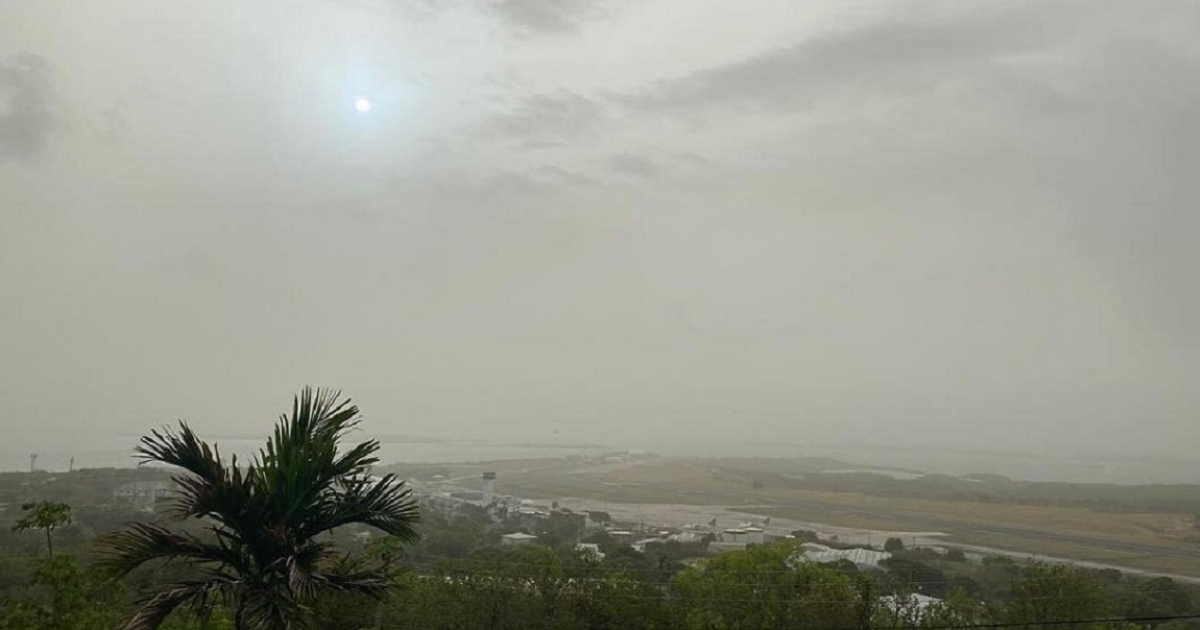
An expansive Sahara dust cloud has reached the southern region of Florida at a time of year when such occurrences are uncommon. While the densest parts remain over the Caribbean, only the outer edges of this phenomenon have brushed the peninsula.
According to The New York Times, the dust layer that covered a significant portion of the Caribbean over the weekend was roughly half the size of the continental United States.
By Saturday, lighter concentrations had already made their way toward southern Florida, as highlighted by reports.
“These clouds continue to emerge from Africa in September, but they are usually smaller and rarely reach areas like Miami,” explained Jason Dunion, a meteorological researcher at the University of Miami who collaborates with NOAA's Hurricane Research Division and studies the Saharan Air Layer.
The timing of this event is particularly noteworthy as it occurs in September.
Unusual Timing of Sahara Dust Events
NOAA notes that the activity of the Saharan Air Layer typically increases around mid-June, peaks from late June to mid-August, and declines rapidly after mid-August, though dry, dusty air masses can also form in early autumn.
The National Weather Service (NWS) in Miami had anticipated that the thickest concentrations would remain south of the Florida peninsula, though drier air on the periphery of the cloud would reach the region.
Satellite images from NOAA's GOES-19 provide tracking of the dust's movement over the tropical Atlantic and Caribbean as it continues its westward journey.
Potential Effects on Florida
One of the most noticeable effects will be a hazier sky appearance in areas affected by the suspended particles.
The Saharan air is exceedingly dry, which may hinder the formation of some rain and storms. CBS News Miami predicted that the dust's arrival would slightly lower rain chances during the early part of this week.
However, the NWS maintained that scattered showers and storms could still occur in southern Florida, as sufficient humidity would remain in the area.
Temperatures are expected to stay high, with highs generally in the low 90s Fahrenheit throughout much of the southern state, according to Miami's NWS forecasts.
Implications for Health and Weather
The Saharan Air Layer can also temporarily impede the formation and strengthening of tropical cyclones. NOAA explains that its mix of dry air, warm temperatures, and strong winds creates an environment generally unfavorable for these systems' development.
In terms of health, the presence of dust does not necessarily mean all of Florida will experience poor air quality. However, when particles reach lower atmospheric levels, they can degrade air quality and cause irritation to the eyes, nose, throat, and lungs, as noted by the Centers for Disease Control and Prevention (CDC).
The CDC also emphasizes that individuals with asthma or other lung diseases, those with heart conditions, older adults, infants, and children may be more susceptible when particle concentrations increase.
Impact on Cuba
The dust event isn't restricted to Florida. Since Saturday, Cuba has been experiencing a low to moderate concentration of Saharan dust, which could influence the region until Tuesday.
Forecasts for the island predicted the highest concentrations between Saturday and Monday, with the peak expected on Sunday.
Cuban meteorological authorities also cautioned about an increase in PM10 particles and advised special precautions for vulnerable populations.
FAQ on Sahara Dust Cloud's Impact
Why is the Sahara dust cloud reaching Florida in September unusual?
Typically, Sahara dust events peak between late June and mid-August. The occurrence of such an event in September is less common, making it noteworthy.
What are the health effects of the Sahara dust on vulnerable populations?
The dust can worsen air quality, potentially causing eye, nose, throat, and lung irritation, especially in individuals with asthma, lung or heart conditions, older adults, infants, and children.
How does the Sahara dust affect weather patterns in Florida?
The dry air from the Sahara dust can reduce the likelihood of rain and storms forming, leading to clearer and hotter conditions.