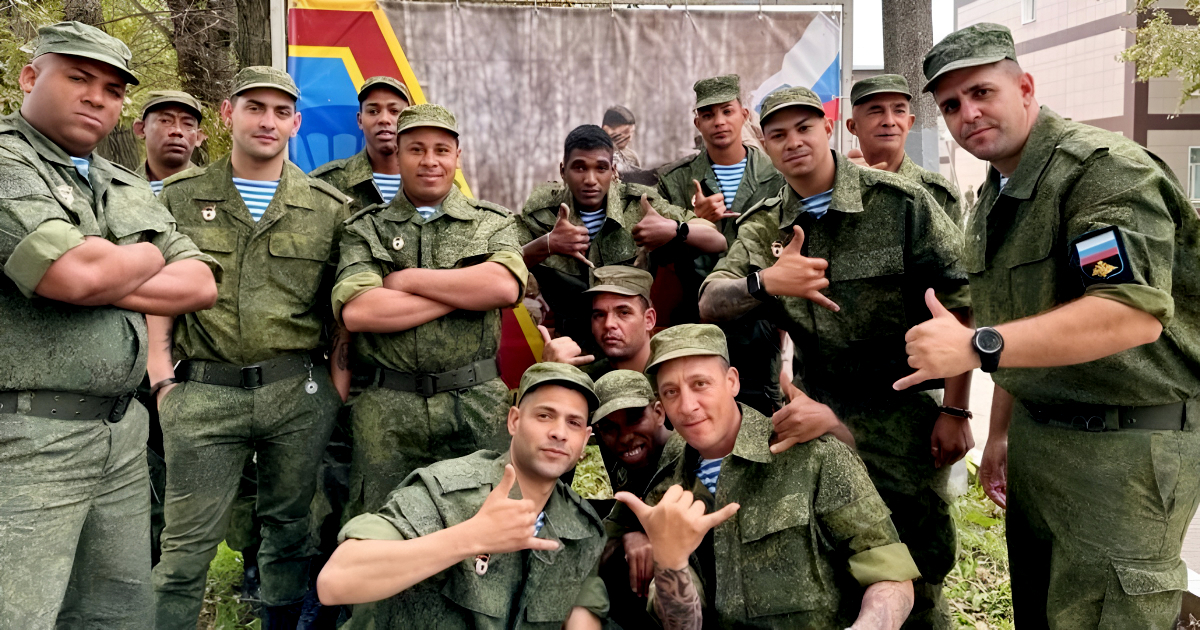
Amnesty International has accused Russia of enlisting thousands of foreign nationals to fight in Ukraine through methods that often resemble human trafficking. This revelation comes from an investigation that highlights the disturbing tactics employed.
The research draws from direct accounts of Cuban citizens who found themselves enlisted in the Russian Armed Forces. The findings were published in September under the title "Russia: Trafficking of Foreign Nationals to Fight in Ukraine." This report is based on six visits made between 2024 and 2026 to two prisoner-of-war camps in Ukraine.
The Voices of the Recruited
Amnesty's interviews involved 15 foreigners from countries including Brazil, Colombia, Cuba, Egypt, Sierra Leone, Sri Lanka, Somalia, and South Africa. Only three individuals acknowledged signing military contracts with full awareness of their deployment to a war zone. Seven others were misled with promises of civilian jobs, and the rest described situations that cast doubt on their voluntary enlistment.
The report also references official Ukrainian data, which identified 28,391 foreign nationals from 136 countries as part of the Russian military forces by April 2026. Amnesty, however, could not independently verify these numbers.
Cuban Testimonies: Ruben and Enrique
One notable account is from "Ruben," a pseudonym used to shield his identity. He recounted his journey to Moscow with his wife in 2021, where he worked in construction before being arrested for drug possession and sentenced to six years in prison.
In 2025, while still incarcerated and facing deportation to Cuba after his release, he and other foreigners received offers to join the Russian military. According to Ruben, promises included Russian citizenship, a bonus of 800,000 rubles (about $10,000), and a monthly salary of 400,000 rubles (approximately $5,000).
"I signed the contract because I didn't want to be deported back to Cuba," he told Amnesty. Ruben aspired to secure Russian citizenship, help his wife obtain it, and eventually bring their children from Cuba to Russia. Despite the dire circumstances, going to war seemed a preferable option to returning to the island. After being sent to the frontlines in late 2025, he was wounded and hospitalized twice before being captured in January 2026.
The second case involves "Enrique," another Cuban who knowingly signed a contract with the Russian Armed Forces but claims he was misled about his role. He had traveled to Russia for construction work and was interested in settling there. A colleague suggested joining the military as a pathway to Russian citizenship.
After signing, Enrique received roughly 20 days of training before being deployed to the combat zone. His journey to the front was abruptly interrupted when drones attacked his vehicle upon arrival. "They told me I would be in a support role, not on the frontlines," he explained.
Deception and Coercion: A Broader Pattern
The experiences of the Cuban recruits are part of a larger pattern documented by Amnesty, which includes false promises of civilian jobs, contracts written in Russian that were not understood by the recruits, promises of high wages and citizenship, confiscation of passports and phones, movement restrictions, and threats against those attempting to leave the service.
Training periods were often as short as two weeks, even for individuals without military experience and who struggled to communicate in Russian. Amnesty argues that fraud, coercion, and the exploitation of economic, migratory, or legal vulnerabilities could meet international criteria for human trafficking. The organization even suggests that some control and restriction methods described warrant investigation for potential indicators of slavery.
Questions About Cuba's Role
While the report primarily holds Russia accountable, it doesn't implicate the Cuban regime in the recruitment networks. However, other investigations have explored this aspect. Since 2023, numerous testimonies from Cubans recruited for Russian forces have surfaced, with Havana officially denying any state involvement and asserting that Cuba is not part of the war.
A CiberCuba investigation using a Ukrainian database of 1,028 Cuban citizens found patterns of recruitment into Russian forces, contracts, travel routes, and economic and migratory incentives. The analysis also noted a temporal correlation between intense recruitment periods, increased air connections between Cuba and Russia, and strengthened bilateral relations.
These findings don't conclusively prove an operation orchestrated from Havana, but they raise questions about how such a large-scale recruitment could occur without the Cuban authorities' knowledge, tolerance, or complicity. In September 2023, the regime announced the arrest of 17 individuals linked to an alleged human trafficking network for the war, but it has since provided little public information about the judicial outcomes of that investigation.
The accusations have escalated internationally. The United States included the recruitment of Cubans for Russia in its Trafficking in Persons Report, alleging that Cuban officials facilitated the process, a claim Havana refuted. Washington also raised the issue at the United Nations during the discussion on the embargo against Cuba, using it to question the Cuban regime's international conduct and urging other governments not to support Havana's resolution.
Cuban civil society has also voiced concerns. Organizations and activists have called for international investigations and raised the potential responsibilities of Cuba in the recruitment of its citizens for one of the regime's main military and political allies with European interlocutors.
The Debate on Voluntary Participation
Amnesty's report introduces a critical element to the debate: ending up fighting for Russia doesn't necessarily mean all foreigners voluntarily went to war. The organization urges that those recruited through deception, coercion, or exploitation of vulnerabilities be identified as potential victims of trafficking.
It also recommends that Ukraine individually assess foreign prisoners in such situations and, where legally applicable, explore avenues for their release and voluntary return.
For the Cuban case, the report provides new independent evidence for an issue that has been ongoing for over three years. Amnesty does not blame Havana for organizing the recruitment but confirms through its own testimonies that Cuban citizens ended up on the frontlines within a Russian system exhibiting traits of human trafficking.
The investigation leaves open a question that the Cuban regime has yet to clarify: how could an operation capable of involving numerous island citizens in the military of one of its main allies persist for years without being effectively detected or stopped by Cuban authorities?
Key Questions on Cuban Recruitment for Russia
How does Amnesty International view Russia's recruitment tactics?
Amnesty International considers Russia's recruitment tactics as potentially constituting human trafficking due to the use of fraud, coercion, and exploitation of vulnerabilities.
What does the report reveal about Cuban involvement?
The report highlights Cuban individuals' involvement but does not directly implicate the Cuban government in the recruitment process, despite other investigations suggesting potential complicity.
What are the implications of the report for international relations?
The report has sparked international concerns, leading the United States to include the recruitment issue in its Trafficking in Persons Report and raising questions at the United Nations about Cuba's international conduct.