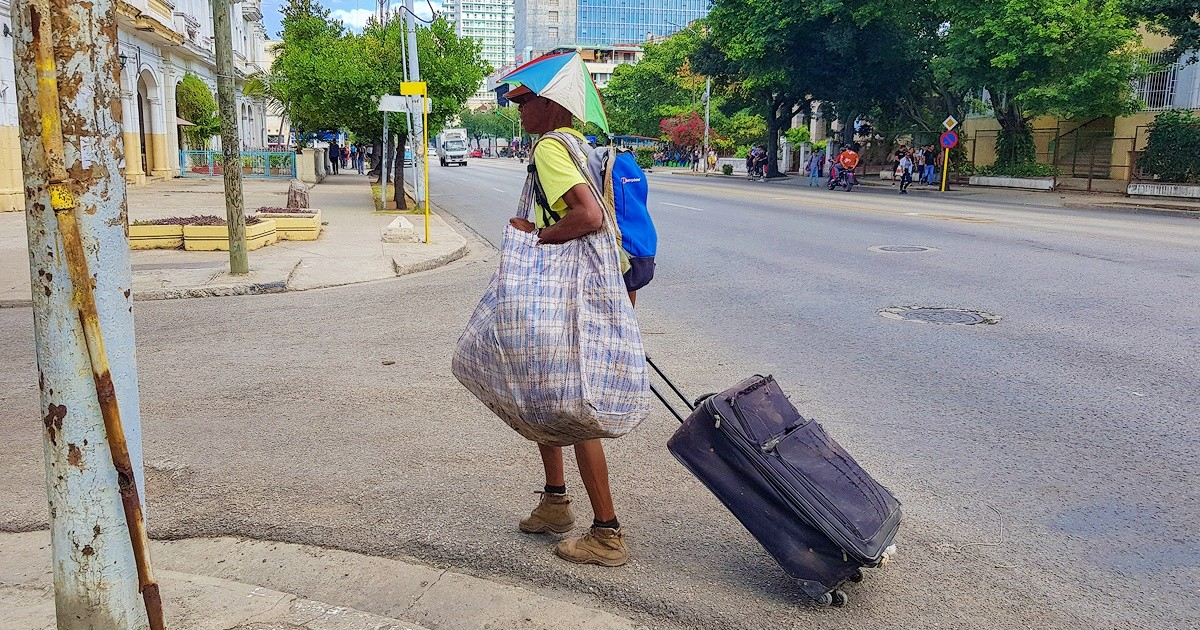
Ivette García González, a historian and former full professor at the University of Havana, shared a stark commentary on Facebook regarding the current situation in Cuba. Titled "What's New About What We're Living Through?", her analysis argues that poverty and vulnerability are no longer confined to minor groups but have become a widespread reality for the average citizen.
García González's argument isn't that Cuba's issues are novel but that they have reached a qualitatively different scale. Power outages, food shortages, hospital collapses, garbage accumulation, rampant corruption, and repression have persisted for decades. However, she contends that the truly new aspect is the extent and compounding effects of these problems.
"Everything negative that existed is now worse, with added layers depending on context and people's imagination," she writes. García González also identifies a phenomenon she finds equally alarming: the "contamination" of societal fabric by the vices of a parasitic and exploitative state, leading to significant psychosocial effects.
This societal "contamination" manifests in everyday behaviors, according to García González. For instance, a bus driver venting frustration on passengers, a market vendor cheating with scales and change, or an official complicating a simple procedure to extract a bribe. These are, in her view, reflections of the same abusive power the state exercises from above, mirrored by those with even minimal authority below.
Structural Changes and Social Dynamics
Among the structural changes she notes is the disappearance of the social pyramid. "The social pyramid we described as inverted in the nineties has vanished; now it has two points: those at the top with their cronies, and those at the bottom," she asserts. This binary structure—regime loyalists versus everyone else—frames her most emphatic claim: "The vulnerable in Cuba are no longer segments or minorities. They are the majority, the common citizen. What about those unjustly imprisoned for exercising rights and dissenting against the government? Many who gave everything believing in the utopia."
Available data supports her assessment. In August 2026, the Cuban Observatory of Human Rights reported that 94% of the Cuban population lived in extreme poverty, with eight out of ten Cubans skipping meals in the previous six months due to lack of money or food.
On the repression front, Prisoners Defenders documented 1,339 political prisoners in August, setting a new historical record, while the Cuban Conflict Observatory recorded 1,415 protests in July 2026 alone.
Crisis Language and Public Perception
García González also criticizes the systematic use of euphemisms to mask the crisis: "educational revolution" hides the teacher shortage; "special period" glossed over the deepest crisis; "proletarian internationalism" justified foreign interference; "army of white coats" sugarcoats the export of cheap professional labor; and "compañero que te atiende" is the regime's term for the agent assigned to surveil citizens.
Sunday's piece is the latest in a series of reflections she has shared throughout 2026. On September 3, she suggested protests should evolve into organized strategies, warning that without this, the cycle of "crisis-protest-retreat" would perpetuate endlessly. On August 21, she declared the reformist cycle exhausted and described the government's 176 economic measures announced in June 2026 as "fraudulent change."
In her recent analysis, García González acknowledges Cubans' "incredible capacity for endurance (not struggle but sheer resilience) and an optimism and trust in authorities that defies any sociopsychological model," but argues that this endurance is part of the problem, as it has allowed the regime's persistence.
Her conclusion leaves no room for doubt: "At this point, the only solution is the definitive end of the totalitarian regime that brought us here and persists, and a transition to democracy."
Understanding Cuba's Current Situation
What is the current state of poverty in Cuba?
As of August 2026, 94% of the Cuban population lives in extreme poverty, with many citizens needing to skip meals due to financial constraints or lack of food.
How does García González describe the societal changes in Cuba?
García González describes a significant shift where the social pyramid has disappeared, creating a binary society with privileged regime loyalists on one side and the majority of citizens on the other, experiencing vulnerability and hardship.
What role do euphemisms play in the Cuban crisis according to García González?
García González argues that the Cuban government uses euphemisms to disguise the severity of the crisis, such as describing teacher shortages as an “educational revolution” and economic hardships as a “special period.”