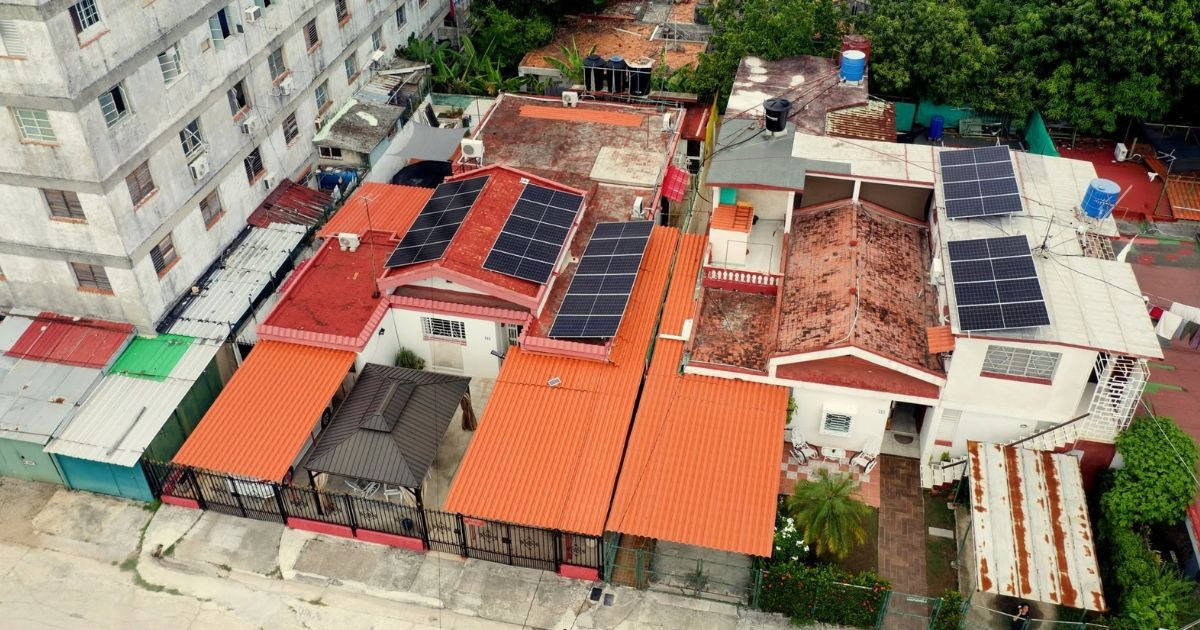
The rapid increase in solar panels atop homes and buildings in Havana, largely driven by prolonged blackouts and the government's failure to revamp its outdated energy infrastructure, has prompted Cuban authorities to call for regulations to manage these installations and establish clearer safety standards.
Armando Rodríguez Batista, the Minister of Science, Technology, and Environment (Citma), shared an analysis titled "Solar Panels: Between Necessity and Order" on Facebook this past Wednesday. He described the growth of solar panel systems as a "historic opportunity" but emphasized the need for careful monitoring to prevent new issues from arising.
The following day, the Cuban News Agency (ACN) revisited the topic, highlighting Rodríguez's emphasis on the importance of organizing solar panel installations on the rooftops of Havana's homes and buildings—a trend that has seen significant growth in recent months.
The analysis shared by the Citma minister includes insights from Dania González Couret, an architect and professor at the Technological University of Havana (CUJAE), who also founded the National Board of Cuba Solar. She praised the increasing number of citizens utilizing urban rooftops to generate electricity.
Harnessing Solar Energy in Urban Areas
"I am thrilled because I have long argued that large photovoltaic parks on the outskirts of cities take up land that could be used for food cultivation. In cities, we have roofs, lots of roofs," she stated.
Studies conducted in El Vedado show that properly installed panels can yield a dual benefit: generating electricity and shielding homes from heat. These structures help reduce the thermal load on a building, potentially lowering the need for ventilation and air conditioning.
González noted that in Cuba, panels achieve optimal performance when installed at an angle between 15 and 30 degrees relative to the horizontal plane.
Challenges and Safety Concerns
However, the expert warned that rapid growth has led to installations by individuals lacking technical expertise. "It's a business, and many people are charging for it without the necessary knowledge. Mistakes are being made," she cautioned.
This issue becomes more critical in multifamily buildings, older structures, and historic areas, where certain installations require permits and must ensure the safety and stability of the equipment.
For now, authorities assure there will be no fines for those who already have systems installed. The minister's analysis aims to provide technical guidance and unify requirements to avoid inconsistent criteria across different municipalities.
González believes the current energy crisis could lead to a positive change if the expansion of domestic solar energy is pursued safely and continues beyond any improvement in the electricity supply.
"It's never too late if the outcome is good. We should seize this opportunity, do it right, follow up to perfect it, and not abandon this practice once the electricity supply improves," she concluded.
Economic Implications of Solar Independence
The rise of these systems is directly linked to power outages. González pointed out that many Cubans have opted for autonomous systems with batteries, as grid-connected systems stop providing electricity during outages.
However, autonomy comes at a cost: batteries significantly increase system expenses, have a limited lifespan, and pose environmental issues when they need replacement.
The expansion of private panels occurs in a Cuba where escaping blackouts increasingly hinges on a family's economic capacity. For those who can afford them, solar systems allow refrigerators, fans, lights, and other devices to operate during lengthy power interruptions.
In parallel, the government has sought to encourage domestic generation. The Ministry of Finance and Prices' Resolution 114/2026 set a rate of 90 Cuban pesos per kilowatt-hour (kWh) for electricity delivered to the National Electric System by residential and non-residential producers, exempting service tax on income from such sales.
Selling electricity to the grid requires specific technical conditions, including compatible systems for interconnection and bi-directional meters that measure both consumption and delivery.
In addition, incentives for acquiring solar technologies have been expanded. In August, the government extended the customs tax exemption for importing photovoltaic solar systems, their components, and other renewable energy equipment, valid until December 31, 2027.
Understanding the Regulation of Solar Panels in Cuba
Why is Cuba looking to regulate solar panel installations?
Cuba aims to regulate solar panel installations to ensure safety, provide technical guidance, and prevent inconsistent criteria across different municipalities, driven by the rapid increase in installations due to frequent blackouts and outdated energy infrastructure.
What are the benefits of installing solar panels in Cuban cities?
Installing solar panels in urban areas offers dual benefits: generating electricity and reducing heat load on buildings, which can lower the need for ventilation and air conditioning.
What challenges are associated with the rapid growth of solar panels?
The rapid growth of solar panels has led to installations by individuals lacking technical expertise, which can result in mistakes and safety concerns, particularly in multifamily, older, and historic buildings.