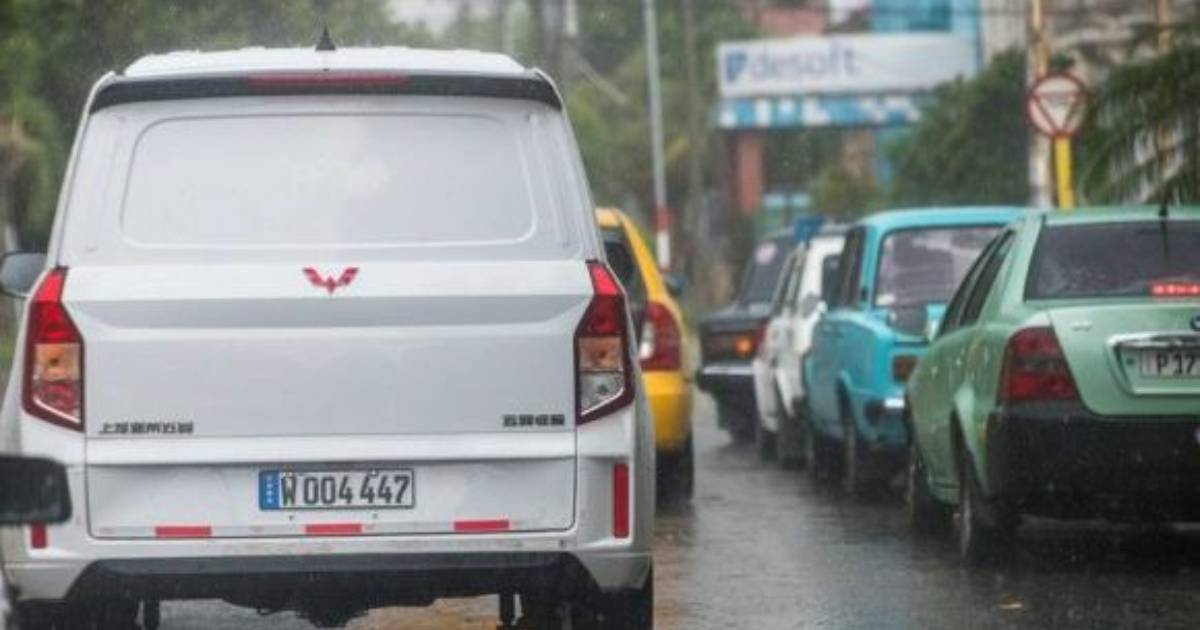
Between January and July of 2026, U.S. exports of vehicles, motorcycles, spare parts, and bicycles to Cuba reached a total of $91 million, with $17.4 million shipped in July alone, according to the U.S.-Cuba Economic and Trade Council (USCTEC).
Miami serves as the primary hub for these shipments, with used passenger vehicles boasting engines over 3,000 cc leading the charge, accounting for $34.9 million in the first seven months of the year. In July alone, this segment contributed $7.15 million.
Trailing behind are used vehicles with engines between 1,500 and 3,000 cc, which amassed nearly $25 million, followed by general passenger cars, totaling $13.8 million during the same period.
Noteworthy among these exports are electric motorcycles from Houston, Texas, which accumulated $2.18 million, and used electric passenger vehicles, reaching $2.92 million.
An intriguing detail in the breakdown is the shipment of "armored combat vehicle parts" from Houston, valued at $776,131 in July, a new entry not seen in previous months of the analyzed period.
Fuel Purchases Increase Amid Vehicle Imports
In tandem with the vehicle shipments, Cuba significantly increased its fuel purchases from the United States. In July, the island acquired $61.1 million in gasoline, kerosene, and other derivatives, marking a 22% rise compared to June's $47.9 million purchases, as reported by the USCTEC in their fuel analysis.
Cuba's total hydrocarbon imports from the U.S. between January and July amounted to $156.8 million, making fuel one of the key elements in bilateral trade.
These fuel shipments are exclusively designated for the Cuban private sector — small and medium enterprises along with other non-state entities — deliberately excluding the government, Armed Forces, and state-owned companies.
Reuters reported at the end of March 2026 that around 30,000 barrels were shipped in ISO tank containers aboard 61 container ships bound for the port of Mariel.
Regulatory Changes Shape Trade Dynamics
This commercial exchange occurs amid evolving regulatory landscapes. In February, the Cuban regime halted the importation of combustion vehicles for new contracts, yet in August, it enacted Decree 163/2026, paving the way for the importation of electric vehicles and assembly components.
Resolution 104/2026 from the Ministry of Foreign Trade and Foreign Investment (MINCEX) authorized 17 Cuban legal entities — including IMPEXPORT, CIMEX, DUNA, SASA, TRADEX, CONSTRUIMPORT, and AXESS — to import vehicles and parts for commercial purposes.
The total U.S. exports to Cuba from January to July 2026 soared to $674 million, showing continuous growth from $64.9 million in January to $148.9 million in July, according to the U.S. Census Bureau. This growth persists despite the Trump administration's ongoing embargo sanctions and the extension of the Trading with the Enemy Act in August 2026.
FAQs on U.S.-Cuba Trade Dynamics
What types of vehicles are primarily exported from the U.S. to Cuba?
The primary exports include used passenger vehicles with engines over 3,000 cc, followed by those between 1,500 and 3,000 cc, and general passenger cars.
How has Cuba's regulatory environment affected vehicle imports?
In February, Cuba halted combustion vehicle imports for new contracts but allowed electric vehicle imports in August under Decree 163/2026.
Which sectors in Cuba benefit from U.S. fuel imports?
The Cuban private sector, including small and medium enterprises and other non-state entities, benefits from these fuel imports.