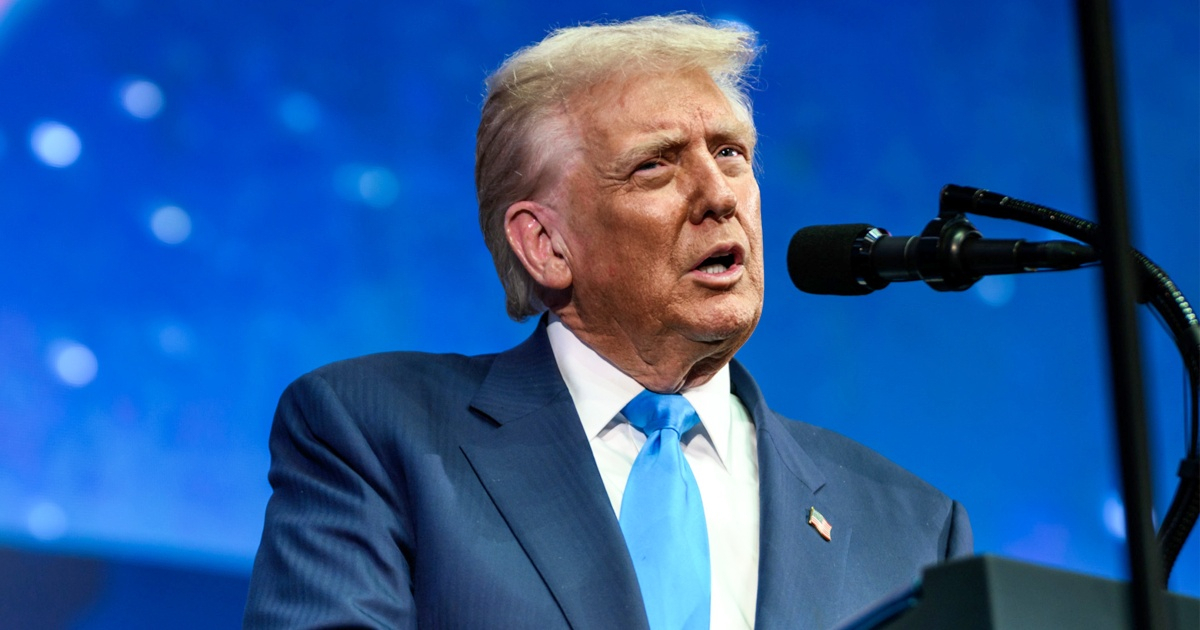
On Wednesday, President Donald Trump acknowledged that oil and gasoline prices won't decrease before the upcoming midterm elections in November. However, he confidently stated that they will start to decline immediately after the elections conclude.
According to a report from AP News, Trump linked the rising cost of oil directly to the ongoing war between the United States and Iran, which has been escalating since early 2026.
Escalating Energy Tensions
This announcement comes during a period of heightened energy tension. On Wednesday, Brent crude surpassed $100 per barrel, driven by new exchanges of military strikes between Washington and Tehran, as reported by Reuters.
Despite the politically risky admission, Trump stated that "oil and gas prices won't drop before the midterms and will begin to decrease immediately after," effectively dismissing any short-term relief for consumers.
Oil Price Trends and Political Ramifications
The situation has been one of sustained escalation. Brent crude started 2026 at around $70 per barrel, surged to $112.57 on March 28—the highest level since 2022—and exceeded $125 in May amid the conflict's peak intensity.
Although partial de-escalation agreements in June temporarily reduced prices, they spiked again in August and September due to renewed military offensives.
Gasoline in the United States averaged $4.15 per gallon on Labor Day, setting a record for the holiday, while diesel reached $5.85 per gallon, surpassing the previous record set in 2022.
Strategies and Internal Debates
Throughout the year, Trump has tested various strategies to control prices. In July, he demanded that gas stations lower their prices "immediately," targeting a crude price that was then about $68 per barrel, with a goal of $2.25 to $2.50 per gallon.
On August 27, he met with oil executives and refiners to explore measures to reduce fuel costs.
Within his administration, there are differing views on the timeline. Treasury Secretary Scott Bessent suggested that gasoline could drop to $3 per gallon by summer if the Strait of Hormuz, through which roughly 20% of the world's oil passes, reopens.
Energy Secretary Chris Wright, however, expressed a more pessimistic view, cautioning that prices might not fall below that threshold until 2027.
Potential Impacts on Cuba and Beyond
In April, Trump had already hinted on Fox News that gasoline prices could be "the same" or "a little higher" for the midterms, though not as decisively as his statement this Wednesday.
Analysts and media outlets like Reuters and Politico have noted that any relief in prices may come too late for voters to feel its impact before November, posing a considerable electoral risk for Republicans.
The global surge in oil prices has also affected Cuba, where the regime liberalized gasoline prices starting May 15, causing informal market prices to skyrocket from 700-1,500 Cuban pesos per liter in January to 7,000-8,000 pesos in subsequent months, exacerbating an already severe energy crisis.
A sustained drop in international oil prices following the November elections would have direct implications not only for American consumers but also for the energy supply in Cuba.
Frequently Asked Questions about Oil Prices and Political Implications
Why are oil prices linked to the U.S.-Iran conflict?
The ongoing conflict between the U.S. and Iran affects the global oil supply, leading to fluctuations in prices due to geopolitical tensions and potential disruptions in oil production and transportation.
How might U.S. midterm elections impact oil prices?
President Trump suggests that oil prices will decrease after the midterm elections, implying that political strategies and outcomes could influence market expectations and pricing.
What are the implications for Cuba if oil prices drop?
A decrease in international oil prices could alleviate some of Cuba's energy supply issues, potentially leading to more stable fuel prices and easing the current energy crisis.