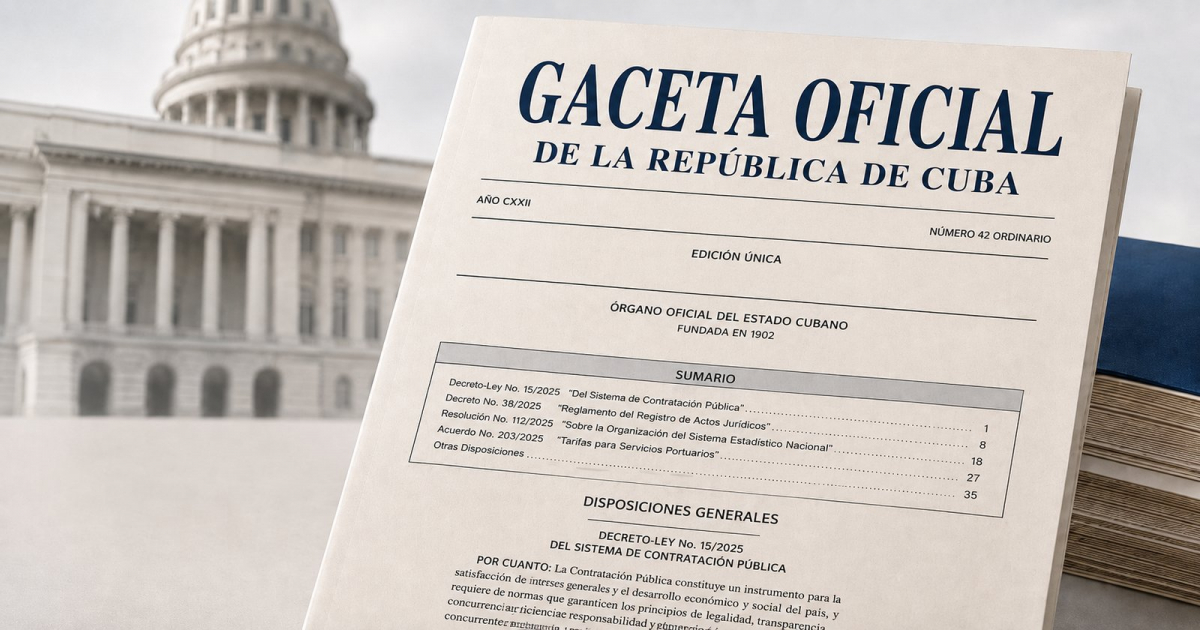
The Cuban State Council unveiled Decree-Law 89, titled "On Non-Agricultural Cooperatives," in the Official Gazette No. 12, Special Edition of 2026, on September 7th. This decree provides a legal foundation for the establishment, operation, and dissolution of these entities within the country's non-agricultural economic sectors.
Non-agricultural cooperatives are characterized by the decree as "economic entities with a business nature," formed through the voluntary association of individuals. Their primary aim is the "production of goods and the provision of services to meet social interests and those of their members."
These cooperatives are granted their own legal status and assets, which they utilize to fulfill their obligations. Their operations are governed by the Constitution, Decree-Law 89, supplementary regulations, internal statutes, and decisions made by their governing bodies.
The National Institute of Non-State Economic Actors, established in August 2024 and under the Council of Ministers, serves as the regulatory body. This institute is tasked with "directing and overseeing state policy for the development and functioning of non-agricultural cooperatives."
Decree-Law 89 is part of a larger regulatory package found in the Official Gazette No. 12 Special Edition of 2026. This package also includes Decree-Law 88, which pertains to micro, small, and medium-sized enterprises as well as private companies with over 100 employees, and Decree-Law 90, which governs self-employment.
Regarding procedural aspects, Resolution 148/2024 from the Ministry of Economy and Planning mandates that the processes for creating, merging, splitting, or dissolving micro, small, and medium enterprises (MSMEs) and non-agricultural cooperatives be conducted "digitally through the Economic Actors Platform."
Applications to establish private cooperatives are managed by the Municipal Development Directorate of the relevant Municipal Administration Council, while those of a state nature or linked to political and social organizations are processed by the Ministry of Economy and Planning.
Entities aiming to operate in areas prioritized for heritage conservation must first secure a Land Use Opinion from the offices of the Historian or Conservator of heritage cities.
The regulatory framework also includes additional requirements for specific activities, such as the production of medical and dental instruments or the care of the ill, disabled individuals, and the elderly, which necessitate prior authorizations from municipal health or education authorities.
This decree-law repeals Decree-Law 47 of 2021, which previously governed non-agricultural cooperatives in Cuba, marking a progression in legal norms that began with the legal recognition of these cooperatives through Decree-Law 305 of 2012.
Additionally, Resolution 2/2026 from the National Institute of Non-State Economic Actors, which took effect this Wednesday, updates the digital procedures for the establishment and dissolution of these entities.
Key Questions About Cuba's Non-Agricultural Cooperatives Reform
What is the purpose of Decree-Law 89 in Cuba?
Decree-Law 89 establishes a legal framework for the creation, operation, and dissolution of non-agricultural cooperatives in Cuba, aiming to organize these entities within the nation's non-agricultural economic sectors.
Who oversees the regulation of non-agricultural cooperatives in Cuba?
The National Institute of Non-State Economic Actors, under the Council of Ministers, is responsible for directing and controlling state policy regarding the development and functioning of non-agricultural cooperatives.
How are applications for private cooperatives handled in Cuba?
Applications for private cooperatives are received and processed by the Municipal Development Directorate of the respective Municipal Administration Council, whereas those of a state nature are handled by the Ministry of Economy and Planning.