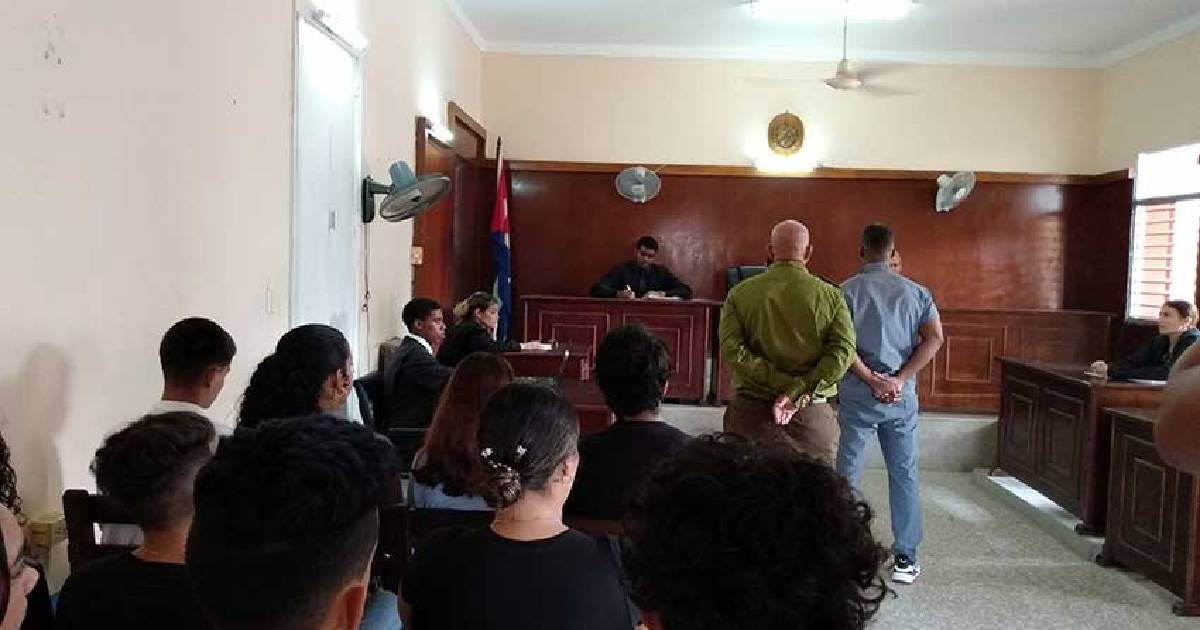
On September 1st, the Provincial People's Court of Las Tunas issued Sentence No. 10 of 2026, convicting eight political prisoners to terms ranging from seven to eight years for "propaganda against the constitutional order," as reported by the human rights organization Cubalex.
The panel of judges, consisting of Jorge Luis García Fajardo as the speaker, along with Gilberto Sevilla Castañeda and Esteban Marino Iser Milton, imposed the harshest sentence on Guillermo Carralero López, who will serve eight years behind bars.
The remaining seven individuals—Javier Reyes Peña, Maikel Hill Ramírez, Carlos Manuel Santiesteban Saavedra, Carlos Alberto McDonald Ennis, Enrique González Infante, Pedro Carlos Camacho Ochoa, and Adisbel Mendoza Barroso—each received a sentence of seven years in prison.
Details of the Sentencing
The court's decision highlighted that the defendants had joined the Cuba Primero movement and were involved in creating videos and sharing content on social media linked to the group. The court labeled this movement as one with "terrorist aims," accusing it of attempting to "destabilize the constitutional order and overthrow the Cuban political system."
Cuba Primero, founded by Cuban-American businessman Armando Labrador, advocates for a peaceful democratic transition on the island. However, the Cuban regime classified it as a terrorist-linked organization in July 2025, a designation the movement and its founder vehemently refute.
Trial and Imprisonment Background
All eight defendants had been held in pretrial detention for over two years following their arrests in March and April 2024, before the verdict was announced.
The trial took place on June 30th within the confines of the Provincial Prison El Típico, under heavy security surveillance. Authorities cited a lack of fuel as the reason for conducting the trial in the prison, effectively preventing family members and independent observers from attending the proceedings.
One of the accused, Carlos Alberto McDonald Ennis, who is in poor health, was released on bail in June prior to the final sentencing.
Judicial Decisions and Wider Implications
The prosecution initially sought sentences ranging from six to nine years, so the final judgments fell short of the maximum requested by the prosecution.
On August 8th, Cuba's Supreme People's Court upheld sentences of 14 and 13 years for two other political prisoners also detained in Las Tunas, Ana Ibis Tristá Padilla and Jarol Varona Agüero, on similar charges.
Cubalex warned that these penalties are part of a systematic pattern: "Sentences of up to eight years for actions related to activism and expressing critical opinions demonstrate the harshness with which any form of opposition is punished in Cuba."
The organization further cautioned that "these sentences intensify persecution and aim to instill fear to deter other expressions of dissent and political participation," especially as Prisoners Defenders recorded an unprecedented number of 1,207 political prisoners in Cuba at the start of 2026.
Understanding Cuba's Political Climate
What charges were brought against the political prisoners in Las Tunas?
The political prisoners were charged with "propaganda against the constitutional order," a charge the Cuban government frequently uses against dissidents.
What is Cuba Primero, and why is it controversial?
Cuba Primero is an opposition movement founded by Armando Labrador, advocating for a peaceful democratic transition in Cuba. The Cuban government controversially labeled it as a terrorist-linked group, a classification rejected by the movement.
How has Cubalex responded to these sentences?
Cubalex has criticized the sentences as part of a broader pattern of repression against political activism and dissent in Cuba, highlighting the severe penalties imposed for expressing opposition.