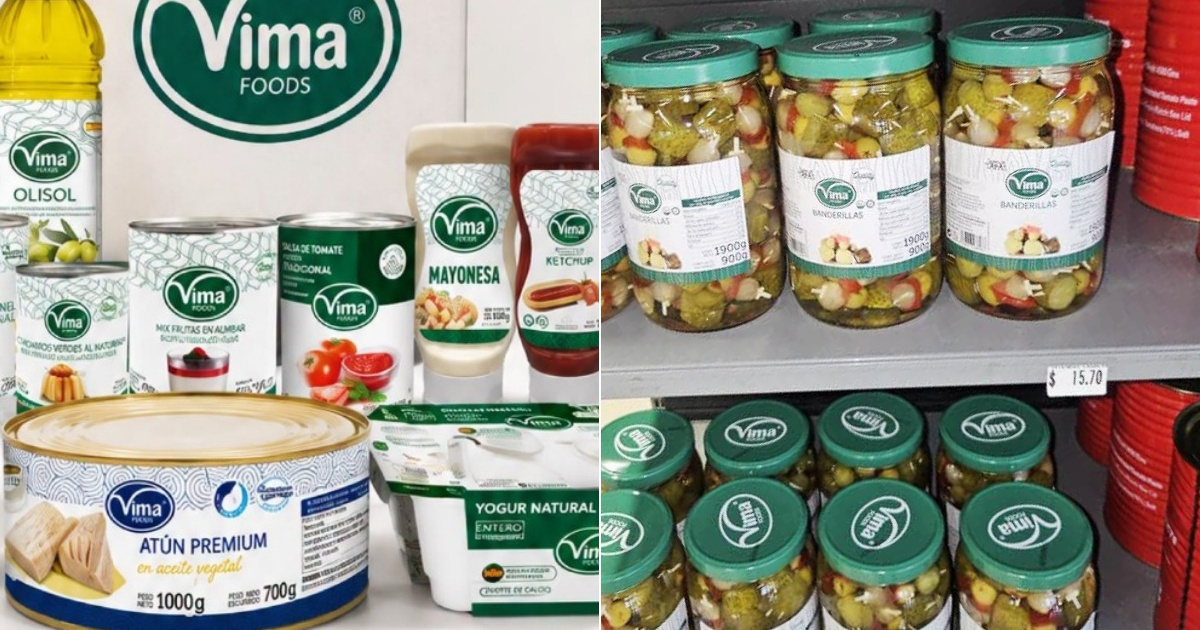
On September 1st, the lobbying firm Continental Strategy LLC terminated its contract with Vima World S.L., a Spanish company exporting food to Cuba, just seven weeks after it was initiated.
The official termination document, submitted to the U.S. Congress the following day, confirmed the end of this brief relationship, which cost the Galician company $37,742 without achieving the desired outcomes.
Vima had engaged Continental Strategy in late July to handle matters related to trade, the food industry, and foreign relations. The contract's objective was succinctly described in one line: pursuing "project opportunities in Latin America."
Despite Cuba being a market that accounts for nearly half of the group's revenue, it was not mentioned in any section of the contract.
The Strategic Choice of Continental Strategy
The decision to hire Continental Strategy was strategic. Its founder, Carlos Trujillo, served as the U.S. Ambassador to the Organization of American States during Donald Trump's first presidential term. Among the firm's partners are Alberto Martínez, who was the chief of staff to Secretary of State Marco Rubio, and Katie Wiles, daughter of Susie Wiles, the White House Chief of Staff. This network made Continental a particularly appealing gateway for foreign firms seeking engagement in Washington.
Ironically, it was the same political environment that was spearheading the opposition against Cuban military business interests.
The Key Lobbyist: A Cuban-Born Specialist
Initially, the contract listed three lobbyists—Trujillo, Eric Farnsworth, and Francisco Petrirena. However, the termination report identified Petrirena as the sole active lobbyist, who contacted the Department of State as the federal agency.
Petrirena, the vice president of Continental Strategy in Miami, was born in Havana and graduated in Accounting and Finance from the University of Havana. He worked at the Vatican Embassy in Cuba, participating in preparations for Pope Francis's 2015 visit, before relocating to Miami in 2017.
Impact of Sanctions Against GAESA
Continental Strategy did not specify the reasons for the contract termination in the document. However, Legis1, a specialized portal reporting on the contract's end on September 3rd, directly linked the decision to the intensification of U.S. sanctions against GAESA, the Cuban military's business conglomerate.
Vima faces dual exposure in Washington. It operates in Cuba through Vima Caribe S.A., partnered with Tiendas Caribe—an entity associated with the military—and exports agricultural products from the U.S. to the island via Vima USA Ltd., based in New York and Miami.
The group's branch in Coruña reported nearly 106 million euros in revenue for 2024, with about 49 million euros originating from Cuban operations, according to the Department of State.
In May 2026, Trump signed Executive Order 14404, introducing secondary sanctions for foreign companies dealing with entities blocked by the Cuban regime. On May 7th, GAESA was designated along with its executive president. By June 5th, the deadline for foreign companies to sever ties with the conglomerate passed, leading to the sanctions on Tecnoimport and Tecnotex, two GAESA subsidiaries, just a day before Vima's registration with Continental Strategy went public.
Direct Warning from the Department of State
Juan Pablo Segura, the Deputy Secretary of State for the Western Hemisphere, was explicit in August: "Foreign companies wishing to invest in Cuba must partner with a Cuban state company, making them complicit in the dictatorship's corruption scheme. For this reason, the Trump Administration has imposed secondary sanctions on all companies maintaining business relations with GAESA."
This is not the first instance where Vima's Cuban connections have caused issues for those associating with it. In 2016, the law firm Mossack Fonseca—where Vima World Ltd. appeared among British Virgin Islands entities—ceased relationships with companies linked to the group's founder, Víctor Moro Suárez, after concluding that their operations in Cuba could expose them to U.S. sanctions.
Vima continues to hold significant interests in Cuba, including a deal signed in May 2024 to manage 20 stores on the island alongside Tiendas Caribe, and has not announced any changes in its operations.
According to Legis1, the case "illustrates how U.S. sanctions policy can rapidly reshape the lobbying landscape" and highlights the financial and reputational risks facing firms representing clients with ties to sanctioned entities.
Understanding the Impact of U.S. Sanctions on Cuban Business Ventures
What led to the termination of the contract between Continental Strategy LLC and Vima World S.L.?
The contract was terminated due to heightened U.S. sanctions against GAESA, the Cuban military's business conglomerate, which impacted Vima's operations in Cuba.
Why was Continental Strategy LLC a strategic choice for Vima World S.L.?
Continental Strategy was chosen for its strong connections within the U.S. political landscape, including ties to key figures from the Trump administration.
How do U.S. sanctions affect foreign companies doing business with Cuba?
U.S. sanctions impose significant financial and reputational risks on foreign companies dealing with entities linked to the Cuban regime, particularly those connected to the military.