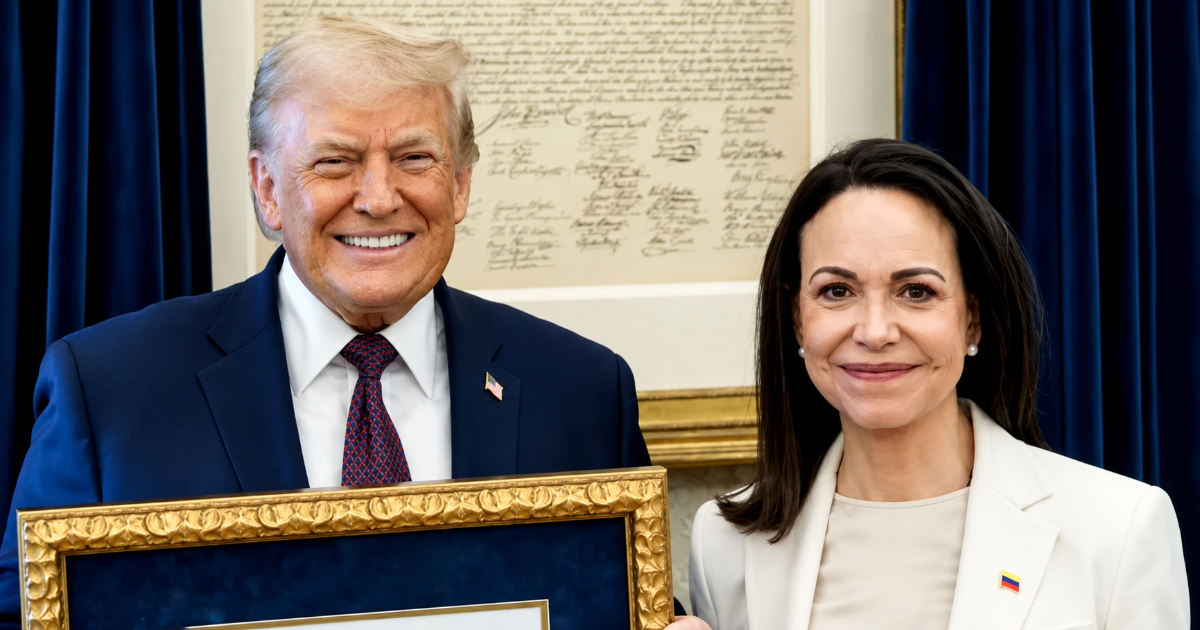
The White House has reportedly requested that María Corina Machado make a stop in Washington before heading back to Venezuela. This information was revealed in a recent analysis by journalist David Alandete, who is the ABC correspondent at the White House.
According to Alandete, the request stems from the Trump administration's urgent need to demonstrate support for the Venezuelan opposition during a politically sensitive time.
Controversial Oil Deal Sparks Outrage
The catalyst for this request is the controversial oil agreement announced by Donald Trump on August 29, described as "the largest oil deal in history," signed directly with the Chavista regime led by Delcy Rodríguez.
This deal involves 17 Venezuelan oil fields with estimated reserves of about 65 billion barrels, lasting 25 years. It includes a 35% stake for the United States through North American Blue Energy Partners (NABEP), a company linked to Venezuelan businessman Alejandro Betancourt, who has been previously investigated in the U.S., Switzerland, and Spain.
The agreement has faced significant backlash from the Venezuelan diaspora in Florida, a critical voting bloc for Republicans ahead of the November 3 midterm elections, where the House of Representatives and a third of the Senate will be up for election.
Machado's Response to the Deal
Alandete explained that there is a push for Machado to visit Washington, express support for the agreement, and thus show alignment with Trump's strategy. The proposal has been put forth to Machado and her team, emphasizing the need for her presence in Washington before returning to Venezuela.
On September 3, Machado broke her silence on the oil deal, expressing "sadness and anger," and raised direct questions about the signatories, the guarantees, the benefits for Venezuela, and the actual control Venezuelans have over their resources.
"The wealth beneath Venezuelan soil does not belong to any illegitimate regime," stated the opposition leader, adding that "genuine investment requires not just money, but also legitimacy, rule of law, transparency, and legal security."
Machado clarified that while she does not oppose U.S. involvement in Venezuela's reconstruction, she insists that "only a democratically elected government that truly represents the Venezuelan people's will can sign such agreements."
Ongoing Tensions with Washington
Tensions between Machado and Washington have been mounting since January. After Nicolás Maduro's capture, Trump decided to collaborate with Delcy Rodríguez, bypassing the democratic opposition.
Machado visited the White House on January 15, where she symbolically presented Trump with her Nobel Peace Prize medal, and returned on March 6 with a transition roadmap. Each time, she was met with the same message: patience.
In June, following the earthquakes that hit Venezuela on the 24th, Machado attempted to return twice, as reported by ABC's White House correspondent. Her first attempt via private plane from Virginia to Curaçao was thwarted when Dutch authorities revoked landing permission due to indications that Washington did not support her trip. Similarly, her commercial flight attempt from Panama was unsuccessful.
Subsequently, Trump administration officials leaked to outlets like Axios, describing Machado's persistence as "grotesque political opportunism." On July 15, the State Department had to clarify before Congress that the U.S. would not prevent her return as she is a Venezuelan citizen with full rights to go back.
Since then, Machado has adopted a more cautious approach, maintaining a delicate balance of not severing ties with Trump while distancing herself from Washington. Republican lawmakers from Florida have warned the president that the Chavista regime might be stalling until he leaves office.
Meanwhile, administration officials have told reporters that "democracy isn't just about elections," a statement that Machado's team has been challenging in Washington with a specific demand: a clear electoral timeline for Venezuela.
Tensions and Diplomacy in Venezuela
Why is the White House interested in Machado's visit?
The White House wants to demonstrate support for the Venezuelan opposition amid a politically delicate situation, especially in light of the controversial oil deal with the Chavista regime.
What are Machado's concerns about the oil agreement?
Machado is worried about the legitimacy of the signatories, the guarantees provided, the benefits for Venezuela, and the actual control Venezuelans have over their resources, stressing the need for a democratically elected government to oversee such deals.
How has the Venezuelan diaspora reacted to the oil deal?
The Venezuelan diaspora in Florida has reacted negatively to the oil deal, which is crucial for Republicans, especially with the upcoming midterm elections.