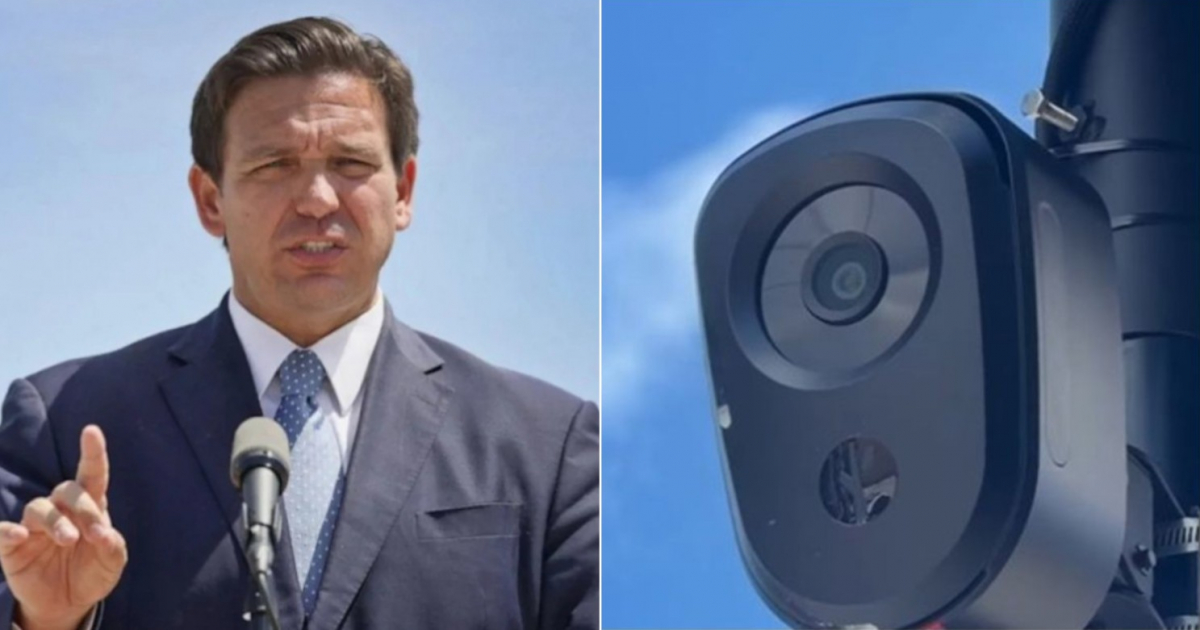
Miami-Dade's Sheriff's Office has completely halted its license plate recognition camera program following a state directive limiting the use of this technology on Florida's highways, according to a report by Univision 23.
The department's 84 Flock devices are now offline, sparking a heated debate over mass surveillance and citizen privacy concerns.
Sheriff Rosie Cordero-Stutz defended the program's track record before announcing its full suspension, highlighting its role in capturing individuals wanted for serious crimes and aiding in the recovery of abducted children and missing persons. However, she acknowledged the necessity for safeguards to prevent misuse.
Impact on South Florida's Surveillance Landscape
South Florida boasted over a thousand Flock cameras in operation—around 372 in Miami-Dade and 863 in Broward—as per the independent DeFlock map. This widespread deployment has fueled ongoing discussions about privacy and surveillance.
DeSantis' Stand on Surveillance
On August 31, the state's Department of Transportation issued a memo rescinding all prior approvals for automatic license plate readers on state roads, giving a 30-day deadline for equipment removal. The document, signed by the agency's Chief Engineer, Will Watts, cited a "recent exponential increase" in police cameras and "alarming reports of misuse, data privacy issues, and surveillance plans" demanding swift action "to preserve Floridians' sovereignty and quality of life."
This decision aligns with Governor Ron DeSantis' earlier promise, where he criticized the technology as "out of control" and cautioned against creating an AI-driven surveillance state. "I'm all for law enforcement having tools to hold criminals accountable. But I don't want this to turn into a surveillance state," DeSantis stated.
Speaking on the Real America's Voice podcast, the governor expressed further concerns: "The cameras we have...who's to say they're only capturing license plates? I believe they're filming the people inside their cars too. They're gathering much more data than they admit. We've seen abuses already."
Understanding Flock Cameras and Public Opposition
Flock license plate readers differ from traditional cameras by capturing not only the license plate but also the make, model, color, and unique vehicle features like dents and bumper stickers. They log the exact date, time, and location of each passing car.
"You drive past a camera, it scans and records your passage—it's essentially metadata," cybersecurity researcher Rod Soto explained to Univision 23, noting that such data enables tracking a vehicle's entire route.
Martha Torres, spokesperson for the Libre Florida Initiative, questioned the data's management. "We don't know who's controlling it, how it's controlled, who it's sold to, or who's handling this citizen information," she stated.
The DeFlock portal warns that these cameras collect data from millions of cars, even if the driver isn't suspected of a crime. "They're marketed as essential crime-fighting tools, yet they ignore the powerful tools police already have for tracking criminals, such as mobile phone location data, bypassing legal requirements for warrants," the site claims.
Debate Over Camera Restrictions
Florida's order doesn't affect cameras on private or local roads, where 98% of surveillance devices are located, according to DeSantis. Miami Beach Mayor Steven Meiner, opposing the new restriction, announced plans to seek legislation keeping the cameras in his city, where approximately half of the 40 devices are on state roads.
Conversely, Jacksonville's Sheriff's Office immediately suspended its program across Duval County. Florida Attorney General James Uthmeier also criticized the technology, citing documented cases where officers used it for unauthorized surveillance of ex-partners or individuals without legal justification.
The Institute for Justice reported at least 24 such incidents by mid-July, including one officer checking his ex-girlfriend's license plate 69 times and another tracking his ex-wife's vehicle 717 times over two years.
DeSantis, who raised alarms about Flock cameras weeks ago, suggests New Hampshire's regulatory model, which mandates data deletion within three minutes unless linked to an active case, and has urged the state Legislature to adopt similar rules to safeguard Floridians' privacy.
Other states have taken steps against Flock Safety, either canceling or not renewing their contracts with the company. Texas Governor Greg Abbott ordered the suspension of state funding for these cameras, affecting over 300 devices in Dallas.
Questions About Flock Cameras and Privacy
What are Flock cameras used for?
Flock cameras are used to capture detailed information about vehicles, including license plates, make, model, and unique features, for law enforcement purposes.
Why is there controversy over Flock cameras?
There is controversy because these cameras raise concerns about mass surveillance, privacy violations, and potential misuse of collected data.
How has Governor DeSantis responded to the use of Flock cameras?
Governor DeSantis has criticized the technology, warning against a surveillance state, and has acted to remove Flock cameras from state roads.