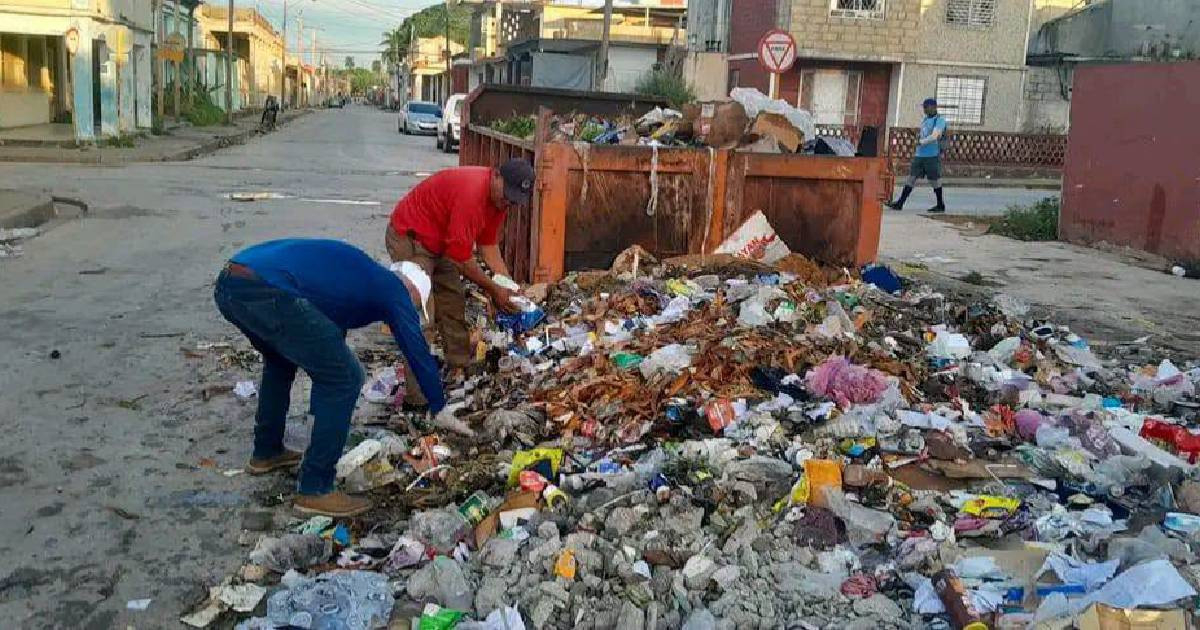
The first secretary of the Communist Party in Ciego de Ávila, Julio Gómez Casanova, has attributed the halt in garbage collection services for over 10 days in the provincial capital to the U.S. embargo. Announcing on Sunday that waste collection resumed the previous day, he cited the embargo as the reason for a "shortage of fuel."
In a Facebook post, Gómez stated that the interruption resulted from "lack of fuel—a direct consequence of the U.S. blockade." He added that efforts this week would focus on the most affected areas, with various entities joining the local development initiative, CostÁvila Pdl, full-time. This project is designed to manage solid waste collection, street cleaning, and maintenance of green spaces.
Public Response Highlights Doubt
Gómez urged residents to participate in cleaning and mowing in their neighborhoods, emphasizing that "keeping the city clean is everyone’s responsibility." However, the public response was largely skeptical. One comment bluntly stated, "Don't be shameless," while another credited the resumption of services to public pressure rather than official action: "Thanks to the pressure from social networks, the garbage is being collected."
Additional comments pointed to shared responsibility: "Besides poor management, people contribute to the problem by dumping trash at any corner." Others demanded that available fuel be sent to Ciro Redondo, another affected municipality, and expressed concern that school children had to navigate streets still littered with waste.
Embargo Blame Faces Scrutiny
The justification of the embargo does not hold up under the current circumstances. The garbage collection crisis in Cuba is part of a larger structural issue that has worsened since 2023, impacting the entire island.
Recently, streets in Artemisa have been buried under trash due to stalled garbage trucks. A landfill in a residential area of Santa Clara had gone 102 days without collection, and Ancón Beach in Trinidad ended its summer season covered in waste.
In Havana, central areas are overwhelmed with piles of garbage, hindering both vehicular and pedestrian movement, and posing significant health risks. The official press acknowledged in April the presence of over 150 micro-landfills in Ciego de Ávila and announced a sweeping plan to clean more than 200 kilometers of streets, yet no visible improvements have been seen.
Days earlier, an expatriate Cuban reported seeing large heaps of garbage in front of the Guiñol Theater in the heart of the City of Portals.
Continued Blame on U.S. Policies
Gómez has a history of blaming the province's issues on the embargo. In July, he claimed that shortages of electricity, water, transportation, food, and connectivity were "direct consequences" of the embargo and the "energy siege" imposed by the U.S. government, as reported by the official newspaper Granma.
Understanding the Ciego de Ávila Garbage Crisis
What is the main reason for the garbage crisis in Ciego de Ávila?
The main reason cited by officials for the garbage crisis is the U.S. embargo, which they claim causes fuel shortages essential for waste collection services.
How have citizens responded to the government's explanation?
Citizens have largely responded with skepticism, with many attributing the resumed services to social media pressure rather than official initiatives.
What broader issues does the garbage crisis in Cuba reflect?
The garbage crisis reflects broader structural issues within Cuba, which have been deteriorating since 2023 and are exacerbated by inadequate management and infrastructure.