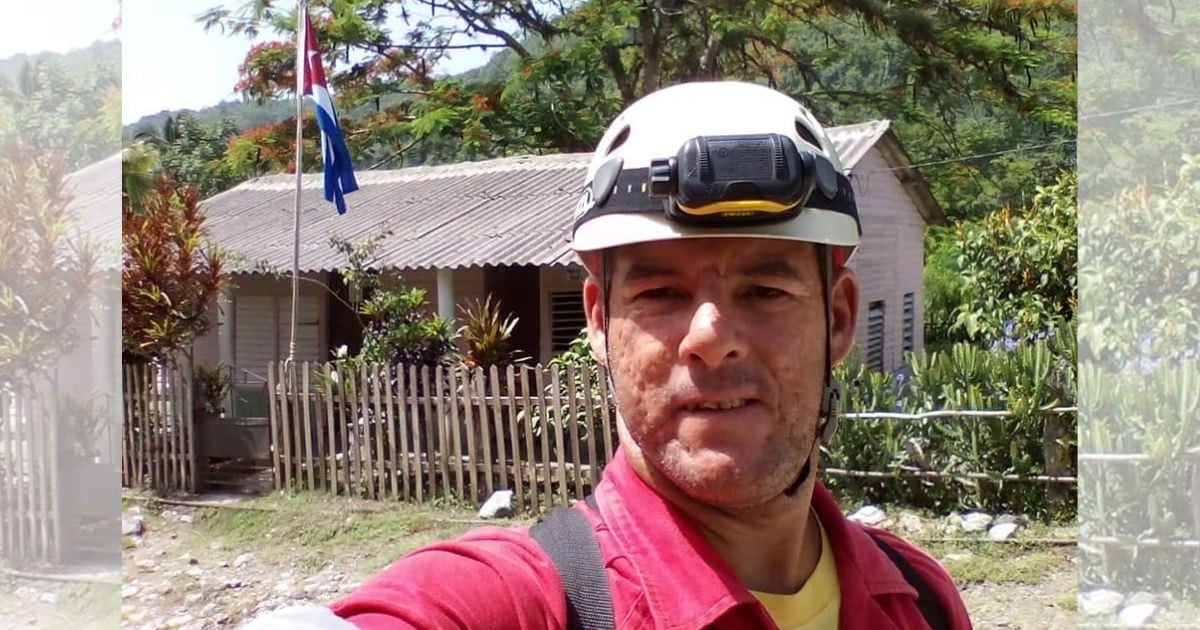
The clandestine storage and sale of fuel within homes in Santiago de Cuba pose a serious threat, potentially turning entire neighborhoods into "ticking time bombs," warned a leader from the Volunteer Firefighters Association amid an escalating energy crisis.
Aris Arias Batalla, the provincial vice president of the Volunteer Firefighters Association of Cuba in Santiago de Cuba, sounded the alarm on Friday through a Facebook post titled "Danger Lurking: The Ticking Bomb in Our Neighborhoods."
Arias distinguished between the acquisition of fuel for logistical and transportation purposes and the irregular storage of fuel inside residences, emphasizing that the country's need for fuel should not be misconstrued as permission to "turn a home into a clandestine fuel depot."
He cautioned that confusing logistical needs with domestic hoarding is setting a trap not just for oneself but for neighbors as well.
Despite a lack of clarity among some individuals regarding what is permissible, Arias stressed that the physical dangers associated with domestic fuel storage remain, regardless of how the rules are interpreted.
He highlighted the presence of five, 10, or 20-liter plastic containers filled with fuel stored in poorly ventilated rooms as particularly hazardous.
"This isn't a 'storage room'; it's a detonator," he stated firmly.
A significant part of his warning focused on the vapors produced by fuel in confined or semi-confined spaces, which can gather and create extremely perilous conditions in the presence of an ignition source.
The firefighter highlighted that seemingly everyday actions can become dangerous in the presence of concentrated flammable vapors, citing electrical switches, static electricity, and electronic devices as potential triggers for an accident.
He also addressed the issue of containers used for storing gasoline or diesel, noting that many are repurposed plastic containers not designed for such use, which can deteriorate under high temperatures.
The heat, he warned, can deform and weaken these containers, leading to cracks and spills.
"The smell isn't just an annoyance; it's a prelude to disaster," he wrote.
Additionally, Arias exposed the illegal sale of small fuel quantities from homes, a practice he described as "Clandestine Home Service."
"This illegal sale of small tanks and jerrycans via Clandestine Home Service is a criminal distortion. No one is authorized to do this," he asserted.
He rejected the notion that such activities can be justified as informal means to earn income during the crisis.
"This isn't a 'chance,' nor an 'invention'; it's a direct violation of safety regulations and social coexistence," he emphasized.
Arias urged residents to report instances of clandestine fuel storage or sale within homes.
"Fires can always be prevented. But prevention doesn't rely on luck or prayers. It requires reporting, diligence, and collective rejection of negligence," he declared.
Storing large amounts of fuel in residential areas poses a risk not only to those who do so but also to surrounding families, Arias noted.
"Let's call it what it is: a ticking time bomb. And the clock doesn't warn," he cautioned.
In one of the most stark parts of his message, Arias spoke of potential outcomes if these practices persist, including destroyed homes, families trapped under debris, and children suffering severe burns.
"When the accident happens—and it will if we don't stop this—no explanation will suffice," he warned.
His warning comes at a time when even the authorities have acknowledged irregularities related to private fuel storage.
In August, firefighters and fire protection specialists highlighted numerous violations in fuel handling by private businesses.
The identified practices included using plastic tanks, inadequate ventilation, lack of protection systems, joint storage of different fuels, and unloading directly into homes from non-specialized vehicles.
Authorities warned that such infractions could result in fines, confiscations, and even legal actions.
Concerns have a concrete history in Santiago de Cuba. In August 2025, a fire in a San Luis home left a resident with third-degree burns and injured a firefighter. During the intervention, a secondary combustion occurred due to a gasoline container and a lit stove.
In another incident in 2023 in the same city, a gasoline container exploded, causing a fire inside a home. Residents initially managed to contain the flames using sand, preventing a larger tragedy.
Understanding the Risks of Fuel Storage in Santiago de Cuba Homes
What is the main concern about storing fuel in homes in Santiago de Cuba?
The primary concern is the potential for entire neighborhoods to become "ticking time bombs" due to the clandestine storage and sale of fuel within homes, which poses significant fire hazards and risks of explosions.
How can residents help prevent fires related to fuel storage?
Residents can help prevent fires by reporting any instances of clandestine fuel storage or sale within homes, adhering to safety guidelines, and refusing to participate in or condone these dangerous practices.
What are some potential triggers for accidents in homes storing fuel?
Potential triggers for accidents include electrical switches, static electricity, and electronic devices, which can ignite concentrated flammable vapors in improperly ventilated spaces.