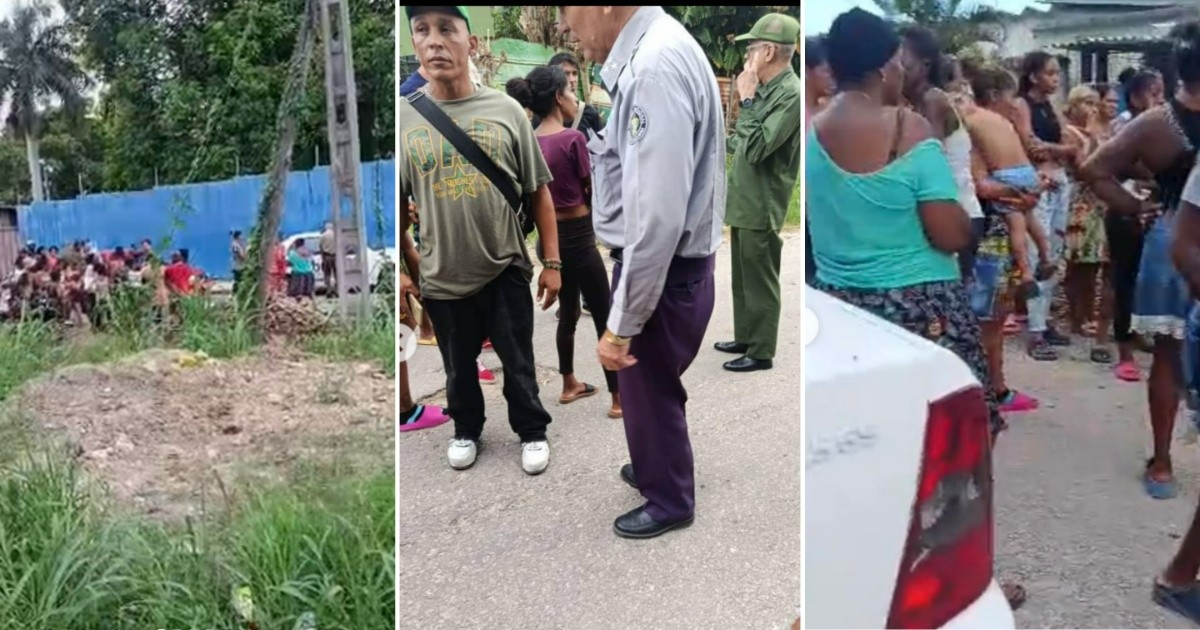
In the Vista Alegre neighborhood of Lawton, residents of the Cataluña shelter took a stand on Saturday against workers from Aguas de La Habana. Their goal was to stop the opening of a street intended to connect a military facility directly to the water line serving Diez de Octubre, as reported by journalist Magdiel Jorge Castro on Instagram.
The local community's frustration stems from a very real issue: they themselves lack running water and rely on water trucks for their supply. Meanwhile, authorities aimed to secure water access for what the residents refer to as "the Poligráfico," a military installation at the street's end.
"All the neighbors came out to oppose this because we don't get water here, yet they were going to give water to them," one resident explained to the journalist.
Another neighbor mentioned that the facility handles passport-related work and previously dealt with currency printing activities, though the journalist noted he could not independently verify these claims.
The protest saw the presence of several police officers and reportedly a general. Ultimately, the construction did not proceed, and authorities promised to increase the delivery of water trucks, a promise that remained unfulfilled the following day.
Water Shortages and Broken Promises
This incident occurs amid a water crisis that in July left over half a million Habaneros without water. The situation is worsened because 87% of the capital's pumping system relies on the electrical grid, and blackouts disrupt the supply.
In August, a break in the main water line from the Cuenca Sur left six municipalities, including Diez de Octubre, without water. The government had to deploy water trucks from the Armed Forces to provide temporary relief to critical areas.
Tensions have been high due to the perception that military and state facilities receive preferential access to basic services. Diez de Octubre has witnessed months of protests: in July, at least 24 people were detained in Luyanó following a demonstration over blackouts and water shortages, and Lawton saw pot-banging protests and garbage burning during several days of that month.
Living Conditions and Corruption in State Shelters
The Cataluña shelter is also a focal point for other serious complaints. Residents describe the accumulation of garbage, constant blackouts, and frequent disputes over the limited water delivered by trucks. Additionally, there are alleged irregularities concerning property ownership: residents claim they are not given ownership of their homes, while individuals connected to the Housing Department and the Government purportedly sell spaces for about $3,500 and charge another $500 for documentation.
Cuban state shelters have been documented as spaces characterized by overcrowding, unsanitary conditions, and corruption, where provisional housing solutions become permanent without the State addressing the living conditions of the inhabitants.
Understanding the Water Crisis in Diez de Octubre
What triggered the protest in Vista Alegre, Lawton?
The protest was triggered by residents' frustration over plans to connect a military facility to the water line while they themselves lack access to running water and depend on water trucks.
How has the water crisis affected Havana recently?
The water crisis has left over half a million residents without water, exacerbated by the reliance of 87% of the capital's pumping system on the electrical grid, which is frequently disrupted by blackouts.
What are the living conditions in Cuban state shelters like?
Cuban state shelters are known for overcrowding, unsanitary conditions, and corruption. These provisional housing solutions often become permanent, with the State failing to improve the living conditions for residents.