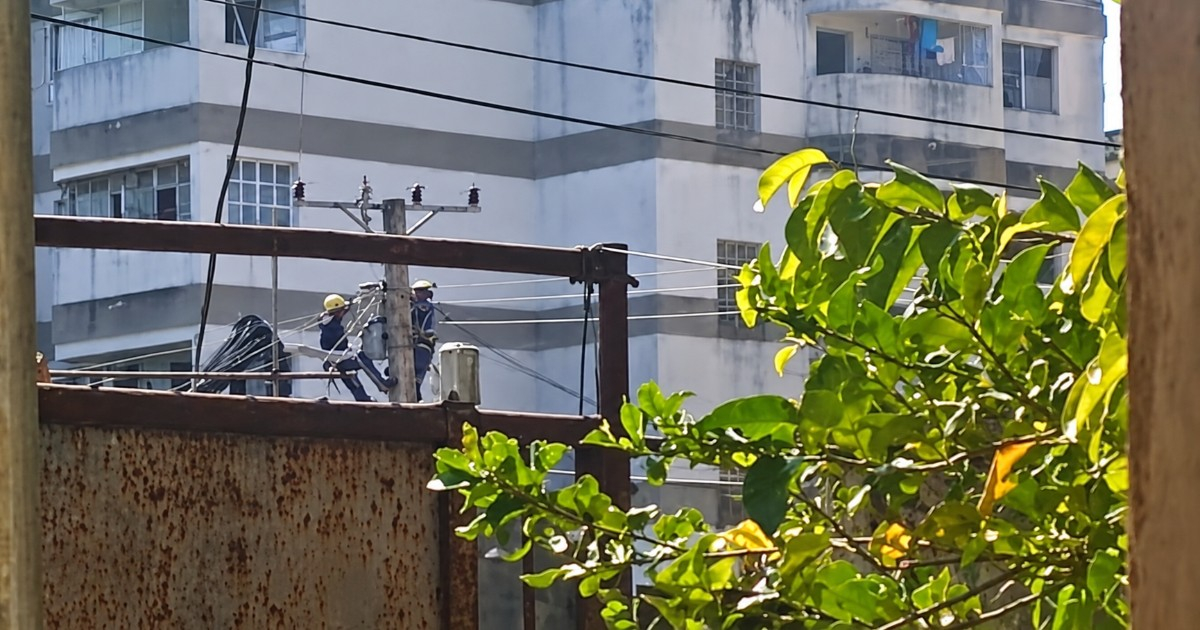
The tragic death of Edisvey Rolando Pérez Rodríguez, a 32-year-old lineman with the Sancti Spíritus Electrical Company, has sent shockwaves through the El Roble neighborhood. Pérez Rodríguez was fatally electrocuted while his crew was in the process of repairing a malfunctioning transformer on 16th Street in the Guanabacoa municipality of Havana.
His team had been dispatched from Sancti Spíritus to address the outage that had left over 15 homes without power for more than two weeks.
The Union Eléctrica (UNE) confirmed the worker's death via social media, extending their condolences to his grieving family.
Conflicting Accounts Emerge
Initial reports from local residents, led by a viral post from Blanca Elena Franchi Díaz, suggested that the power was restored while the workers were still handling the equipment. "How can the power be turned back on when workers are still repairing the electrical setup? Where were the safety protocols?" questioned Franchi Díaz in her post.
However, several commentators with technical expertise disputed this version online.
A witness named Frank Díaz stated that the transformer had been disconnected at the time of the incident. The electrocution, he claimed, was due to a different cause: "It turns out a house was illegally siphoning electricity, and according to inspectors, some kind of power generator was activated in that house. When activated, it sent electricity back through the tapped cable, leading to the tragedy."
Illegal Connections and Safety Concerns
Gendry Jiménez, a colleague of the deceased, supported this explanation, pointing to the illegal connection as the primary cause of the accident. "All safety measures were in place," Jiménez noted. "It was due to a customer’s illegal double-tap connection that our lineman came into contact with electricity and lost his life."
The so-called "double-tap" — illegally connecting to a nearby circuit during a power outage — is a serious crime in Cuba, linked to numerous accidents within the electrical sector.
The Cuban prosecutor's office reported 460 cases involving crimes against the National Electroenergetic System between May 2025 and the first half of 2026.
Other technical experts, such as Alejandro Gutiérrez and former lineman Reidiel López, suggested there might have been a lapse in workplace safety protocols, particularly the absence of grounding in the affected line, which could have prevented current from flowing in through external sources.
Community Reacts to Ongoing Crisis
Dozens of people expressed their sorrow over the incident on social media, with many in the young man's neighborhood mourning his loss. This tragedy is part of a disturbing trend of Cuban linemen fatalities that has worsened amid the energy crisis.
In June, another electrical worker died in Cárdenas, Matanzas; in September 2025, lineman Cleivi Pujada Castro died in Bauta, Artemisa; and that same month, Osmani Hernández Madroza lost both arms after a shock in San Miguel del Padrón.
Guanabacoa has been among the municipalities hardest hit by prolonged blackouts in 2026, with residents protesting in the dark.
Residents of 16th Street had been enduring over two weeks of heat, food and medicine spoilage, and challenges for the elderly and those with special needs before the crew arrived to address the outage.
"The workers who come out to fix these issues are human beings too, and they deserve to return home safely," Franchi Díaz wrote, encapsulating the anger of a community now mourning a man who came to solve their problem and never returned.
Frequently Asked Questions about Electrical Safety and Issues in Cuba
What caused the lineman's electrocution in Guanabacoa?
The electrocution was reportedly caused by electricity flowing back through the line due to an illegal connection by a house using a power generator.
What is a "double-tap" connection?
A "double-tap" is an illegal practice where individuals connect to a nearby circuit during a power outage, which can lead to serious safety hazards.
How has the energy crisis affected electrical workers in Cuba?
The energy crisis has led to increased fatalities among Cuban linemen, as they face dangerous conditions and illegal electrical connections during repairs.