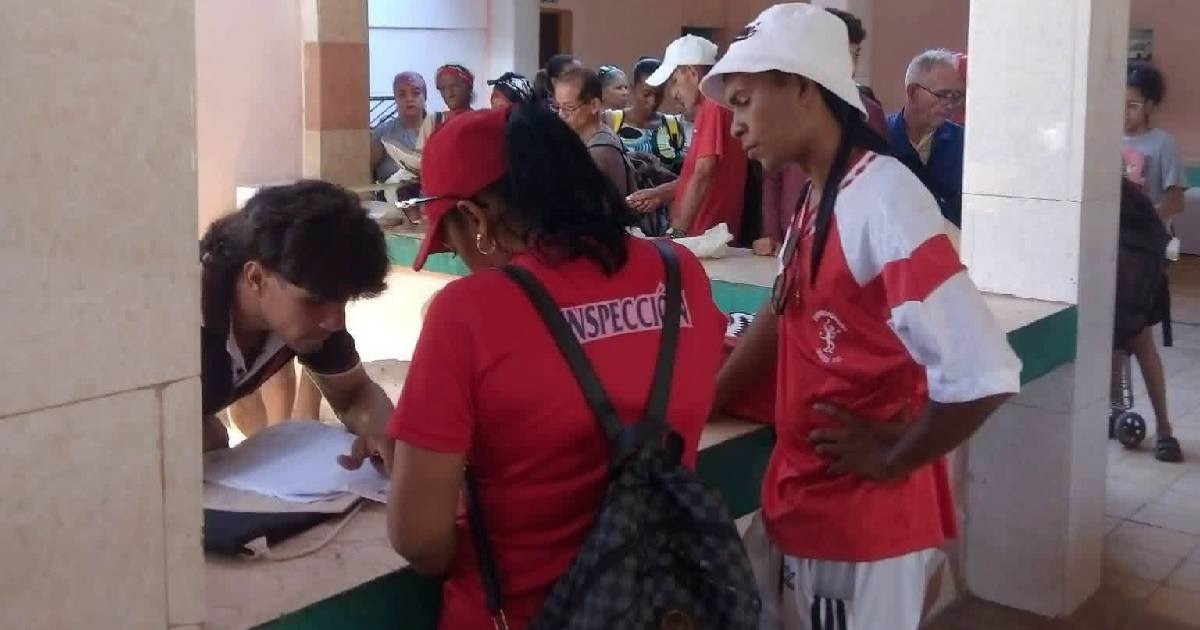
This week, the Municipal Administration Council in Guantánamo imposed fines on several small and medium enterprises, non-agricultural cooperatives, and self-employed workers for refusing to accept online payments. Additionally, one business faced closure for repeated violations and employing workers in irregular situations.
The sanctioned entities included the non-agricultural cooperative Los Girasoles, Placita La Chirimolla—located at the corner of Narciso López and Máximo Gómez—Mercado La Punta, and the Unidad de Correo Centro.
Meanwhile, the business Fénix received a permanent shutdown due to consistent refusal to engage with digital payment platforms and employing illegal workers, according to a report on the pro-government Facebook profile Mi Guantánamo on Tuesday.
The statement from the Municipal Administration Council of Guantánamo was unequivocal: "Banking is an obligation, not an option. Economic discipline ensures transparency and trust. The people deserve respect."
Ongoing Enforcement and Public Reaction
This week's actions are part of a sustained crackdown that the municipality has been carrying out for months. On August 28, authorities imposed 29 fines in a single day, totaling 198,360 Cuban pesos, after inspecting 51 economic actors and closing four repeat offenders.
On the same day, there were six citizen complaints, mostly about the rejection of Transfermóvil or EnZona for payments.
Banking System's Inadequacy
At the beginning of August, Mariela Rodríguez Hernández, the municipal director of Supervision and Inspection in the El Salvador municipality, warned that there is no leeway for those who do not comply with this obligation. "The rule is clear: all self-employed workers must accept online payments for all their products and services. There is no middle ground."
The underlying paradox is that the provincial government itself admitted in July that the banking system lacks the capacity to support the policy it enforces. At that time, Bandec was capturing just over 35% of the nearly 15 million pesos needed daily for operations.
National Impact and Economic Realities
The official newspaper Venceremos acknowledged that the crisis "has ceased to be a banking issue and has become a social problem."
The contradiction deepens when considering that 113 private businesses in the province handle cash payments of pensions to over 3,000 retirees, precisely because the banking system cannot guarantee this service. The government, unable to digitize its own operations, demands that private merchants do so under threat of fines and closures.
Nationally, the outcome of three years of mandatory banking, enforced by the Central Bank's Resolution 111/2023, is telling: fewer than four percent of transactions in Cuba are digital, despite over 15,240 fines and 269 business closures nationwide.
Economist Elías Amor bluntly summarized the situation: "This is just another of the many whims of the Castro regime that go wrong, and they later blame the blockade and the embargo for their failures."
Understanding Guantánamo's Banking Policies
What actions did Guantánamo's authorities take against businesses?
Authorities in Guantánamo imposed fines on several businesses and closed one for failing to accept digital payments and employing workers illegally.
Why did the business Fénix face closure?
The business Fénix was closed due to repeated refusal to use digital payment platforms and for operating with illegal workers.
What is the impact of mandatory banking in Cuba?
Despite efforts, fewer than four percent of transactions in Cuba are digital, with numerous fines and closures being reported.