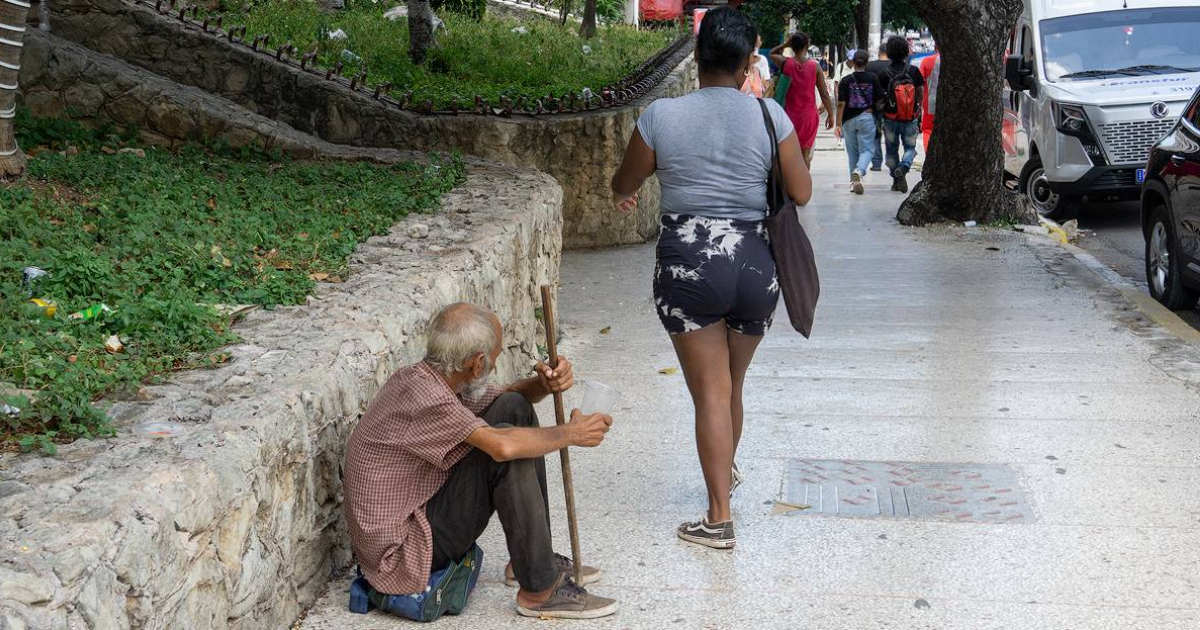
This week, Cuban filmmaker Eduardo González Rodríguez shared a compelling post on his Facebook profile that has resonated widely among Cubans both on the island and abroad. In his writing, he paints a vivid picture of daily life in his neighborhood, exposing the stark contrast between the government's rhetoric of "resistance" and the harsh reality of widespread hunger.
His post, ominously titled "The Silence of the Lambs," starts with a poignant image: his wife, in tears, serving food in a plastic container to a neighborhood acquaintance. The man, who struggles with a cognitive disorder, earns his keep by tending to gardens and had come by to see if they had any leftovers.
"It's for Juanito. He came again to see if there was any food left over. My heart breaks into pieces!" González Rodríguez quotes in his narrative.
This scene acts as a catalyst for his unflinching critique of those in power. "I have more respect for those who ask for food than those who demand resistance. Those who ask for food do not steal; those who call for resistance have never known hunger," he writes, capturing the essence of his argument.
The filmmaker expresses his disbelief in "176 measures, economic restructuring, urgent plans, or the 'we have to produce' mantra of government spokespersons, nor in the sincerity of those who claim to defend an ideal yet do not fit in their shirts."
His disdain for the regime's narrative is clear: "When they talk about social justice on TV as if speaking from an idyllic island, it makes me sick, very sick."
González Rodríguez describes Juanito's plight: "He vanished into the dreadful darkness of another night without power, clutching his green plastic container," an image that encapsulates the dual crises of hunger and blackouts plaguing Cuba.
The author warns that "many working Cubans will go to bed without eating during another blackout night," and concludes with a biting irony aimed at those who glorify enduring hardship: "If there were any heroism, those running this country would be in the dark, fasting."
González Rodríguez's voice joins those of other intellectuals who, as of 2026, have openly dismissed the official narrative.
In August, academic Julio César González Pagés challenged the notion of "creative resistance," asserting that such a concept is unsustainable when people are left without power, water, or food for days on end.
Understanding the Cuban Crisis: Key Questions Answered
What prompted Eduardo González Rodríguez to write his post?
Eduardo González Rodríguez wrote his post to highlight the disconnect between the Cuban government's calls for "resistance" and the actual hunger and hardship faced by the population.
How does González Rodríguez view the Cuban government's measures?
He expresses skepticism towards the government's economic measures and plans, doubting their effectiveness and the sincerity of those promoting them.
What is the significance of the image of Juanito in González Rodríguez's post?
The image of Juanito with his green plastic container symbolizes the dire situation of hunger and power outages affecting many in Cuba.