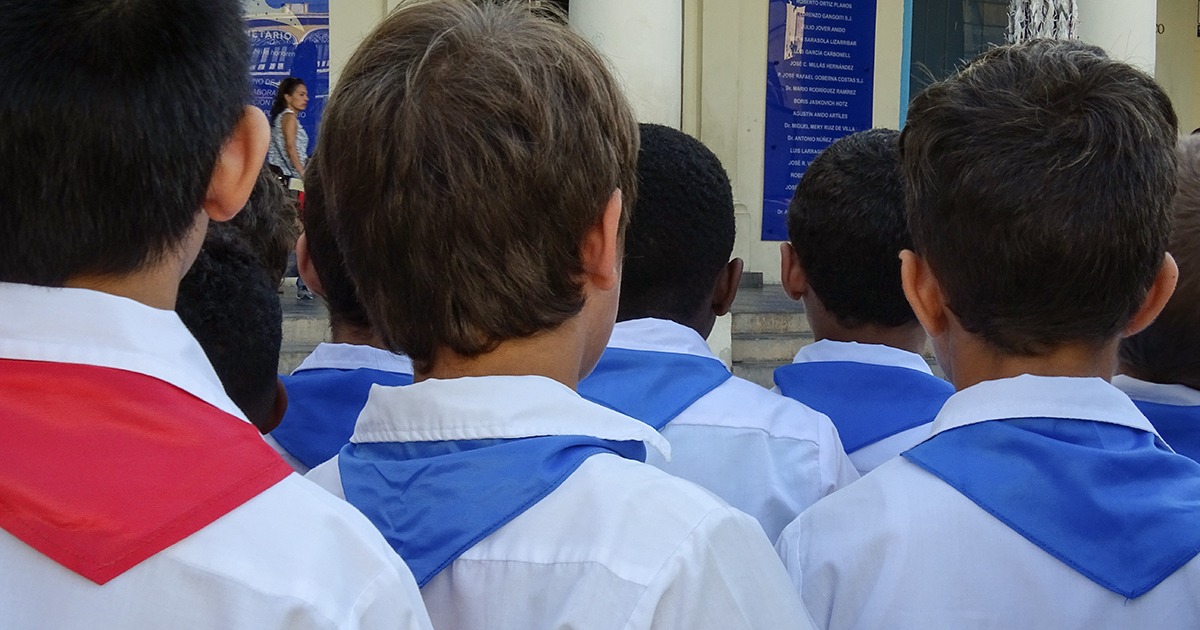
Esther Suárez Durán, a renowned Cuban sociologist and playwright, released a critical essay on CubaxCuba this past Friday. The essay scrutinizes the 2026-2027 school year commencement, condemning Cuban authorities for their recurring self-praise and preemptive accolades in educational endeavors.
Suárez Durán, known for her work as an investigator, essayist, and theater critic, argues that despite the dire conditions of daily life plagued with contradictions and a blatant disregard for basic citizen needs, official communications paint an overly optimistic picture that once more leans towards triumphalism.
Addressing Structural Challenges
The author criticizes the official narrative for merely "completing the task at all costs" without the thorough examination warranted by the circumstances. Restarting educational activities amidst increasingly harsh economic and social conditions should be considered a significant challenge, not a cause for celebration.
The essay points out significant structural issues ignored by the official narrative. The plight of boarding students, disconnected from their families and entirely reliant on the institution, presents a major concern, especially considering the current instability.
Technological and Transportation Hurdles
Suárez Durán also highlights the government's push for digital tools in a country ill-equipped to support them. She notes that "the nation neither produces nor trades mobile devices necessary for such communication." This issue is exacerbated by frequent power outages, sometimes lasting over 20 hours daily, disrupting more than 45% of the country's mobile radio bases, as admitted by state-run telecom company ETECSA.
Another pressing issue is transportation. Suárez Durán writes, "The current cost of private transportation, which is almost the sole option, is unaffordable for daily commutes to educational and work centers in higher education."
Contrasting Official Rhetoric
The reality starkly contrasts with the regime's rhetoric. Miguel Díaz-Canel hailed the school year start as a "Revolutionary triumph," while the Communist Party of Cuba termed it "another act of heroism and determination not to falter." Roberto Morales Ojeda, Organizational Secretary of the PCC Central Committee, acknowledged the lack of essential resources for the educational process but attributed all issues to the U.S. embargo.
Cuba's education system begins the 2026-2027 term with a shortage of over 21,000 teachers and only 73% teaching coverage, according to the Ministry of Education. There is also a significant shortfall in school uniforms; the national demand is around 3.6 million garments, yet only about 12% of primary needs are met.
Additionally, the food crisis looms large: the World Food Program reports that 48.5% of Cuban schoolchildren aged 6 to 11 do not receive meals or snacks at school. Despite Minister of Education Naima Ariatne Trujillo Barreto's August promise of a "grand celebration," she later admitted the school year began under "very difficult" conditions.
Public response has been strong. One Cuban mother declared she wouldn't send her children to school as long as power outages prevented them from sleeping: "I can't ask children to sacrifice for a futureless situation."
Against official voluntarism, Suárez Durán champions in-person education as irreplaceable, emphasizing that "nothing substitutes for the personal contact between teacher and student; nothing provides the former with more insight into the quality of knowledge, experience, and value transmission than this interaction."
FAQs on Cuba's Educational Challenges
What are the main issues highlighted in Suárez Durán's essay?
Suárez Durán's essay highlights the structural problems in Cuba's education system, including reliance on digital tools without proper infrastructure, transportation challenges, and the vulnerability of boarding students.
How does the Cuban government portray the start of the school year?
The Cuban government depicts the school year start as a triumph and an act of heroism, despite significant shortages and infrastructural challenges.
What are the current challenges in Cuba's education system?
Cuba's education system faces a severe teacher shortage, a lack of school uniforms, and a food crisis affecting nearly half of the schoolchildren's nutrition.