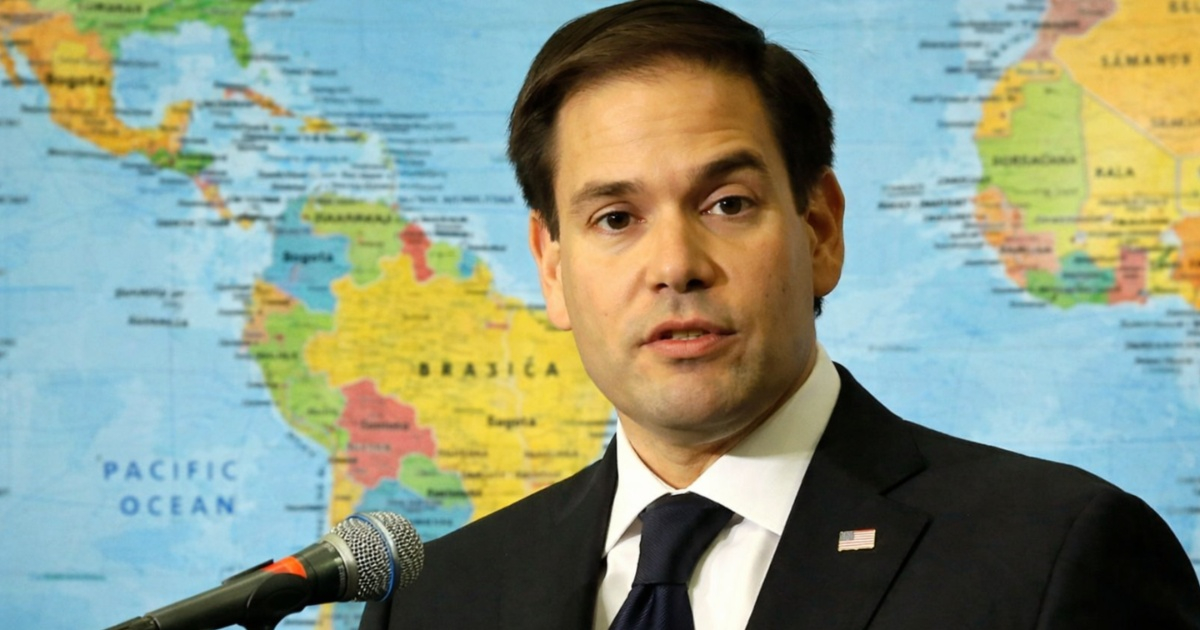
U.S. Secretary of State Marco Rubio is set to embark on a crucial tour of Latin America, visiting Colombia, Ecuador, and Peru from September 8 to 10. This initiative, announced by the State Department on Friday, aims to strengthen strategic alliances throughout the region.
According to the official statement, the tour will focus on three main objectives: providing humanitarian aid to Colombia following the catastrophic earthquake in August, enhancing cooperation against narcoterrorism, and bolstering trade relations between Washington and its South American partners.
Humanitarian Efforts in Colombia
In Colombia, Rubio plans to meet with President Abelardo De la Espriella, who took office on August 7, succeeding Gustavo Petro. This leadership change signals a significant shift in bilateral relations with Washington. Although the State Department has not officially confirmed it, Colombian media suggest this meeting could take place in Barranquilla.
The humanitarian aspect of the visit is pressing. The earthquake, measuring 7.4 in magnitude, struck northwest Colombia on August 10, with its epicenter in San José del Palmar, Chocó. The disaster resulted in at least 294 fatalities, 320 individuals missing, and 3,935 injuries.
Security and Trade Discussions
Security issues are also a major focus. Recently, Colombia joined the Coalition Against the Cartels of the Americas (A3C), a military alliance spearheaded by the Trump administration, becoming its 19th member. President De la Espriella has also authorized joint U.S.-Colombian military operations targeting drug trafficking within Colombian territory, as confirmed by U.S. Secretary of Defense Pete Hegseth.
U.S. Southern Command (SOUTHCOM) commander, Francis Donovan, visited Colombia at the end of August to strengthen military cooperation with the new government, paving the way for Rubio's visit.
Strengthening Ties in Ecuador and Peru
In Ecuador, Secretary Rubio is scheduled to meet with President Daniel Noboa to discuss security cooperation and counter-narcotics efforts. This marks Rubio's second visit to Quito in under a year, during which the two countries have already conducted two joint operations against organized crime, as reported by EFE.
Rubio's visit to Peru will be his first as the head of U.S. diplomacy since Keiko Fujimori was inaugurated as constitutional president on July 28, beginning a term that extends until 2031.
This tour coincides with a growing alignment between Washington and several right-leaning Latin American governments, a trend the Trump administration has leveraged to advance its hemispheric security strategy. The State Department emphasized that throughout his travels, Rubio will reaffirm "the Trump administration's commitment to a secure, prosperous, and democratic Western Hemisphere."
Key Questions About Marco Rubio's Latin America Tour
What are the main goals of Marco Rubio's visit to Latin America?
The primary goals of Rubio's visit are to provide humanitarian aid to Colombia, enhance cooperation against narcoterrorism, and strengthen trade relations between the U.S. and its South American partners.
What is the significance of Rubio's meeting with Colombian President Abelardo De la Espriella?
The meeting with President De la Espriella is significant as it represents a shift in bilateral relations with Washington, following his recent assumption of office, and highlights Colombia's strategic partnership with the U.S.
How does Colombia's membership in the Coalition Against the Cartels of the Americas affect U.S.-Colombian relations?
Colombia's membership in the coalition strengthens its alliance with the U.S., enabling joint military operations against drug trafficking and enhancing security cooperation.