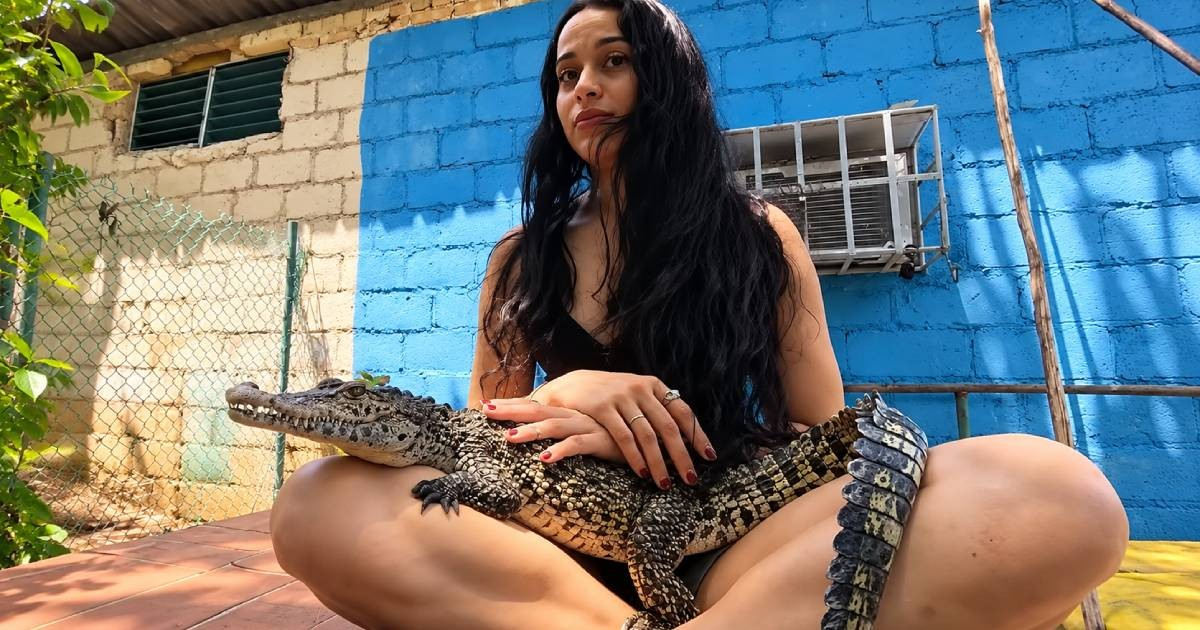
At the age of 22, Lorena Montes Peña is not your typical pet owner. Her home in Matanzas is filled with dogs, cats, turtles, iguanas, and ducks. Yet, the most fascinating member of her household resides in the pool: a hybrid crocodile around three years old.
Lorena, who is studying Veterinary Medicine and lives in Palmar de Junco, showcased her unique living situation with the reptile in a video for JSant TV's YouTube channel, which has garnered tens of thousands of views.
This crocodile is a hybrid between a Cuban crocodile (Crocodylus rhombifer) and an American crocodile (Crocodylus acutus), Lorena explained.
Interestingly, the crocodile didn't become part of her life because she wanted it as a pet. According to her story, the reptile was discovered injured, with wounds on its head and a leg, after being rescued from being sold for religious rituals. A family acquaintance brought it to her wrapped in a cloth.
Determined to care for the animal, Lorena took on the responsibility. Her daily routine now includes keeping the pool clean, ensuring the crocodile has both water and dry areas for sunbathing, and sourcing the food it requires.
"It requires management, a schedule, a specific environment with sun, dry areas, and water. It needs to be bathed and cleaned," she explained.
Feeding the crocodile is no small feat in today's Cuba. Lorena acquires pork and beef offal from slaughterhouses or through social media contacts. She even resorts to cooking with wood and charcoal due to gas shortages.
During the summer, the crocodile consumes about a kilogram of meat weekly. In colder months, it eats less frequently due to its metabolic needs.
Living with the crocodile has led to humorous moments that Lorena now recalls with laughter. While she assures it has never bitten her, she has experienced its tail whips.
One such incident left a mark on her back, reminiscent of a whip from the days of slavery.
Despite the seemingly familiar interaction with the reptile, Lorena issues a stern warning: having a crocodile at home is not something others should attempt.
"It's an enormous responsibility. I don't recommend it because I know nobody would rush out if the crocodile escapes at 3 a.m.," she stated.
In no uncertain terms, she added, "No one should have it. No one should have it."
The crocodile is just one of around 20 rescued animals Lorena cares for at her home, including iguanas, tortoises, turtles, ducks, dogs, and cats.
She relies on donations to support them and balances her studies with work related to veterinary care.
When asked about the biggest challenge of animal rescue in Cuba, her answer was swift: "The country, the economy, the people... maintaining it and wanting to do so much with so little."
The time Lorena can continue living with the crocodile is limited. She estimates she can keep it under current conditions for about two more years before its size outgrows the domestic pool, increasing the risks.
Therefore, despite her experience, her advice for anyone encountering a crocodile in the wild is clear:
"If it's still, let it be. If it needs help, seek out specialists. But never grab it, never keep it."
Insights into Living with a Pet Crocodile
How did Lorena acquire the crocodile?
The crocodile was rescued from being sold for religious rituals and brought to Lorena after being found injured.
What challenges does Lorena face in caring for the crocodile?
Lorena faces challenges such as maintaining the crocodile's environment and sourcing food, particularly due to shortages in Cuba.
What advice does Lorena give to those considering a pet crocodile?
Lorena strongly advises against keeping a crocodile as a pet due to the significant responsibility and potential risks involved.