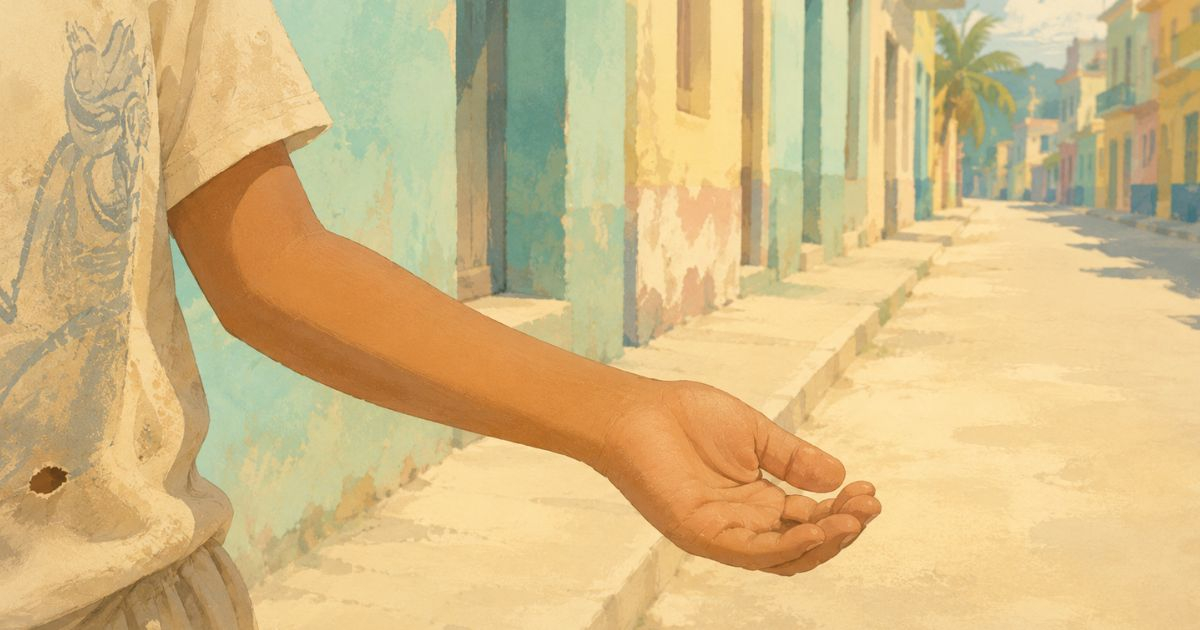
Officials in Santiago de Cuba have acknowledged a notable rise in the number of children and teenagers involved in begging. They announced ongoing efforts focused on prevention, monitoring, and intervention, particularly in the city's central areas.
According to the pro-government outlet Santiago de Cuba Hoy, this issue was discussed on TV Santiago's Justice in Debate segment. The discussion featured Captain Isabel Cristina Fernández Bartelemí, a minor affairs officer, and provincial prosecutor Daira Lescay Bridón.
These specialists highlighted that preventive measures are being implemented in collaboration with social policy committees and other community stakeholders. Their interventions are primarily directed at three key areas: family, school, and community.
The authorities also noted that certain parts of Santiago de Cuba have seen a higher incidence of minors in begging situations. Areas under close scrutiny include Plaza de Marte, Plaza de Ferreiro, and the vicinity of Avenida de las Américas, alongside other busy locales in the city and province.
The discussion also addressed the role of parents and legal guardians. The specialists explained that Cuban law imposes consequences on those who severely neglect their parental duties, allowing or facilitating circumstances that harm minors' development.
During the program, it was reiterated that teenagers can face criminal responsibility from the age of 16 for actions deemed criminal offenses. However, authorities emphasized that efforts related to child begging should prioritize prevention and protection of the young.
This year, Cuban legislation has intensified its approach to this issue. The Law 178 of 2025, known as the Code of Childhood, Adolescence, and Youth, came into effect on January 28, 2026. It provides enhanced protection against child labor and begging.
Article 83 of the law defines begging as any activity where children or adolescents are used, induced, or forced to solicit money or goods from others in public spaces. It is classified as a form of child exploitation, violence, and a severe violation of their rights.
Despite the Cuban regime's claims that the new Code of Childhood, Adolescence, and Youth strengthens protections against child labor and begging, the authorities' own admissions reveal an increase in children and teenagers found in such situations on the streets.
In August, two children, aged 13 and 11, were seen selling bread on the streets to financially support their mothers. In July, an 11-year-old was recorded collecting cans to help sustain his mother in Camagüey, while other minors were captured selling fruits and pushing a cart loaded with avocados in Havana.
That same month, the story emerged of a boy in Sancti Spíritus selling homemade sweets prepared by his mother, highlighting how some minors are compelled to engage in economic activities due to their families' hardships.
Understanding Child Begging and Legal Measures in Cuba
What measures are being taken to address child begging in Santiago de Cuba?
Officials are focusing on prevention, monitoring, and intervention, particularly in central areas of the city. They are working with social policy committees and community stakeholders to address the issue at the family, school, and community levels.
How does Cuban law address child begging and exploitation?
Cuban law, specifically Law 178 of 2025, the Code of Childhood, Adolescence, and Youth, defines begging as a form of child exploitation and a grave violation of rights. It includes penalties for those who neglect their parental duties and allows teenagers to face criminal responsibility for offenses from the age of 16.