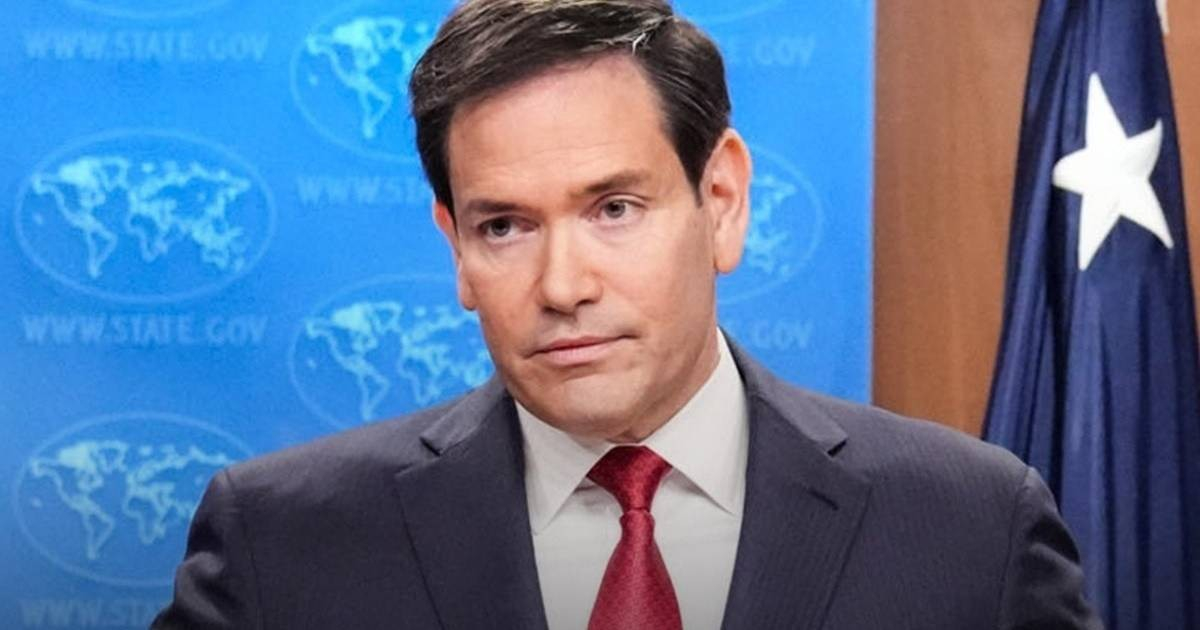
Secretary of State Marco Rubio emphasized on Wednesday that fully restoring diplomatic ties between the United States and Cuba is legally unattainable unless the island nation moves towards democracy.
In a conversation with Brian Kilmeade on Fox Radio, Rubio highlighted that this requirement is not a matter of the Trump administration's discretion but rather a stipulation of a congressional law that has been in place for over twenty years.
Rubio referred to the Helms-Burton Act of 1996 to delineate the constraints on any engagement: "U.S. policy towards Cuba, unlike our policy towards Venezuela or other nations, is codified; it is enshrined in statute. There's legislation, and that legislation dictates what we can and cannot do with Cuba. It clearly states that normalization between our countries cannot be fully realized under this law—passed by Congress more than two decades ago—unless there is a functional democracy or at least steps towards achieving one."
During the same discussion, Rubio labeled Cuba as a "failed state" and categorically denied that Washington is to blame for the crisis: "Cuba is a failed state right now. And it’s not our fault. People claim it's our fault. It's not."
He attributed the island's energy collapse to the cessation of free oil supplies from Venezuela—up to 100,000 barrels a day—which the regime used to receive before the capture of Nicolás Maduro in January 2026.
According to Rubio, the Cuban regime didn't use this oil to benefit its population: "Cuba was getting free oil from Maduro. Maduro was literally stealing the oil from the Venezuelan people and giving it away for free to Cuba," and most of that fuel was sold for cash that "ended up lining their pockets."
Regarding the island's chronic power outages, Rubio was frank: "You see these blackouts in Cuba, these blackouts are not new. They've been experiencing blackouts for five to seven years. Do you know why? Because their system doesn't work. It just doesn't. They have equipment from the 1940s and 1950s and haven’t upgraded or invested in them at all because their economic model fails."
Rubio outlined the only viable path forward for the island: "The only solution and answer for Cuba, and we're ready to play a productive role in this, is to set itself on an irreversible path towards becoming a normal and functional state that is eventually democratic."
This stance aligns with the strategy that Rubio had publicly articulated weeks earlier. In an interview with Axios on August 7, the secretary set a goal for Cuba to be on an "irreversible trajectory towards a different future" by the end of the Trump administration, warning, "Every time they create a new mechanism to escape the bind, we shut it down."
Since January 2026, the administration has executed over two dozen actions against the Cuban regime, including sanctions on 40 entities and measures against at least 38 individuals. On August 6, a new round targeted five military entities and eight Ministry of Armed Forces officials, including Minister Álvaro López Miera, for ties with arms purchases from Russia and China.
Rubio also touched on the transition process in Venezuela, describing it as a three-step model—stabilization, economic recovery, and democratic transition—and announced that talks between the 2015 National Assembly and the Venezuelan government would continue in about 10 days, facilitated by Washington.
When asked about how much longer the Cuban regime might last, Rubio did not provide a timeline but issued a warning: "This won't go away in the next 2.5 years."
Key Considerations for U.S.-Cuba Relations
What is the Helms-Burton Act?
The Helms-Burton Act is a U.S. law enacted in 1996 that codifies the U.S. embargo against Cuba and sets conditions for normalizing relations, requiring democratic reforms on the island.
Why does Rubio describe Cuba as a "failed state"?
Rubio characterizes Cuba as a "failed state" due to its ongoing economic crisis, chronic power outages, and reliance on outdated infrastructure, attributing these issues to the Cuban government's ineffective economic model.
What role does the U.S. seek to play in Cuba's future?
The United States aims to support Cuba in embarking on an irreversible path towards becoming a functional and eventually democratic state.