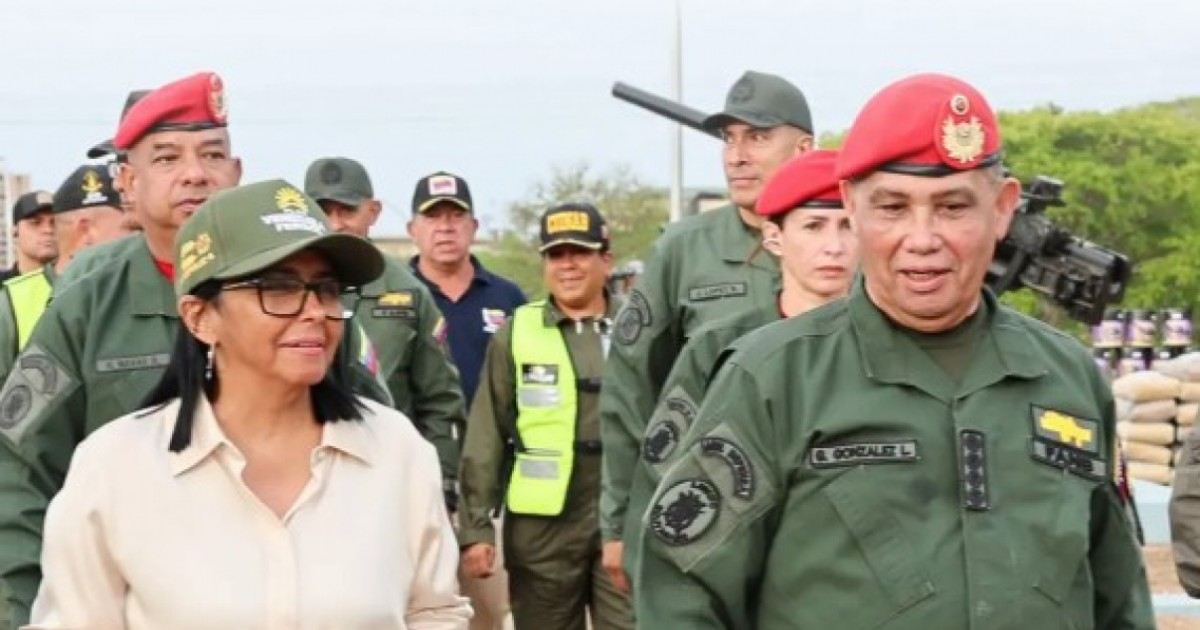
The Venezuelan Defense Minister, Gustavo González López, has affirmed the unanimous support of the military leadership for the landmark oil agreement between Caracas and Washington. He refuted claims that the deal represents a surrender of sovereignty to the United States.
Following a meeting at the Miraflores Palace in Caracas with interim President Delcy Rodríguez, González López made the announcement.
"Turning a political difference into an economic cooperation agreement is merely a step toward peace, not subordination. We fully agree and support all decisions of our commander in chief to achieve prosperity," the minister stated, as reported by EFE.
Summarizing the pact in a single word, González López was clear: "This is prosperity and well-being for the country, just as it is for us."
Legislative and Military Endorsement
The military's endorsement came on the same day when the Venezuelan Parliament, dominated by pro-government forces, also approved the agreement, with backing from the ruling party and dissent from the opposition.
Legislator Miguel Pérez Abad, who presented the project to the chamber, described the agreement as "the most significant in the last 100 years," projecting it will create approximately 3.6 million jobs, both direct and indirect, stemming from oil operations.
Details of the Oil Agreement
The deal, now supported by both the military and lawmakers, was announced on August 29 by the Trump administration, labeling it as "the largest oil agreement in world history." It was signed by Secretary of State Marco Rubio and Secretary of War Pete Hegseth.
The agreement grants concessions over 17 Venezuelan oil fields to the private company North American Blue Energy Partners (NABEP), which holds proven reserves of about 65 billion barrels, accounting for roughly 21% of Venezuela's total reserves.
In return, NABEP agreed to cede a 35% equity stake in its parent company to the Department of War and granted the Department of State the right to purchase 20% of its production at cost price.
Economic Projections and Political Implications
Delcy Rodríguez set the agreement's duration at 25 years, forecasting that Venezuela will receive $209.335 billion in taxes, based on a $65 per barrel price. The production target is set to exceed 1.5 million barrels daily.
González López's endorsement carries significant political weight. Appointed by Delcy Rodríguez in March, replacing Vladimir Padrino López, the longest-serving military leader under the current regime, González López has a background in intelligence agencies like DGCIM and SEBIN. He has faced sanctions from both the United States and the European Union for alleged human rights violations. His support of an agreement with Washington highlights the extent of the political shift in Venezuela.
The military and parliamentary support coincided with the arrival of U.S. Secretary of Energy Chris Wright in Caracas. He landed at Maiquetía airport to partake in the signing of a new Chevron contract in the Orinoco Oil Belt.
The agreement is part of the reconfiguration of Venezuelan power following the capture of Nicolas Maduro by U.S. forces on January 3, solidifying the halt of around 35,000 barrels per day of oil shipments to Cuba, which had been part of a barter arrangement now suspended.
The United States is also sponsoring political reconciliation talks in Venezuela, with further meetings scheduled for September, making the oil pact just one component of a broader negotiation between the two governments.
Key Questions About the Venezuela-U.S. Oil Deal
What are the main benefits of the oil agreement for Venezuela?
The agreement is expected to bring prosperity and well-being by creating approximately 3.6 million jobs and generating $209.335 billion in tax revenue over 25 years.
How does the agreement impact U.S.-Venezuela relations?
The deal signifies a major political shift in Venezuela, fostering economic cooperation and aligning with U.S.-backed political reconciliation efforts.