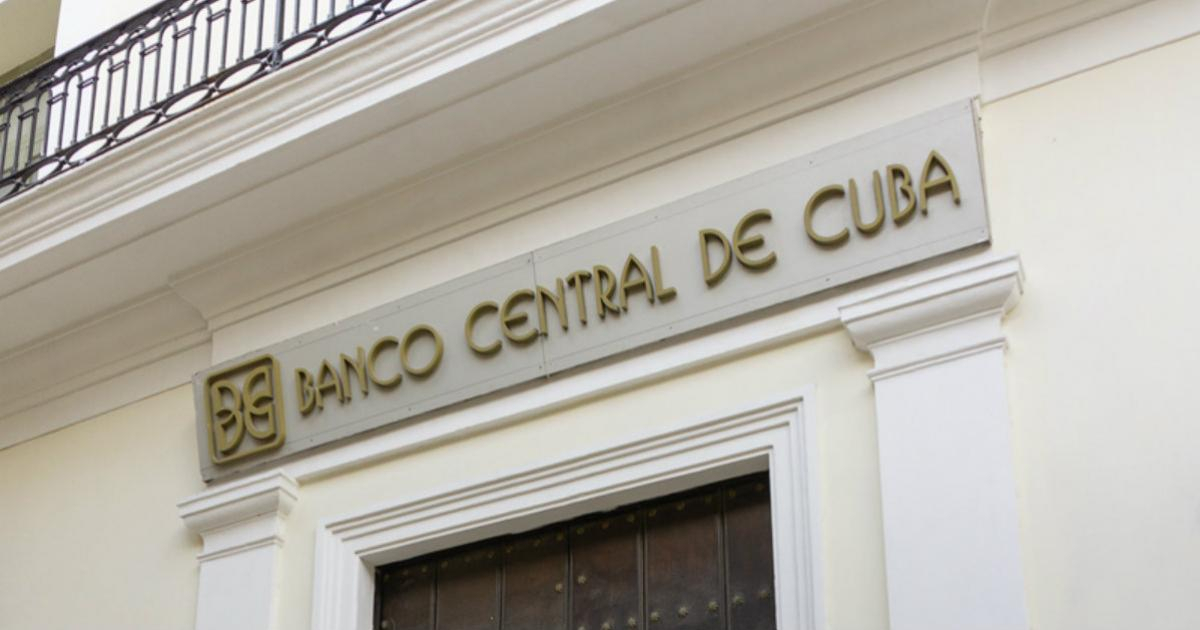
The Central Bank of Cuba (BCC) has unveiled a fresh set of procedures governing the deposit of initial capital required for establishing small and medium-sized enterprises (SMEs), private companies with over a hundred employees, and non-agricultural cooperatives on the island.
This new directive, outlined in Resolution 98/2026, was published in the Official Gazette No. 71 Ordinary of 2026 and replaces Resolution 89/2024, which had been in effect since August 2024.
Set to become effective seven days post-publication, the directive details the steps prospective entrepreneurs and cooperative members must take to verify their businesses' capital with banks.
The regulation mandates that individuals aspiring to become partners must deposit their financial contributions in banks sanctioned by the BCC. Upon receiving a request, the bank is obliged to open an on-demand deposit account exclusively for the initial capital within five business days.
Mandatory Deposit Process for Partners
According to Resolution 2/2026 from the National Institute of Non-State Economic Actors, also published in the same Gazette, prospective partners have a five-business-day window to deposit their share of the capital once the account is set up.
This account is solely for verifying the contributed funds and cannot be used for regular business transactions. The resolution clearly states that no money flows from or to this account can be initiated by account holders, nor can payment instruments or credit titles be utilized.
The funds will not earn interest, and banks may charge fixed fees for their services. Once the deposit is complete, the bank will issue a certification of the capital, allowing the business formation process to proceed with a notary.
Next Steps After Business Formation
If for some reason the enterprise or cooperative fails to be established, the bank is required to return the funds through the same method used for the initial deposit.
Upon successful formation and registration with the Mercantile Registry, the process to open an operational checking account at the same branch where the initial capital was deposited commences. Registration also involves the National Office of Tax Administration (ONAT), which has a ten-business-day period to register the new entity and subsequently relay the information to the bank.
Once the bank receives this information, it informs the partners of the date and time to visit the branch to sign the necessary contract. Following the signing, the bank has up to seven business days to open the checking account.
To formalize the account, a minimum set of documents is required: a certified copy of the constitution deed and statutes or regulations, identification of representatives, certification of registration in the Mercantile Registry, criminal records of the contributor, tax identification number, and the number from the National Office of Statistics and Information (ONEI). The bank may request additional documents as part of its due diligence process.
Comprehensive Regulatory Package
After the capital transfer, the initial deposit account will be closed. Although each entity will manage its checking account in a single bank, the resolution allows for additional accounts such as expense accounts, fixed-term deposits, income accounts, and those linked to magnetic cards, as well as accounts associated with specific financing.
This new procedure is part of a broader regulatory package. Decree-Law 133/2026 by the Council of State amends Decree-Laws 88, 89, and 90 of 2024, which pertain to private companies, cooperatives, and self-employed workers.
Resolution 2/2026 stipulates that the formation of these businesses will be processed through the Economic Actors Platform, granting the Municipal Development Directorate up to 20 business days to approve or reject an application.
The regulation even provides an exception for the ongoing energy and connectivity crisis in Cuba: in cases of prolonged power outages or lack of connectivity, municipal authorities may temporarily process applications using manual records and update the platform once services are restored.
These measures are part of the 176 initiatives announced by the Cuban government for the non-state sector, including lifting the cap of 100 employees for private companies and allowing individuals to be partners in more than one business.
Understanding New Banking Regulations in Cuba
What are the new requirements for depositing initial capital in Cuba?
Prospective partners must deposit their capital contributions in banks authorized by the Central Bank of Cuba. An on-demand deposit account is then opened exclusively for this purpose.
How long does the bank have to open a deposit account for initial capital?
The bank has up to five business days to open the account after receiving the request for depositing the initial capital.
What happens if a business or cooperative is not formed after depositing the capital?
If the business or cooperative is not established, the bank must return the funds using the same method that was used for the initial deposit.