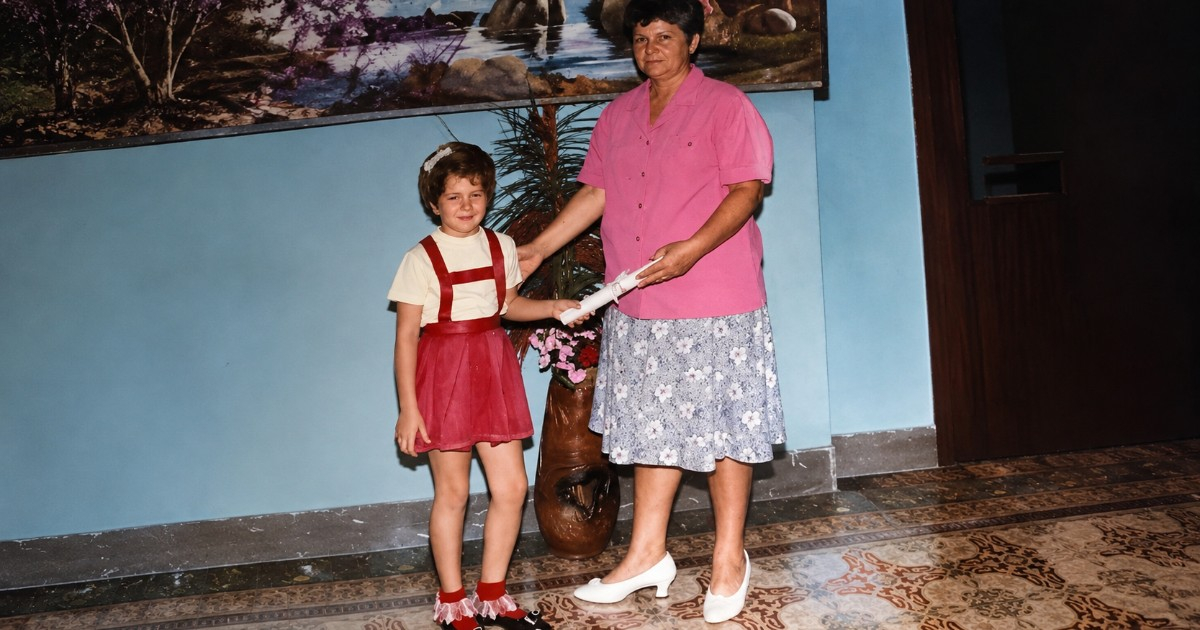
Julia Elena Jareño Varcárcel, a graduate in Education from the University of Las Tunas, shared a heartfelt testimony on Facebook, encapsulating decades of systemic contradictions in Cuba.
The content creator, with a focus on English language studies, recounted how she dedicated more than half her life to education, trusting in the promise that schooling would make her "someone in life." Yet, it was her emigrated aunt who funded her laptop, clothing, and even her graduation gown.
"Study, my child! Study to become someone in life! And I believed it! For many years, I swear I believed it," Jareño begins her narrative.
The Reality Behind Academic Achievements
Jareño graduated in the 2020-2021 academic year with a 4.52 GPA and a diploma thesis graded at the top level after five years at the Municipal University Center of Puerto Padre. Nevertheless, her journey was riddled with unanswered questions.
"Why did the dollar seller have a motorbike while my Physical Education teacher rode a bicycle inherited from his grandfather? Why did the man selling pork have a nice house, yet the doctor at the clinic rented a place because she couldn’t afford her own home?" she ponders in her post.
In Cuba, those with higher education don't necessarily enjoy better living standards. In 2026, the basic salary for government-funded jobs stood at 3,210 Cuban pesos monthly. University professors earned between 6,130 and 8,880 pesos, depending on their rank, while a newly graduated doctor made about 7,045 pesos a month.
The Economic Burden of Education
The issue becomes apparent when professionals need to purchase essentials, like a liter of oil costing 5,000 pesos. They can't afford social activities or dream of saving enough to buy a home, as their salaries are insufficient, and their professions are undervalued.
Emigration plays a crucial role in economic survival. "My laptop, shoes, clothes, food, and even my graduation attire were largely funded by my aunt. Yes, my aunt who emigrated!" Jareño emphasizes.
"Emigration didn't only take people away; it became a source of income for families left behind in Cuba. While some studied, worked, and survived on the island, others sent money, clothes, food, medicine, appliances, shoes, and even the means necessary for education. So, when I'm told everything was free, I ask: Free for whom?" she reflects.
The Broader Context of Professional Disillusionment
Jareño's experience is far from unique. For years, stories have emerged of professionals earning more as drivers or informal sellers than in their trained fields.
In January 2026, a Cuban woman on TikTok exposed the myth of free education by highlighting the real costs families endure.
Comments on such posts follow a familiar theme. One reader aptly describes it: "We've endured an inverted pyramid for years; a professional lives on a meager salary, unlike someone without even a high school diploma who earns more than their potential."
Another commenter, who left her medical career, specialty, and master's degree, candidly states: "I did the math and couldn't support my child and live properly. I became self-employed. I'm not rich, but I'm a person. As a professional, I wasn't."
A professional with two degrees and a gold diploma shares that after twenty years, she is financially reliant on her son because her salary barely covers a week.
A retired accountant after four decades can't withdraw more than 1,000 pesos from her pension. An economist who graduated in 1995 admits she's still waiting for life to change.
Others highlight the intrinsic value of knowledge beyond the system: "The good thing about studying is that even if a degree is useless here, it provides knowledge to succeed elsewhere," a reader notes.
While academic training can open doors, for many Cubans, the only door it opens is the one leading out of the country.
Understanding the Cuban Educational Paradox
Why do Cuban professionals struggle financially despite higher education?
Cuban professionals often face financial difficulties because their salaries are insufficient to cover basic living expenses, and their professions are undervalued compared to informal jobs that can offer higher earnings.
How does emigration affect families in Cuba?
Emigration serves as a crucial economic lifeline for many Cuban families, as relatives abroad send money and goods to support those who remain on the island, effectively subsidizing their living conditions and educational expenses.