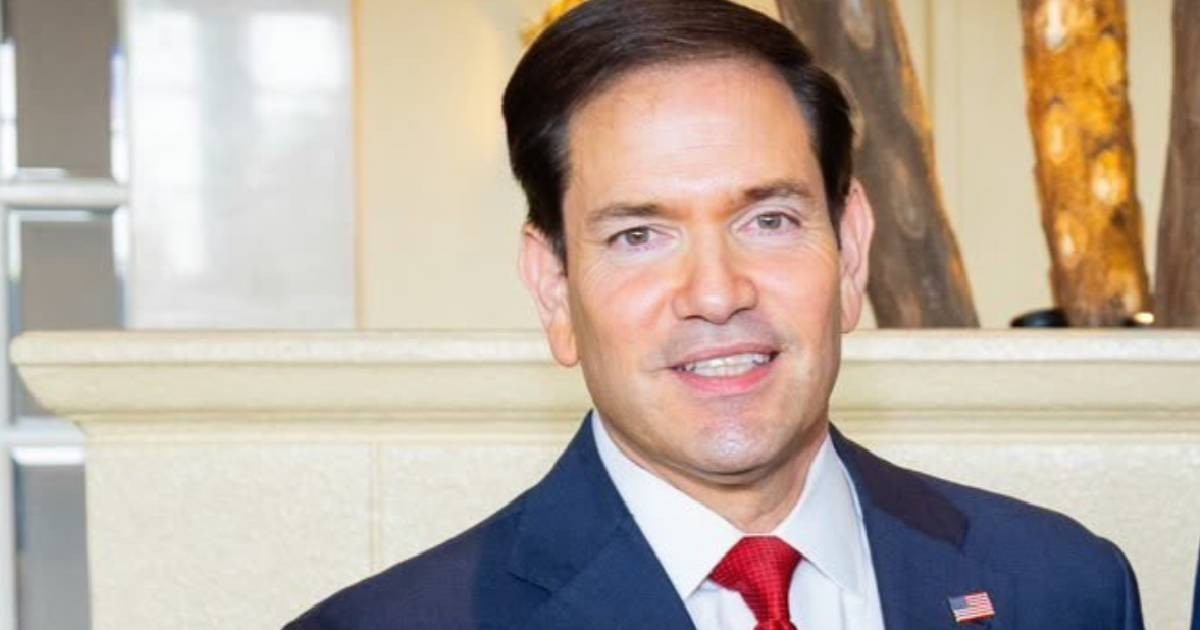
On Tuesday, U.S. Secretary of State Marco Rubio provided clarification on the controversial oil deal between Washington and Venezuela, emphasizing that the pact was signed with North American Blue Energy Partners (NABEP), a private company in which the U.S. Department of War holds a 35% stake, rather than with the interim Venezuelan government.
Initially announced by President Donald Trump in late August and described by the White House as "the largest oil deal in history," the agreement grants NABEP concessions on 17 Venezuelan oil fields with reserves estimated at over 65 billion barrels.
"This is not fundamentally an agreement with the interim government; it is with a private company that is participating alongside the U.S. through the existing system," Rubio clarified during an interview with journalist Sergio Novelli.
Background on Venezuelan Oil Fields
According to Rubio, most of the 17 fields were previously under Chinese and Russian interests, many of which were inactive. Rubio criticized the actions during the Chavez era, stating, "Cuba was given billions of dollars in oil value. China was paying very little for oil, receiving it at a discount. As for Russia, they were simply taking oil in exchange for debt payments."
NABEP has committed to investing up to $100 billion in infrastructure and paying around $200 billion in royalties and taxes throughout the agreement's duration. The U.S. will have the right to purchase 20% of the production at extraction cost for its strategic reserves. However, there is a discrepancy in the agreement's term: while the Venezuelan government suggests a 25-year duration, the White House mentions 100 years.
Addressing Allegations and Ensuring Transparency
Rubio addressed inquiries about Alejandro Betancourt, the Venezuelan businessman known as "bolichico" who controls NABEP and is under investigation for alleged money laundering in Spain and Switzerland related to a $4.85 billion corruption scheme in PDVSA. "We thoroughly investigate those known within our system. If he were under investigation here, it would be noted," Rubio remarked, adding that Betancourt supported the opposition during Juan Guaidó's era in 2019, which led to conflicts with Maduro's government.
To ensure transparency in fund management, Rubio mentioned that KPMG will audit all generated funds in the short term, while in the long term, accountability will fall to a democratically elected government.
Political Future and Migration Concerns
In political matters, Rubio reiterated that Venezuela must eventually be governed by an elected government through free elections, though he did not specify a timeline. "It should happen as soon as possible, but conditions need to be established," he stated, listing requirements like a legitimate National Electoral Council, reliable voting machinery, free press, and international oversight.
Regarding María Corina Machado, Rubio affirmed, "She has every right to return to Venezuela whenever she chooses," while expressing concerns about her safety and insisting that all exiled leaders should be able to return without fear.
On the issue of Venezuelan migrants in the U.S., Rubio denied that the Trump administration's policies target this community specifically, stating they apply to all migrants. When asked about the possibility of a new Deferred Enforced Departure (DED), he replied, "Anything is possible," but noted that it is not currently under discussion.
Rubio mentioned that in October 2026, leaders of the 2015 National Assembly will convene to advance political negotiations, a step Washington deems critical for facilitating Venezuela's transition to a legitimate government.
Key Points about the Venezuela Oil Deal
Who signed the oil deal with Venezuela?
The oil deal was signed with North American Blue Energy Partners (NABEP), a private company, not with the interim Venezuelan government.
What is the duration of the oil agreement?
There is a disagreement on the duration: the Venezuelan government claims it lasts 25 years, while the White House states it is for 100 years.
What are the concerns related to Alejandro Betancourt?
Alejandro Betancourt, who controls NABEP, is under investigation for alleged money laundering in Spain and Switzerland related to a PDVSA corruption scheme.