Cuba has yet to set an official date for conducting its next Population and Housing Census, despite repeated announcements and delays since the count, initially scheduled for 2022, was suspended.
According to a report by Radio 26, an official media outlet in Matanzas, the census process remains in its preparatory phase. The National Office of Statistics and Information (ONEI) has not yet announced when the census will officially begin.
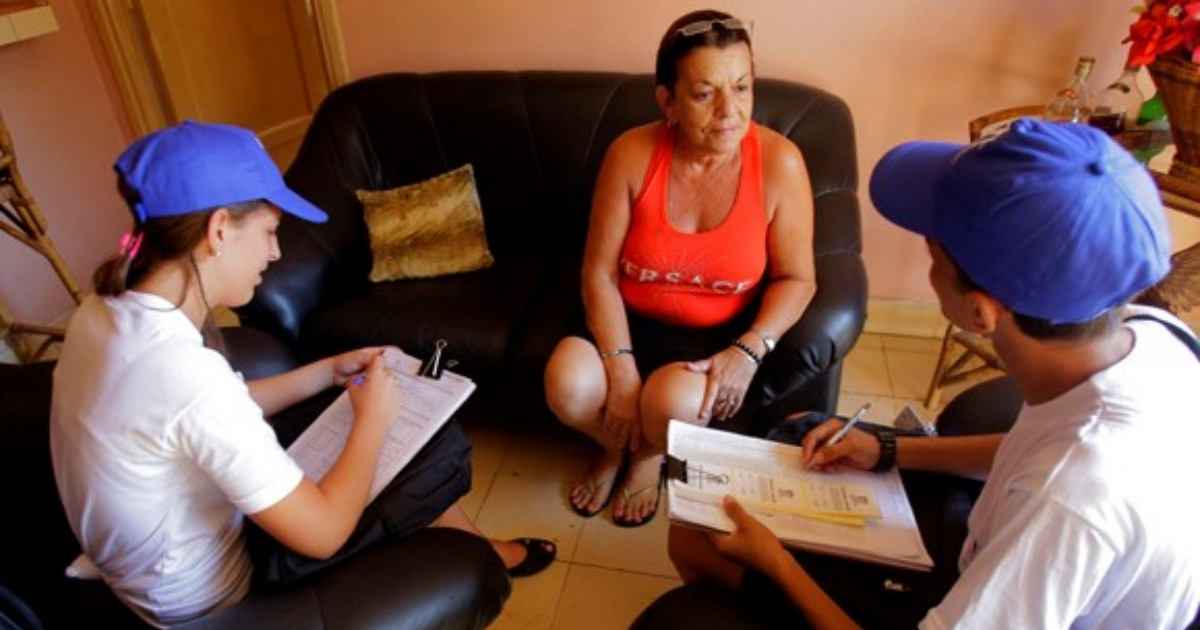
Currently, the "Preliminary Registration" is ongoing, where social workers and hired staff visit homes and facilities to determine the number of residents and the head of the household without requesting documents or entering homes.
This phase actually commenced on May 19, 2025, according to reports from official media at that time.
Following the preliminary registration, the schedule includes a trial run to test logistics and technological tools before the actual census begins.
Technological Innovations in the Census Process
The upcoming operation will incorporate mobile devices with GPS to georeference the collected data, a significant technological advancement in the process.
Delays have been accumulating for years. The last national census was conducted in 2012, and the next was supposed to take place a decade later, in 2022, but it was postponed due to the pandemic and resource shortages amidst the economic crisis.
In April 2025, authorities assured that the Population and Housing Census would occur that same year.
By then, ONEI had divided the process into three stages: Preliminary Registration, Census Trial, and Census Execution.
This promise was also unfulfilled. In November 2025, after conducting a census trial in Santa Cruz del Norte, Mayabeque, ONEI deemed the test successful and shifted expectations for the national count to 2026.
The organization stated that the trial would enable a "more efficient and accurate" census.
Demographic Shifts and Consequences
The lack of an updated census is particularly significant amid the island's rapid demographic transformation.
According to official figures released by ONEI, Cuba ended 2025 with 9,434,593 residents after losing over 313,000 individuals in just one year.
Over five years, the official population declined by more than 1.6 million people.
The combination of emigration, aging, and low birth rates exacerbates the situation.
In 2025, there were approximately 68,000 births compared to over 134,000 deaths, resulting in a natural decrease of more than 66,000 people.
Moreover, fertility remains well below the generational replacement level.
Long-term prospects are also bleak. The United Nations Population Fund has warned that if current trends continue, Cuba could end the century with a mere 5.6 million inhabitants.
Frequently Asked Questions about Cuba's Census Delays
Why has Cuba delayed its census?
Cuba's census has been delayed due to a combination of factors, including the COVID-19 pandemic, economic resource shortages, and logistical challenges.
What technological advancements are planned for the next census?
The upcoming census aims to use mobile devices equipped with GPS to georeference data, marking a significant step forward in technological adoption for data collection.
What are the demographic challenges Cuba is facing?
Cuba is experiencing demographic challenges such as high emigration rates, an aging population, and low birth rates, which together contribute to a declining population.