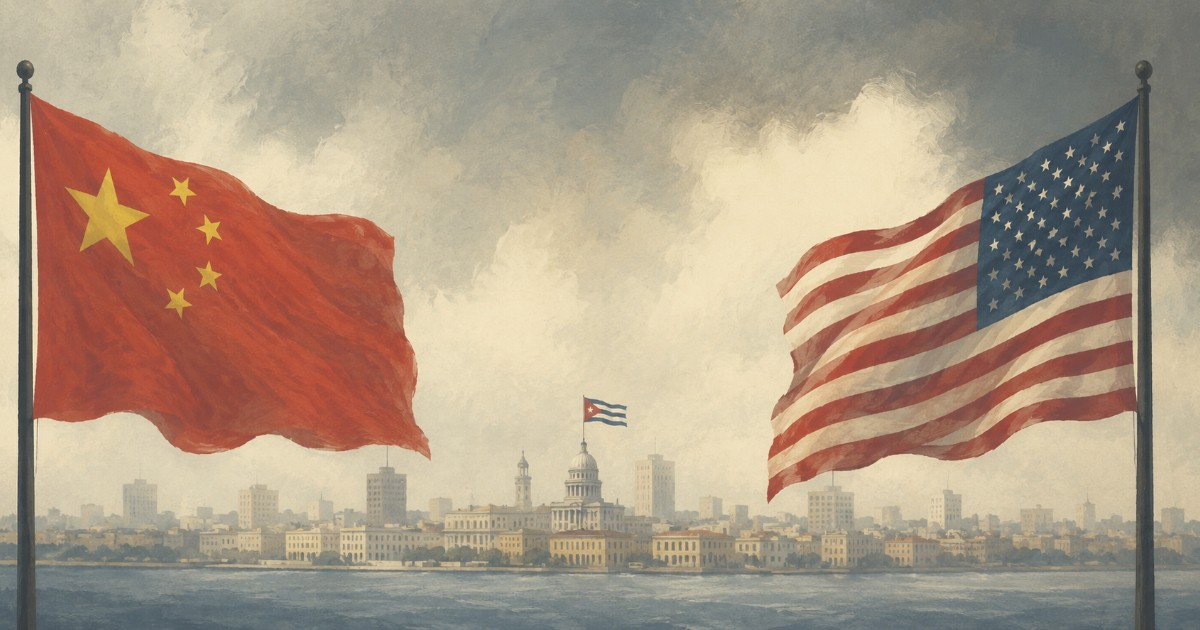
In a significant escalation of diplomatic tensions, China has accused U.S. politicians of adopting a "hegemonic, dominant, and arrogant" mindset towards Cuba. The Chinese government claims these politicians are clinging to the outdated Monroe Doctrine and treating Latin America as a "backyard" under Washington's control.
The Chinese Embassy in Cuba released a statement expressing this stance following American criticisms concerning China's growing economic, technological, and intelligence presence on the island. Although the statement did not name specific U.S. officials, it accused "certain American politicians" of exaggerating geopolitical threats and unjustly criticizing the cooperation between China and Cuba.
China's Firm Stance Against U.S. Policies
The embassy's statement criticized American declarations as being filled with "obsolete Monroe Doctrine" rhetoric and Cold War-era ideological biases. It highlighted these positions as further evidence of Washington's "hegemonic, dominant, and arrogant" nature. The statement further accused U.S. political sectors of harboring a "colonial dream" that "America belongs to Americans."
China argued that the U.S. continues to view the Western Hemisphere as its "private property and backyard," accusing Washington of imposing its will through "blockades, sanctions, intimidation, and subversion."
Calls for Sovereign Choices for Latin America
The Chinese Embassy asserted that the real issue is not China's presence in Latin America but rather "hegemonism and power politics, blockades, sanctions, and gunboat diplomacy." It emphasized that Latin American countries should have the freedom to choose their partners without interference. China pledged ongoing support for these nations in defending their sovereignty, security, and developmental interests.
The statement came in response to Cuban-American Republican Congressman Carlos Giménez's call to expel China from the Western Hemisphere. Giménez accused Beijing of attempting to undermine the U.S. by providing a "lifeline" to the Cuban government.
These comments were linked to an opinion piece by analyst Gordon G. Chang in The Hill, titled "Don't Let China Rescue Cuba," urging Washington to prevent Beijing from strengthening its foothold on the island.
Concerns Over Alleged Intelligence Activities
The dispute centers on purported Chinese signal intelligence facilities in Cuba. A U.S. State Department report released in July claimed China operates three of the 18 known signal intelligence facilities in Cuba, posing an "acute risk" to U.S. military operations.
The Center for Strategic and International Studies (CSIS) also identified four sites potentially linked to such intelligence activities: Bejucal, Wajay, Calabazar, and El Salao.
Cuba has dismissed these allegations. Deputy Foreign Minister Carlos Fernández de Cossío labeled accusations of foreign military bases as "slander," accusing Washington of campaigning against the island.
China has similarly rejected espionage accusations, with Foreign Ministry spokesman Guo Jiakun asserting that "cooperation between China and Cuba is legitimate and transparent."
China's Ongoing Support for Cuba Amid Crisis
Amidst Cuba's severe economic and energy crisis, Beijing has increased its assistance to Havana. In early August, China announced the delivery of 5,000 additional photovoltaic systems and pledged millions of dollars and large quantities of rice to Cuba through 2026.
These developments have heightened U.S. concerns. In August, Secretary of State Marco Rubio announced sanctions against Cuban military representative in China, Waldo Pérez Cortés, and others involved in acquiring equipment from Beijing.
Key Questions on U.S.-China-Cuba Relations
What is the Monroe Doctrine?
The Monroe Doctrine is a U.S. policy that opposes European colonialism in the Americas, asserting that any intervention in the political affairs of the Americas by foreign powers is a potential threat to the U.S.
How has China responded to U.S. allegations of espionage?
China has rejected accusations of espionage, with its Foreign Ministry stating that cooperation between China and Cuba is legitimate and transparent.
What assistance is China providing to Cuba?
China is supporting Cuba amid its economic crisis by providing photovoltaic systems, financial aid, and substantial amounts of rice.